

The aquaculture industry in Khanh Hoa province has achieved many successes, making a significant contribution to socio-economic development, especially in increasing income for people in coastal and island areas.
However, developing the aquaculture industry into an industrial-scale sector applying modern technologies, as seen in advanced countries, still faces challenges. These include initial investment costs, policy mechanisms, access to capital, and securing product markets.
Pioneering steps
On January 28, 2022, the Politburo issued Resolution No. 09-NQ/TW on the development of Khanh Hoa province until 2030, with a vision to 2045; which outlined the direction: "Strongly develop the marine economy in the direction of: aquaculture, exploitation, and processing of seafood, especially high-tech, environmentally friendly marine farming."
Following the policy of Khanh Hoa province, the Department of Agriculture and Rural Development of the province has collaborated with the Research Institute of Aquaculture III to develop and finalize the "Pilot Project for the Development of High-Tech Marine Aquaculture in Khanh Hoa".
The pilot project for developing high-tech marine aquaculture in Khanh Hoa province was developed to concretize the objectives of implementing Resolution No. 09-NQ/TW of the Politburo and Resolution No. 42/NQ-CP of the Government on building and developing Khanh Hoa province until 2030, with a vision to 2045. Accordingly, the estimated budget for the project is 1,000 billion VND; of which, the provincial budget will provide 300 billion VND, the farmers will contribute 400 billion VND, and the remainder will come from preferential loans and other credit institutions.
The main objectives of the project are to increase the productivity and value of aquaculture production, improve income for people and related organizations, create jobs, and promote socio-economic conditions. At the same time, the project also aims to protect the marine environment and promote sustainable marine economic development, reduce pressure on coastal areas, and minimize development conflicts between economic sectors in the region.
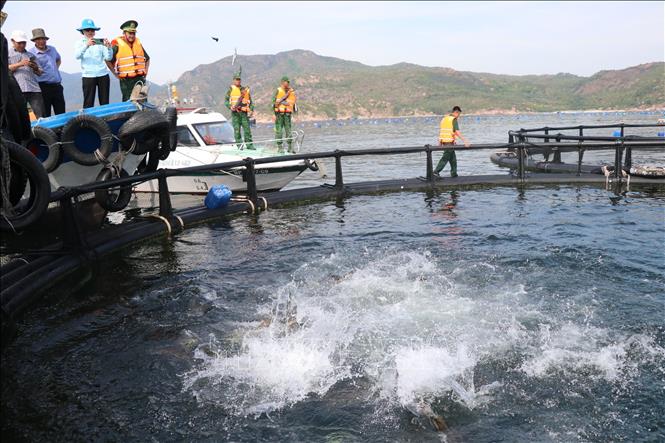
In mid-2023, the first pilot model of high-tech marine aquaculture was implemented in Cam Lap commune, Cam Ranh city. After one year of implementation, the pilot model of high-tech marine aquaculture in Khanh Hoa has been successful compared to the set objectives. The summary report shows that, in addition to being able to withstand waves and wind, protect the ecological environment and adapt to climate change, the cages made of HDPE (Hydroplastic Polyethylene) in the pilot model all yielded higher profits than traditional wooden cages; in particular, the average profit margin reached 172% for the cobia farming model, 112% for the lobster farming model, and 131.4% for the grouper farming model. This serves as a basis and premise to encourage the widespread development of high-tech marine aquaculture models.
Mr. Nguyen Van Ty, from Cam Lap commune, Cam Ranh city, is one of the pioneers in raising grouper in open sea areas. He said that before switching to HDPE cage farming, people faced many difficulties in operating traditional cages, especially in areas with strong waves and storms.
Raising fish in wooden rafts is quite complicated and inconvenient to operate, failing to meet the requirements in terms of scale and economic conditions. However, since the adoption of HDPE cages, everything has become much easier. HDPE cages have a sturdy structure, are easy to move, and can withstand environmental changes, ensuring safe aquaculture in deep water or areas with strong waves.
According to Mr. Ty, farmers are now raising fish on a much larger scale than before. This not only increases production but also reduces many operating costs. The HDPE cage system optimizes farming area and saves time and effort. More importantly, it achieves higher economic efficiency thanks to cost savings and improved quality of farmed aquatic products. However, according to Mr. Ty, the biggest difficulty currently remains the initial investment cost; the cost of HDPE cage farming is quite high, and many farmers are hesitant to invest.
Sharing concerns about industrial-scale aquaculture, Mr. Nguyen Thanh Sang, Chairman of the Board of Directors of Van Phong Aquaculture and Tourism Cooperative, said: The Van Phong Cooperative, with 32 members, has pioneered the application of high-tech aquaculture models in Khanh Hoa, using cages made of HDPE material capable of withstanding waves and wind in offshore waters. However, Mr. Sang still has reservations because, in addition to the high investment costs that will lead to unstable seafood prices, especially when dependent on the Chinese market, this has created difficulties for farmers.
Initial capital support
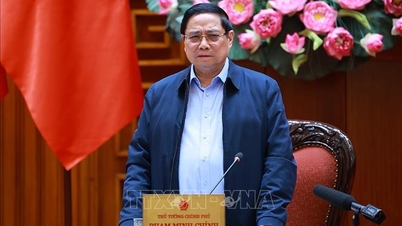
According to Mr. Nguyen Tan Tuan, Chairman of the People's Committee of Khanh Hoa province, Khanh Hoa province will have policies to support initial capital as well as interest rate subsidies to help fishermen switch from traditional cages to high-tech cages, ensuring they can withstand storms of level 10-12 and that fishermen's assets are protected.
The Provincial People's Committee is developing an insurance policy for fishermen engaged in aquaculture in open sea areas, covering accident and risk. Meanwhile, Mr. Phung Duc Tien, Deputy Minister of Agriculture and Rural Development, said that in the near future, the State Bank will survey and provide loans to those engaged in marine aquaculture under the 30,000 billion VND loan package.
At the same time, the Khanh Hoa Provincial People's Council will develop policies to address difficulties in allocating sea surface area and accessing loans. This is a very important prerequisite for implementing marine aquaculture.
Most recently, in early October, the People's Committee of Khanh Hoa province issued document No. 11346/KH-UBND on the plan to expand the pilot model for developing high-tech marine aquaculture in the province, aiming to gradually achieve the goal of making Khanh Hoa a province with a strong and sustainable marine economy, contributing to environmental protection, ensuring national defense, security and sovereignty over the sea and islands in accordance with the spirit of Resolution No. 09-NQ/TW, dated January 28, 2022, of the Politburo.
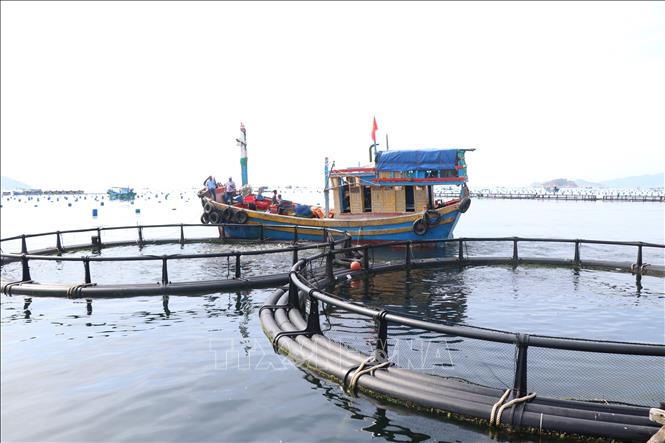
Accordingly, Khanh Hoa will implement this plan in 3 phases. Phase I, from now until the end of 2025, the agricultural sector will develop an area of approximately 30 hectares for 150 households in Van Ninh district, Ninh Hoa town, Nha Trang city, and Hon Noi area in Cam Lam district and Cam Ranh city, with an estimated cost of over 75 billion VND from local budget, enterprise support funds, and matching capital from households converting traditional cages to HDPE cages. Phase II, from 2026-2027, will expand the pilot model of high-tech marine aquaculture to 100 hectares for 500 households, with a total estimated cost of 225 billion VND.
Phase III, in 2028-2029, will expand the pilot model of high-tech marine aquaculture to 110 hectares for 550 households, with a total estimated budget of 245 billion VND. For phases II and III, in addition to budget funds and matching funds from the people, there will also be approximately 140 billion VND in loans.
To encourage fishermen to adopt high-tech aquaculture, Mr. Nguyen Tan Tuan, Chairman of the People's Committee of Khanh Hoa province, stated that in addition to providing initial capital support for people to convert their cages, controlling the quality of breeding stock to meet the needs of farmers is crucial. Furthermore, the province will effectively manage aquaculture planning and implement further policies to encourage fishermen to participate in the high-tech aquaculture development program.
According to VNA
Source: https://doanhnghiepvn.vn/kinh-te/vi-the-trung-tam-nuoi-bien-bai-cuoi-quan-ly-tot-quy-hoach-nuoi-trong/20241227100834028









































































Comment (0)