

Ho Chi Minh City has been making efforts to clean up polluted canals to minimize environmental pollution and improve the quality of life for its residents. However, because some rivers, streams, and canals flow through multiple districts, achieving good results requires decisive and concerted efforts from all localities.
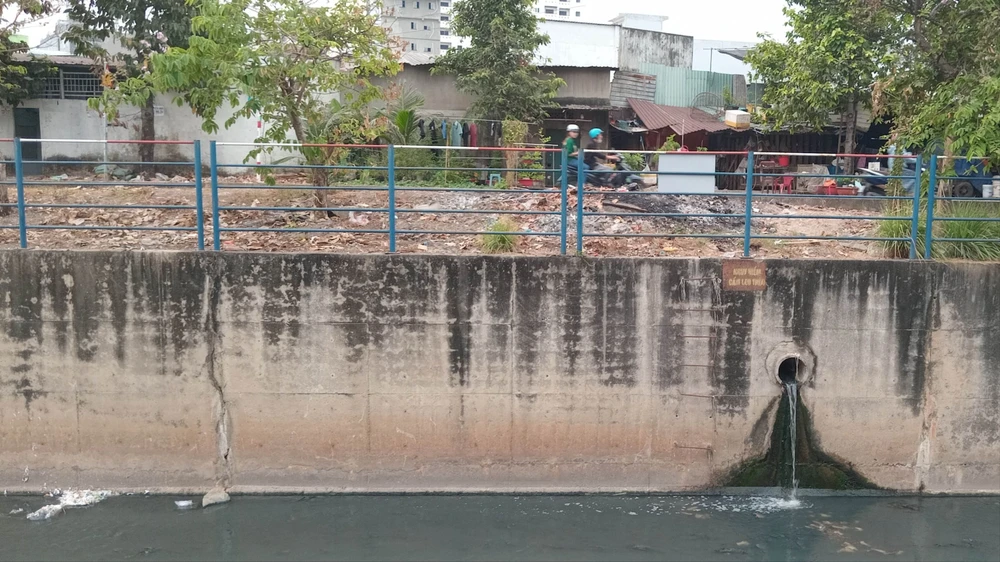
Canals and streams remain polluted.
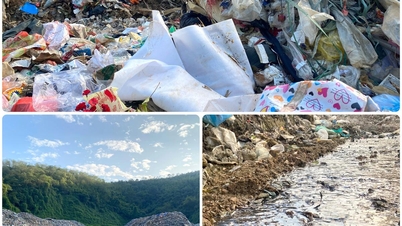
The drainage system along the Cai Stream - Nhum Stream - Xuan Truong Stream basin and the Ba Bo Canal (bordering Ho Chi Minh City and Binh Duong Province) has seen the two localities jointly implement various solutions to mitigate pollution. Ho Chi Minh City and Binh Duong Province invested over 1,000 billion VND in the renovation of the Ba Bo Canal, with both banks reinforced with sturdy concrete embankments; however, the water in the canal consistently emits a foul odor. Observations reveal numerous pipes carrying domestic wastewater directly into the canal. Under the scorching sun, the stench emanating from the canal becomes even more suffocating.
Observations at Nhum stream are similar. Despite being concreted and embanked on both sides, pollution remains widespread; the water in the canal is always black and emits an unpleasant odor due to wastewater from residential areas being discharged directly into it.
Pointing down to the Ba Bo canal, which was covered in white foam, Mr. Tran Van Dang (living near the foot of Provincial Road 43 bridge, Binh Chieu ward, Thu Duc City, Ho Chi Minh City) sadly said: "The people hoped that after the renovation, the Ba Bo canal, with its 'dead' water, would be 'revived,' and hundreds of households living along the canal would be free from the foul smell. However, the environment is still polluted because domestic and industrial wastewater is still being discharged into it without treatment. Mr. Dang is worried that the pollution will affect the health of the people, especially young children."
Monitoring results from the Binh Duong Department of Natural Resources and Environment show that the surface water volume in the Ba Bo canal and the Cai - Nhum - Xuan Truong streams in 2023 tended to decrease slightly compared to 2022. However, at some times, the water quality in these canal systems still showed organic pollution, mainly due to receiving untreated domestic wastewater from households in wards 11 and 16, Binh Hoa commune, Thuan An city; and wastewater from households and some small businesses and service units near the Ho Chi Minh City National University dormitory area.
Meanwhile, water quality monitoring data for the Ba Bo Canal by the Ho Chi Minh City Department of Natural Resources and Environment in 2023 showed that BOD5 parameters were non-compliant in 75% of locations, exceeding the limit by 1.21-8.23 times; DO was non-compliant in 25% of locations, exceeding the limit by 1.1-2.4 times; COD was non-compliant in 75% of locations, exceeding the limit by 2.31-8.1 times; and coliform was non-compliant in 100% of locations, exceeding the limit by 4.68-64.2 times. Monitoring results of surface water quality in Cai Stream - Nhum Stream - Xuan Truong Stream also showed heavy pollution: COD was non-compliant in 100% of locations, exceeding the limit by 1.6-4.9 times; BOD5 was also non-compliant in 100% of locations, exceeding the limit by 1.8-6.4 times; and coliform was non-compliant in 100% of locations, exceeding the limit by 28-280 times. E. coli levels were found to be 100% substandard, exceeding the limit by 200-5,600 times... In general, the water quality monitoring parameters of the Cai - Suoi Nhum - Suoi Xuan Truong canal system largely failed to meet Vietnamese standards (QCVN 08-MT: 2015/BTNMT).
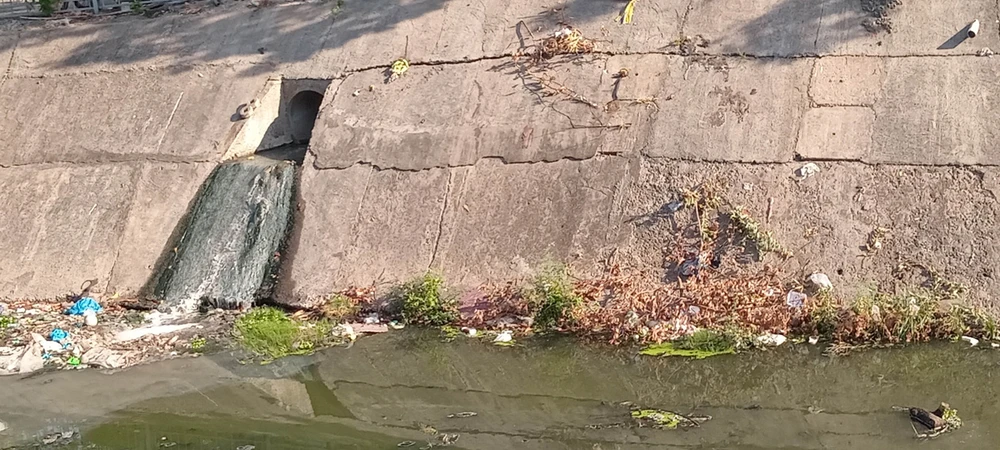
Wastewater treatment connection is not yet available.
According to Mr. Ngo Quang Su, Director of the Department of Natural Resources and Environment of Binh Duong province, although functional agencies and local authorities have propagated and supervised people to prevent littering into canals through organizing environmental cleanup campaigns and activities along the canal routes, a segment of the population still litters into the canals, mainly street vendors and passersby.
On the other hand, not all domestic wastewater from households in the Ba Bo canal basin has been connected to urban wastewater treatment plants due to difficulties in constructing the connection infrastructure; the construction progress of the Nhum stream drainage project is still slow (only phase 1 has been completed at 77%, phase 2 in the downstream area of the canal, with a length of about 250m, is currently suspended due to land clearance issues).
Ms. Nguyen Thi Thanh My, Deputy Director of the Ho Chi Minh City Department of Natural Resources and Environment, said that to minimize pollution in the drainage system of the Cai Stream - Nhum Stream - Xuan Truong Stream basin and Ba Bo Canal, the Ho Chi Minh City Department of Natural Resources and Environment will strengthen inspection and monitoring of environmental protection compliance by production and business establishments along the canals; and review suitable public land to include in the planning of automatic monitoring stations in the area bordering Binh Duong province.
Mr. VO VAN MINH, Chairman of the People's Committee of Binh Duong Province:
Strengthening monitoring of emission sources.
Binh Duong will focus on key solutions such as strengthening inspection and supervision of Song Than 1 and Song Than 2 Industrial Parks and facilities within the industrial parks. It will also enhance monitoring of wastewater treatment system operation in industrial parks and businesses with high wastewater volumes through automated monitoring systems, surveillance cameras, and automated sampling equipment.
On the other hand, coordinate with the 4th Army Corps to review and identify sources of waste generated from the unit's operations, including the treatment and discharge of domestic wastewater from officers and soldiers.
Mr. BUI XUAN CUONG, Vice Chairman of the People's Committee of Ho Chi Minh City:
Expedite the construction of wastewater treatment plants.
To protect the canal system bordering Binh Duong province, the city has assigned the Department of Natural Resources and Environment to continue reviewing sources of pollution in the canal basin; strengthen inspection and supervision of compliance with environmental protection laws for production, business, and service establishments and industrial zones discharging waste into this basin; and coordinate with Binh Duong province to address pollution in the canals.
At the same time, the Department of Construction is tasked with continuing to implement the Ho Chi Minh City flood control and wastewater treatment project for the period 2020-2045, including urging the acceleration of the construction progress of the North Saigon 1 wastewater treatment plant and the North Saigon 2 wastewater treatment plant. The Department of Planning and Investment is tasked with leading the effort to attract investment for the construction of these two wastewater treatment plants.
Ho Chi Minh City and Long An Province cooperate in addressing surface water pollution.
To proactively and promptly coordinate the resolution of surface water pollution in the border basin between Ho Chi Minh City and Long An province, the Ho Chi Minh City People's Committee has assigned the Ho Chi Minh City Department of Natural Resources and Environment to cooperate with the Long An Provincial Department of Natural Resources and Environment to develop a plan to strengthen coordinated control of environmental pollution in the border canal area between the two localities for the period 2024-2030.
Accordingly, the two localities will strictly control pollution sources, share surface water monitoring data every two months at bordering locations along the Thầy Cai, An Hạ, Cần Giuộc, and Bến Lức - Chợ Đệm canals; share data from automatic wastewater monitoring stations in industrial zones, clusters, and businesses with large discharges into the border area; share inspection results, plans, and solutions for definitively addressing environmental pollution in cases of violations; and maintain a hotline for timely coordination.
Ho Chi Minh City has assigned the Department of Construction to implement the Ho Chi Minh City Flood Control and Wastewater Treatment Project for the period 2020-2045 and the Flood Control and Wastewater Treatment Plan for the period 2020-2030. The Department of Planning and Investment will lead and expedite procedures to attract investment for the construction of a wastewater treatment plant. The Department of Agriculture and Rural Development will strengthen the implementation of regulations on the management, exploitation, and protection of irrigation works for the Thầy Cai - An Hạ canal section; and direct the Irrigation Service Management and Exploitation Company Limited to dredge silt and sediment, remove garbage, treat water hyacinth and weeds, and clear the waterway for the Thầy Cai - An Hạ canal section.
The Urban Infrastructure Investment Project Management Board is accelerating the construction progress of the centralized urban wastewater collection system and treatment plant in the river basin; Cu Chi, Hoc Mon, Binh Chanh districts and District 8, Binh Tan districts are reviewing and updating wastewater discharge sources under their management that discharge into adjacent river basins; strengthening surprise inspections when there are signs of violations; ensuring that 100% of production, business and service establishments treat wastewater to meet standards before discharge.
QUOC HUNG
MINH HAI
Source


![[Photo] Closing Ceremony of the 10th Session of the 15th National Assembly](/_next/image?url=https%3A%2F%2Fvphoto.vietnam.vn%2Fthumb%2F1200x675%2Fvietnam%2Fresource%2FIMAGE%2F2025%2F12%2F11%2F1765448959967_image-1437-jpg.webp&w=3840&q=75)
![[Photo] Prime Minister Pham Minh Chinh holds a phone call with the CEO of Russia's Rosatom Corporation.](/_next/image?url=https%3A%2F%2Fvphoto.vietnam.vn%2Fthumb%2F1200x675%2Fvietnam%2Fresource%2FIMAGE%2F2025%2F12%2F11%2F1765464552365_dsc-5295-jpg.webp&w=3840&q=75)








































![[OFFICIAL] MISA GROUP ANNOUNCES ITS PIONEERING BRAND POSITIONING IN BUILDING AGENTIC AI FOR BUSINESSES, HOUSEHOLDS, AND THE GOVERNMENT](https://vphoto.vietnam.vn/thumb/402x226/vietnam/resource/IMAGE/2025/12/11/1765444754256_agentic-ai_postfb-scaled.png)













































Comment (0)