

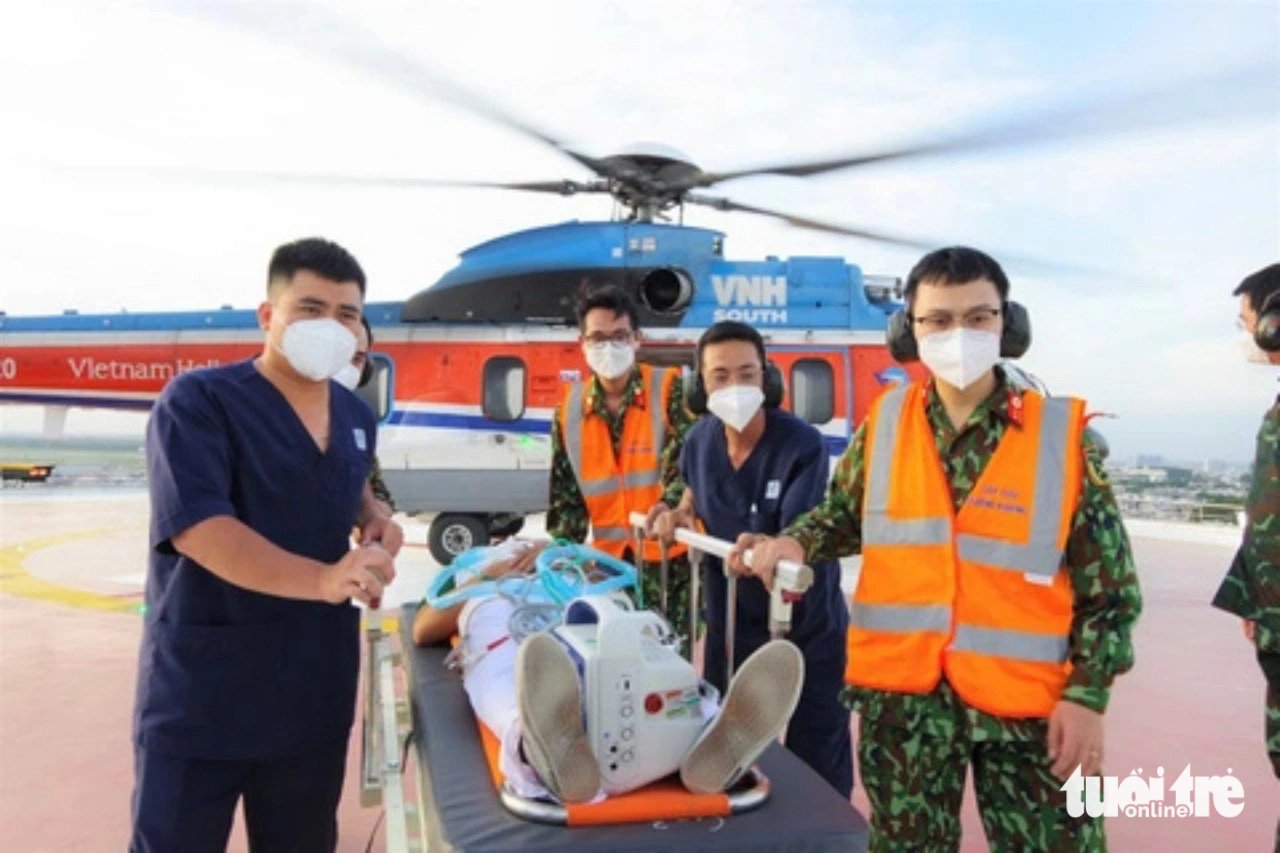
The Southern Helicopter Company - 18th Brigade, in coordination with Military Hospital 175, previously conducted training flights for emergency patient evacuation using helicopters at the helipad on the roof of Military Hospital 175 - Photo: DUYEN PHAN
In the project to professionalize out-of-hospital emergency care in Ho Chi Minh City for the period up to 2030 and beyond, which was recently approved by the Vice Chairman of the Ho Chi Minh City People's Committee, Duong Anh Duc, public opinion is particularly interested in air ambulance services and who will be eligible for emergency care when this new service is implemented.
The proposal put forward by the Ho Chi Minh City Department of Health is based on the city's unique characteristics as a hub for medical tourism, as well as hosting numerous international economic , cultural, and social events.
According to the Department of Health , Ho Chi Minh City's implementation of air ambulance services will professionally meet the emergency needs of the people and develop the healthcare ecosystem.
These patients will be airlifted for emergency treatment.
Particularly with the role of regional medical cooperation and linkages between Ho Chi Minh City and the provinces of the Southeast region, and Ho Chi Minh City and the 13 provinces and cities of the Mekong Delta region, the need for emergency air transport becomes even more important.
For example, for critical illnesses requiring a critical window of opportunity, transporting organs from the donor site to the recipient site would be far more feasible and efficient than transporting them by road.
To ensure this service operates effectively, the plan states that a team of air ambulance specialists will be established, with the Department of Health as the focal point, along with representatives from units including the Southern Helicopter Company - Brigade 18, Military Hospital 175, and Cho Ray Hospital.
This expert team is responsible for consultations and determining the appropriate air transport for patients. They also research and advise on the development of air ambulance models, including training and developing human resources; assessing the technical safety for licensing helicopter landing pads; supplementing air ambulance equipment; developing and updating operational coordination regulations; organizing drills; and establishing financial mechanisms... according to a suitable roadmap.
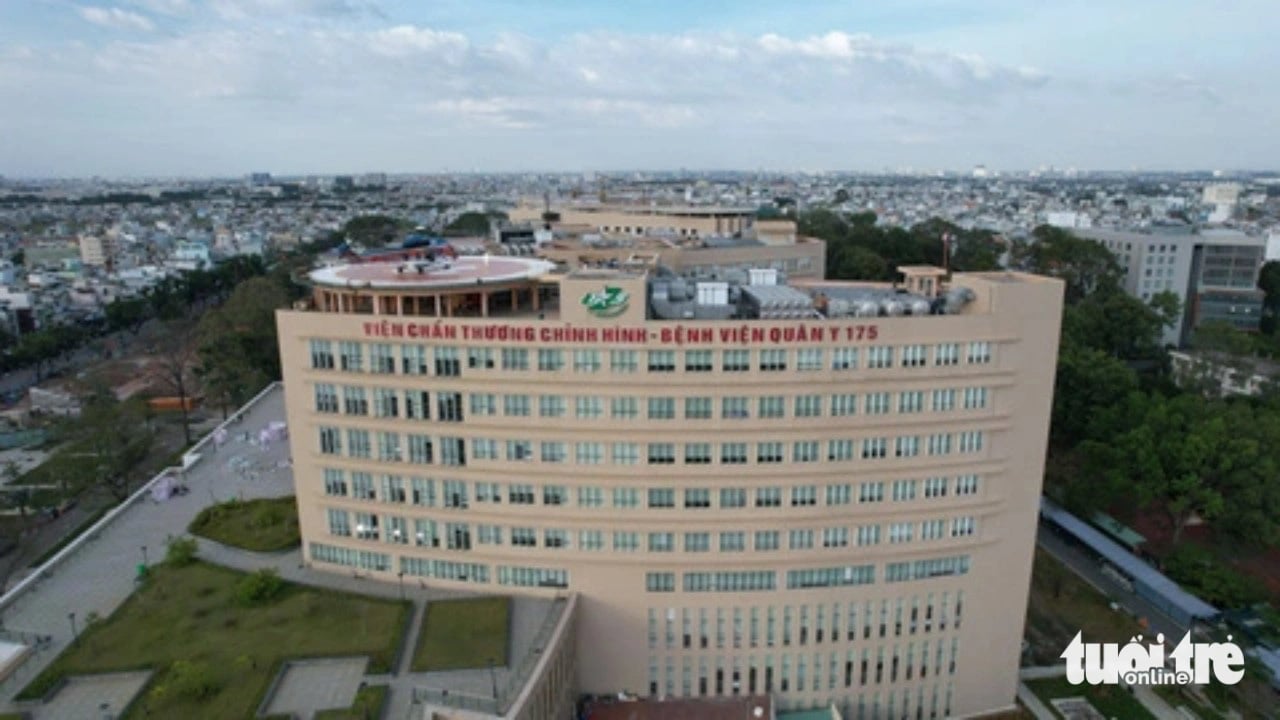
The 115 Air Emergency Center was established on the existing infrastructure of Military Hospital 175 (Ministry of Defense) - Photo: DUYEN PHAN
The plan also states that a 115 air ambulance emergency center will be established using the existing infrastructure of Military Hospital 175 (Ministry of Defense).
This hospital has a large helipad and has successfully carried out many emergency air transports from islands to the mainland.
And one of the key tasks outlined in the plan is to develop and issue criteria and conditions for providing out-of-hospital emergency care by air.
Accordingly, air ambulance services are only available when a patient is in a critical condition with life-threatening symptoms in remote or isolated areas such as seas, islands, or other isolated regions.
Or the medical condition exceeds the capacity of the current medical facility, requiring immediate transfer to higher-level hospitals where land or water-based emergency services cannot provide timely assistance.
We are requesting approval for emergency medical services based on demand and emergency flight routes.
The development of air ambulance services is divided into two phases. Phase 1 (2023-2030) will involve the deployment of air ambulance services in coordination with and utilization of the helicopter landing pad at Military Hospital 175.
This phase primarily focuses on selecting and training competent air ambulance personnel, ensuring they meet health and flight safety standards for operating on emergency transport helicopters. Additionally, it will establish regulations for coordinating air ambulance operations.
Phase 2 (from 2030 onwards) will involve collaboration with the Southern Helicopter Company - 18th Brigade to expand out-of-hospital emergency medical services by air, effectively utilizing existing helipads at hospitals in Ho Chi Minh City.
At the same time, we recommend that the Ministry of National Defence, the National Air Traffic Management and Control Center, and the Air Defence and Air Force Command prioritize providing out-of-hospital emergency medical care by air for people in need and establish emergency air routes.
Source


![[Photo] Closing Ceremony of the 10th Session of the 15th National Assembly](/_next/image?url=https%3A%2F%2Fvphoto.vietnam.vn%2Fthumb%2F1200x675%2Fvietnam%2Fresource%2FIMAGE%2F2025%2F12%2F11%2F1765448959967_image-1437-jpg.webp&w=3840&q=75)

![[Photo] Prime Minister Pham Minh Chinh holds a phone call with the CEO of Russia's Rosatom Corporation.](/_next/image?url=https%3A%2F%2Fvphoto.vietnam.vn%2Fthumb%2F1200x675%2Fvietnam%2Fresource%2FIMAGE%2F2025%2F12%2F11%2F1765464552365_dsc-5295-jpg.webp&w=3840&q=75)















































![[OFFICIAL] MISA GROUP ANNOUNCES ITS PIONEERING BRAND POSITIONING IN BUILDING AGENTIC AI FOR BUSINESSES, HOUSEHOLDS, AND THE GOVERNMENT](https://vphoto.vietnam.vn/thumb/402x226/vietnam/resource/IMAGE/2025/12/11/1765444754256_agentic-ai_postfb-scaled.png)









































Comment (0)