

Studies have also shown that coffee can reduce the risk of diabetes, is good for the liver and heart, promotes weight loss, and increases longevity.
However, doctors warn that there are three symptoms that, if experienced, indicate you should adjust your daily coffee intake.

Drinking coffee offers many health benefits.
Dr. Sooj, a physician working at the UK National Health Service, said that regular coffee drinkers who experience rapid heartbeat, anxiety, or difficulty sleeping should reduce their coffee intake, according to the Express (UK).
My heart was beating fast, pounding.
Nutrition expert Victoria Taylor, who works at the British Heart Foundation, explains that research shows that 4-5 cups of coffee a day does not affect the risk of developing coronary heart disease or cause irregular heartbeats or arrhythmias.
However, some people are more sensitive to caffeine than others, and in these individuals, caffeine can cause a rapid heartbeat, a feeling like the heart is pounding.
If this happens, you should limit your caffeine intake, or ideally, stop completely.
Feeling restless and anxious.
Caffeine can sometimes have effects similar to anxiety symptoms, including tension and a rapid heartbeat. If consumed in excessive amounts, you may also experience anxiety due to caffeine.

If you experience a rapid heartbeat or restlessness, reduce your coffee intake.
Studies show that caffeine increases alertness by blocking a brain chemical that makes you feel tired (adenosine), while simultaneously triggering the release of adrenaline, which boosts energy.
If caffeine intake is high, these effects are stronger, leading to caffeine-induced anxiety symptoms, according to the health website Healthline .
According to Harvard Medical School, consuming too much caffeine can cause symptoms such as anxiety, restlessness, rapid heartbeat, and stomach and intestinal problems. If you experience these symptoms, it's best to temporarily stop drinking coffee.
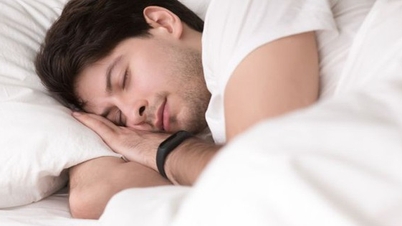
Difficulty sleeping
Although recent research has shown that coffee drinkers even sleep better than those who abstain from coffee, some people still have trouble sleeping if they drink coffee, depending on individual physiology.
The American Academy of Sleep Medicine states that caffeine has a half-life of up to 5 hours – this is the time it takes for the caffeine to be reduced by half compared to its original amount, according to Healthline .
If you find that drinking coffee makes it difficult to sleep, then you should still prioritize sleep, according to Express .
Source link




















































![[OFFICIAL] MISA GROUP ANNOUNCES ITS PIONEERING BRAND POSITIONING IN BUILDING AGENTIC AI FOR BUSINESSES, HOUSEHOLDS, AND THE GOVERNMENT](https://vphoto.vietnam.vn/thumb/402x226/vietnam/resource/IMAGE/2025/12/11/1765444754256_agentic-ai_postfb-scaled.png)



















































Comment (0)