

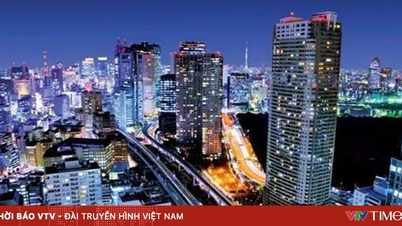
(CLO) The Vietnamese real estate market closed 2024 with positive recovery results thanks to significant progress in perfecting the legal framework, with increasingly transparent and clear information for all participants.
The market gradually heated up towards the end of the year.
2024 marked a resurgence of the Vietnamese economy after a period of stable recovery and growth. With positive macroeconomic indicators, investor and public confidence in the economy was strengthened. The real estate market was no exception, becoming one of the leading sectors contributing significantly to overall development.
Accordingly, the real estate market in 2024 has passed its most difficult phase with many positive recovery results and is still closely following the recovery process with much room for future growth thanks to the impetus from supporting factors from the macroeconomic environment, policy management, and market demand.
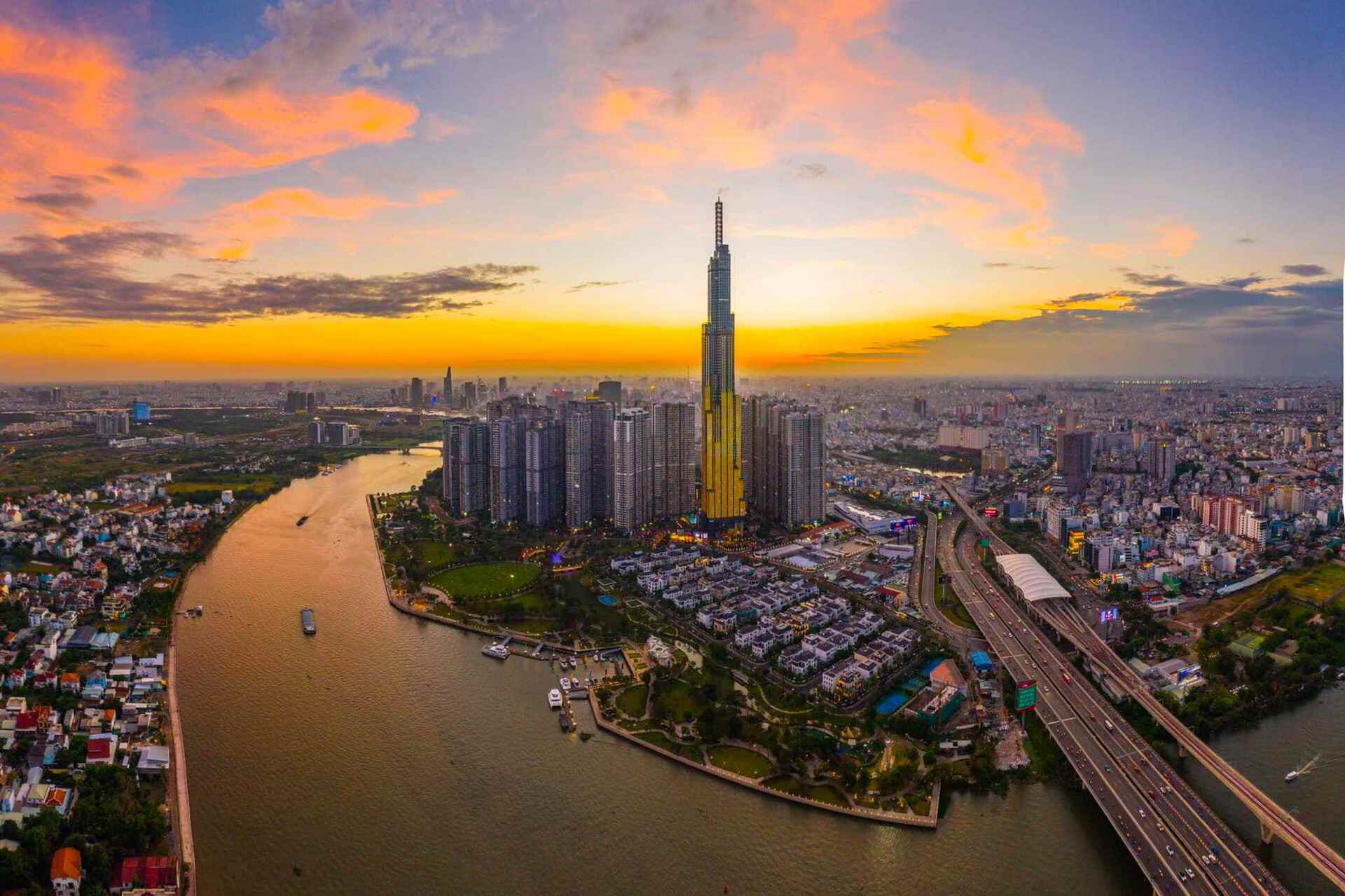
Vietnam's real estate market concluded 2024 with significant progress. (Photo: ST)
At the end of the first quarter of 2024, the market saw a large number of real estate brokers and agencies returning to operation as developers began activating and implementing a series of projects on an increasingly large scale. Some projects with good progress have officially started accepting deposits. Newly launched projects, from land plots, townhouses, villas, apartments, etc., all recorded good levels of interest, transactions, and price growth in both the primary and secondary markets.
In the second quarter of 2024, the recovery momentum of the real estate market continued, with strong growth in supply and transaction volume, increasing threefold and nearly fourfold respectively compared to the same period in 2023.
In particular, the information that the Land Law of 2024, the Housing Law of 2023, the Real Estate Business Law of 2023, and Clause 2, Article 209 of the Law on Credit Institutions will come into effect five months early further boosts confidence among entities operating in the real estate sector, encouraging them to "re-enter the market."
By the third quarter, legal regulations on housing, land, and real estate business were officially put into effect, eliminating the "pre-determined" sentiment of the entire market. The market also began to show signs of heating up, with land auctions in suburban areas of Hanoi becoming hotter than ever. The market's heat was further driven by the apartment segment, with continuously rising prices, establishing new benchmarks in both the primary and secondary markets.
Towards the end of the year, with the market warming up, many real estate developers changed their plans, launching projects earlier than expected, along with various preferential policies, helping the housing supply exceed forecasts.
Supply is growing strongly year-on-year.
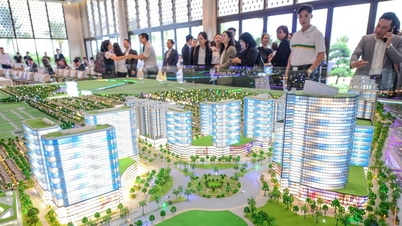
According to a report by the Vietnam Association of Real Estate Brokers (VARs), the supply of residential real estate in 2024 is expected to grow strongly year-on-year, with an increasing number of large-scale projects launching towards the end of the year, along with preferential and flexible payment policies. By the end of 2024, the real estate market recorded approximately 56,000 products offered on the primary market, equivalent to the end of 2023, as many projects were able to clear a large amount of unsold inventory amidst market recovery.
Overall in 2024, the market recorded approximately 81,000 products offered for sale, an increase of over 40% compared to 2023. Of these, 65,376 were new products, about three times more than in 2023, but only about 7% of the number in 2018 – a year before the pandemic. In the fourth quarter of 2024 alone, the market recorded 28,000 new products offered for sale, double the number from the previous quarter and four times the number in the same period of 2023.
Transaction volumes in 2024 continued to grow steadily as supply improved in both quantity and quality. Demand for real estate, including both residential and investment purposes, remained high and is steadily increasing alongside urbanization and economic development, supported by a well-developed legal framework. Overall in 2024, the market recorded over 47,000 successful transactions, equivalent to an absorption rate of 72%. Over 50% of primary transactions were driven by investment demand, with a certain amount of speculative activity.
In terms of transaction structure, luxury apartments dominate the market share, accounting for 75% of total market transactions. New projects have very good absorption rates, reaching over 70%. Notably, many projects recorded absorption rates of over 90% on the day of their official launch.
In fact, many high-end apartments are being resold even before or shortly after the sales contract is signed. Towards the end of the year, the number of such transfers increases due to improved supply and speculators who bought apartments in the short term cutting their losses – essentially cutting their profits or breaking even – due to financial pressure.
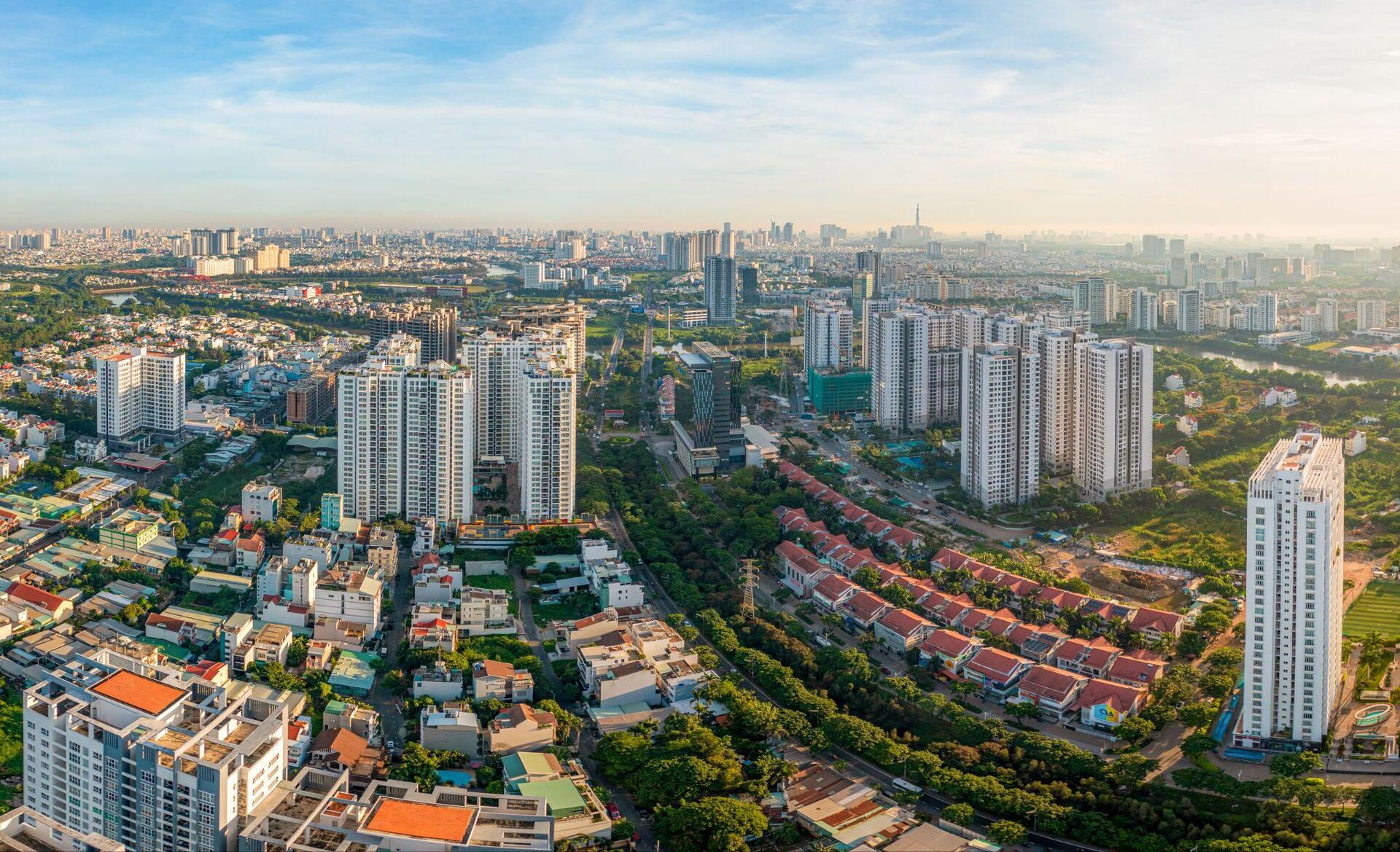
The supply of residential real estate in 2024 is expected to grow strongly year-on-year with an increasing number of large-scale projects being launched. (Photo: ST)
Transactions in low-rise buildings also improved significantly amidst the market recovery, with the absorption rate of newly launched projects reaching very good levels, estimated at nearly 65%, equivalent to almost 9,000 transactions.
In the secondary market, liquidity is mainly concentrated in products that meet the needs of those who want to live there immediately. This includes large-scale urban projects with existing residents and modern, integrated infrastructure and amenities. It also includes individual houses with guaranteed legal status and priced under 4 billion VND in major cities.
In the land plot segment, transactions mainly occur in the secondary market, as the new legal framework forces developers to build houses for sale. Large plots of land without legal documentation are being sold at a loss, while subdivided plots with guaranteed legal status are being sought after by investors.
Besides "profit-taking" transactions, secondary market transactions also increased sharply as investors accepted the "pain" once and for all, boldly "cutting losses" on assets that did not generate cash flow or had low potential for price appreciation, such as land plots far from the city center or unfinished projects, in order to restructure their investment portfolios and allocate assets to those with business potential, rental income, and cash flow generation.
VARs assess that, overall, the real estate market "closed" 2024 with positive recovery results thanks to major advances in perfecting the legal framework, along with close guidance and management from the Party, State, and Government .
Currently, the real estate market is still moving positively. Liquidity is showing a slight decrease in the high-end segment, but remains stable for housing products that meet real housing needs and offer reasonable value, considering factors such as technical infrastructure, social infrastructure, green spaces, lakes, playgrounds, commercial areas, management, and security.
VARS believes that, for the market to recover and develop in a safe, healthy, and sustainable direction, investors need to ensure prices are in line with market purchasing power, instead of focusing on short-term profits.
Source: https://www.congluan.vn/bat-dong-san-viet-nam-khep-lai-nam-2024-voi-nhieu-buoc-tien-lon-post328396.html
![[Photo] Closing Ceremony of the 10th Session of the 15th National Assembly](/_next/image?url=https%3A%2F%2Fvphoto.vietnam.vn%2Fthumb%2F1200x675%2Fvietnam%2Fresource%2FIMAGE%2F2025%2F12%2F11%2F1765448959967_image-1437-jpg.webp&w=3840&q=75)

![[Photo] Prime Minister Pham Minh Chinh holds a phone call with the CEO of Russia's Rosatom Corporation.](/_next/image?url=https%3A%2F%2Fvphoto.vietnam.vn%2Fthumb%2F1200x675%2Fvietnam%2Fresource%2FIMAGE%2F2025%2F12%2F11%2F1765464552365_dsc-5295-jpg.webp&w=3840&q=75)













































![[OFFICIAL] MISA GROUP ANNOUNCES ITS PIONEERING BRAND POSITIONING IN BUILDING AGENTIC AI FOR BUSINESSES, HOUSEHOLDS, AND THE GOVERNMENT](https://vphoto.vietnam.vn/thumb/402x226/vietnam/resource/IMAGE/2025/12/11/1765444754256_agentic-ai_postfb-scaled.png)









































Comment (0)