

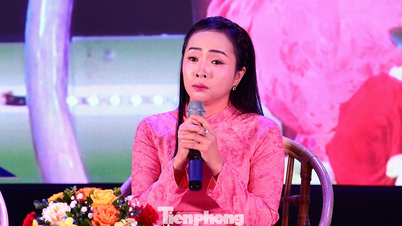
Returning to Vietnam to participate in the "Spring in the Homeland" program, Ms. Nguyen Thi Lien, Vice President of the Vietnamese Women's Association in Malaysia and Head of the Vietnamese Language Club in Malaysia, had an exchange with a reporter from Dai Doan Ket Newspaper about inspiring a love for the Vietnamese language among Vietnamese people living abroad.

PV: Madam, as the Head of the Vietnamese Club in Malaysia, what motivates you to dedicate your efforts to organizing Vietnamese language classes for the Vietnamese community here?
Ms. Nguyen Thi Lien: - More than ten years ago, my whole family moved to Kuala Lumpur, Malaysia. Back in Vietnam, I graduated from the Faculty of Literature at Hanoi Pedagogical University I and worked as a high school teacher for 12 years. I feel quite regretful about having to leave the school.
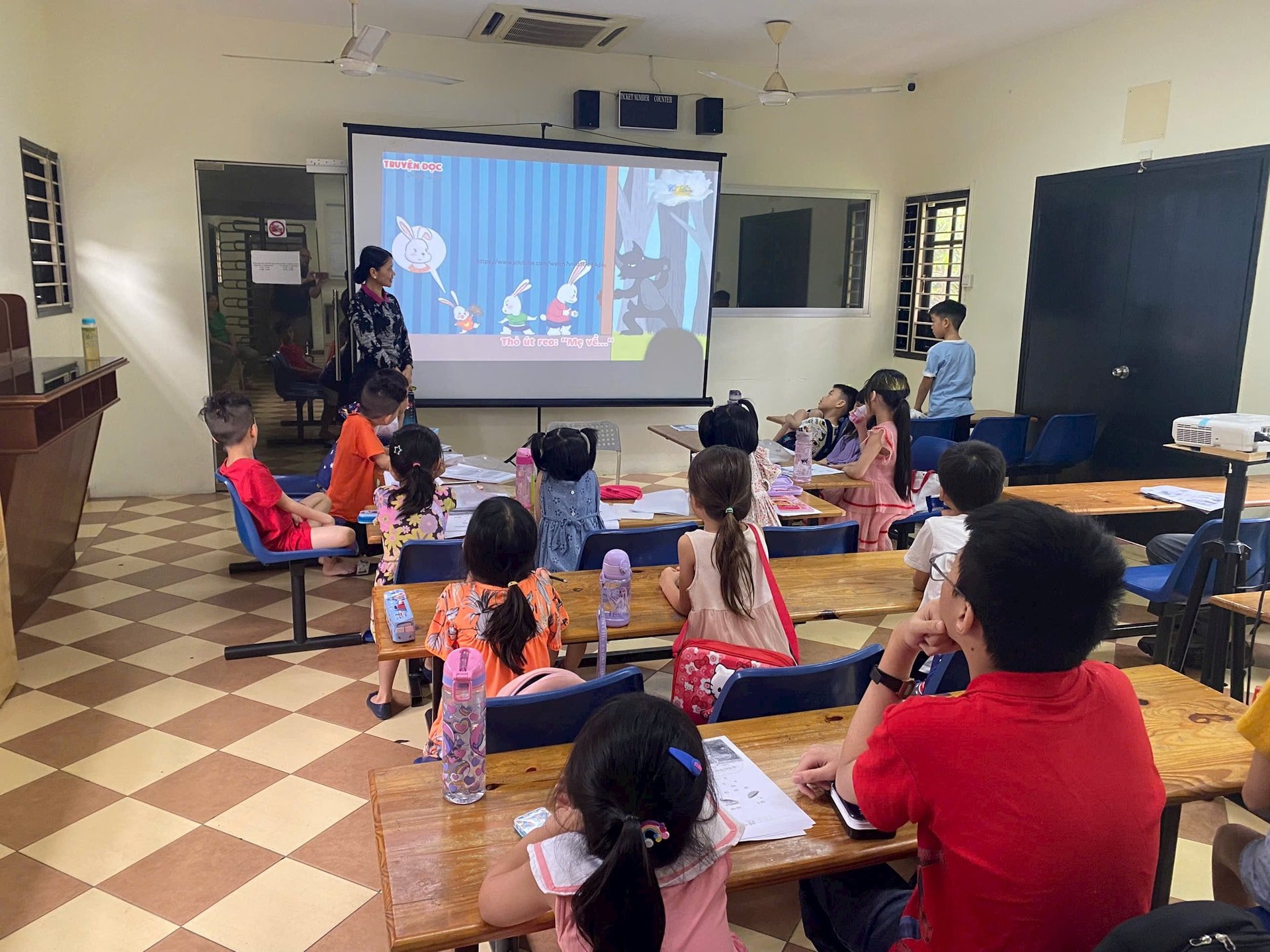
In Malaysia, I also had many opportunities to teach Vietnamese, and I considered this work to alleviate my longing for my old job. Knowing my expertise, Ms. Tran Thi Chang, President of the Vietnamese Women's Association in Malaysia, approached me and asked me to help the community establish Vietnamese language classes for Vietnamese children there. At the time, I was quite hesitant because it was truly a challenging beginning. But then I realized this was a very meaningful job, suitable to my expertise and interests, so I accepted. Together with the enthusiastic members of the Vietnamese Women's Association in Malaysia, we began to find ways to overcome the difficulties. On October 16, 2016, the first two classes of the Vietnamese Language Club in Malaysia officially opened.
Madam, is the Vietnamese community in Malaysia enthusiastic about learning Vietnamese? Could you share some of the methods you have used to instill a love for the Vietnamese language and Vietnam in Vietnamese children living abroad ?
Teaching Vietnamese to Vietnamese people abroad is different from teaching Vietnamese to students in Vietnam. The diverse student body requires flexible teaching methods tailored to their abilities and goals. I spend a considerable amount of time and effort preparing lessons, especially for young children. In my early years in Kuala Lumpur, I noticed that teaching Vietnamese to children wasn't highly valued. Only a few families who planned for their children to return to Vietnam for education paid attention to this issue. However, many families also planned for their children to attend international schools when they returned to Vietnam, and if they intended for their children to be born and raised here, it was inevitable that they wouldn't know Vietnamese or wouldn't use it well. For families where Vietnamese parents married locals, the children had to learn multiple languages because Malaysia is a multilingual country. The children learn English, Malay, and Chinese at school, and depending on their circumstances, they also learn Hokkien, Cantonese, etc., according to their father's hometown. Those who are Muslim learn Arabic, and so on. Generally, Vietnamese has very little opportunity to be included in their schedules. Therefore, in the initial stages of opening the classes, we had to encourage and persuade families to let their children participate.
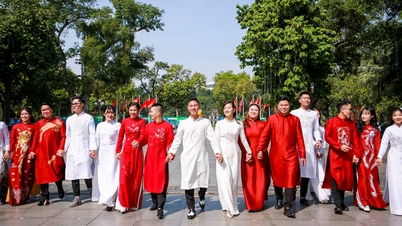
However, over time, perceptions of the Vietnamese language have changed. The emergence of classes in the Vietnamese Language Club has also led people to reconsider the role of the Vietnamese language. Every Mid-Autumn Festival, Children's Day (June 1st), and Lunar New Year, we organize performances of traditional Vietnamese ao dai dresses, cultural shows, and folk games for the children. Seeing the children happily singing in Vietnamese, looking adorable in their ao dai, and enthusiastically participating in sack races, tug-of-war, and blindfolded pot-breaking games, brings joy and a desire for their own children to learn and excel in Vietnamese gradually arises in the hearts of parents. In this way, the position of the Vietnamese language is becoming increasingly secure within the Vietnamese community in Malaysia.
What were the main challenges you faced while teaching ? Can you share some memories from your experience teaching and learning Vietnamese in Malaysia?
- In the more than eight years of the Vietnamese Language Club's development, there have been two challenging periods: the opening of classes and the COVID-19 pandemic. The first period was as I described above, and during the COVID-19 pandemic, Malaysia implemented a lockdown, and Vietnamese classes had to cease operations. However, when schools adopted online learning, I discussed it with the club members and decided to try it out. Fortunately, we received support from parents, and both teachers and students gradually adapted to the new learning format. During the pandemic, our student numbers increased significantly. In particular, we attracted students from states far from the capital, who normally wouldn't be able to attend in-person classes.
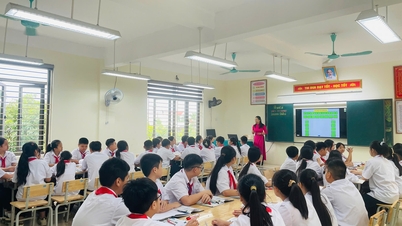
Compared to teaching Vietnamese abroad, I find that teachers generally have to invest a considerable amount of time and effort in preparing lesson plans because the students are quite diverse in age and Vietnamese language proficiency. Therefore, we have to divide them into small groups. Each group uses a different lesson plan, even if it's the same topic.
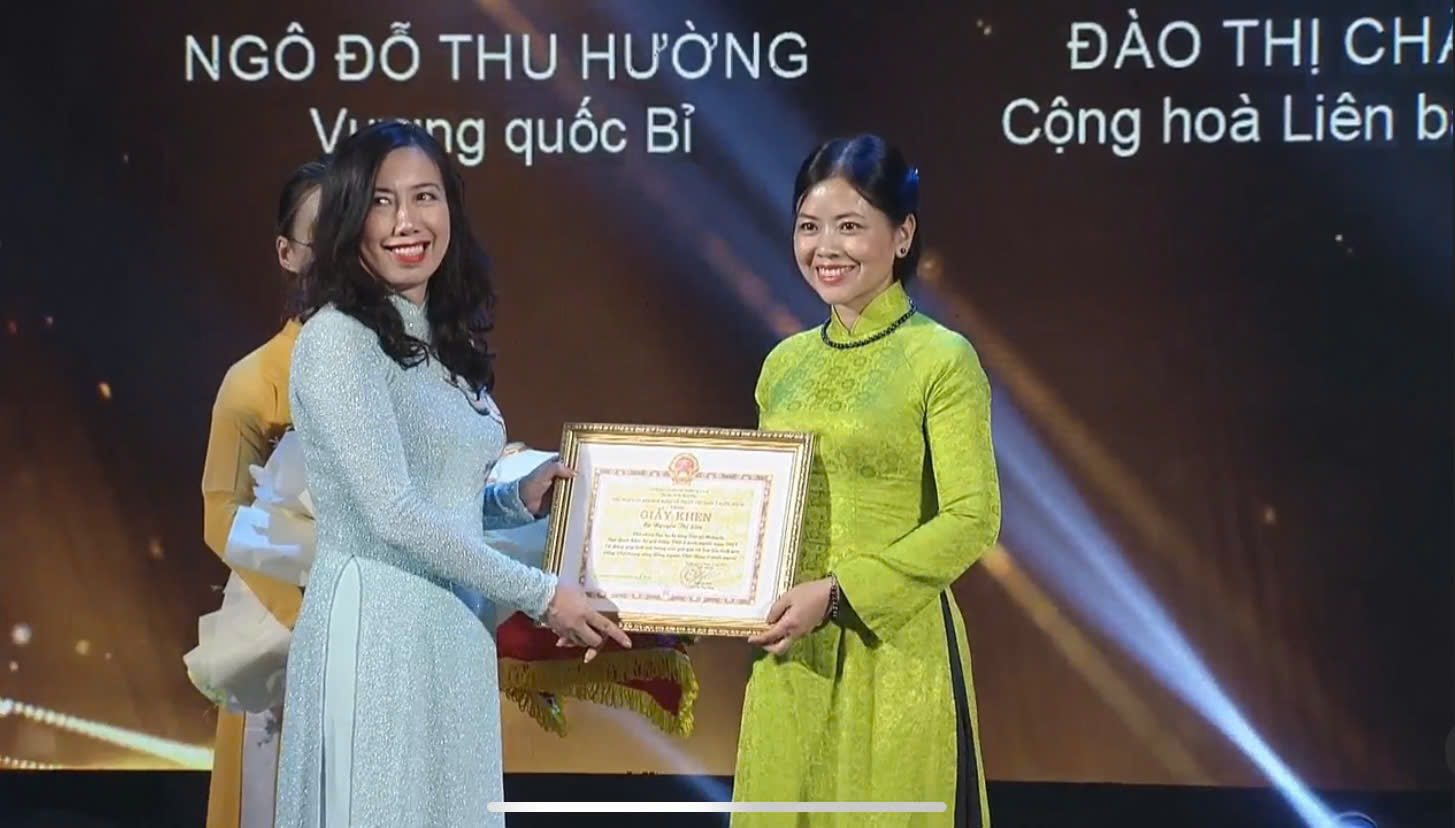
There are many memorable moments from teaching the children. They are so lovely and innocent, so their mistakes in using Vietnamese are also endearing. But perhaps my most memorable moment was when I saw tears in their eyes as I played them a song about mothers. Those tears made me realize that they could be moved by the lyrics in Vietnamese, and I saw the meaning in my work. Another beautiful memory is when I returned to Vietnam to attend the 2023 Ceremony Honoring Vietnamese Ambassadors Abroad. At that time, I felt that besides my ability to use Vietnamese being recognized—because it was a competition that included both writing and public speaking—my journey in teaching Vietnamese was also appreciated and acknowledged.
According to her, has the situation regarding Vietnamese language learning within the Vietnamese community improved significantly compared to the past? What systematic approaches are needed to help Vietnamese people abroad preserve the Vietnamese language and culture?
- In recent years, I have noticed that our Party and State have placed great importance on preserving the Vietnamese language abroad. The Ministry of Foreign Affairs and the State Committee for Overseas Vietnamese have coordinated with representative agencies to implement many specific, practical, and meaningful programs such as: organizing Vietnamese language training courses, holding competitions to find Vietnamese language ambassadors abroad, implementing Vietnamese language teaching programs on television, the Overseas Vietnamese Youth Summer Camp program… and taking many actions to encourage the movement of teaching the Vietnamese language in other countries. Perhaps because of this, I see that the teaching of the Vietnamese language in other countries is developing quite well compared to previous years. In Malaysia, the Vietnamese Embassy is also very interested and always accompanies and supports the activities of our Vietnamese Language Club.
To help Vietnamese people abroad preserve the Vietnamese language and culture, I believe several points need to be considered. First, we should strengthen cultural activities within the community, such as celebrating Lunar New Year, Hung Kings' Commemoration Day, and the Mid-Autumn Festival. These events will inspire and nurture love for the Vietnamese language and culture in both our generation and future generations. In addition, we need to train and cultivate enthusiastic individuals to participate in teaching widely in areas where Vietnamese people live, and establish effective Vietnamese language classes. Another crucial factor in preserving the Vietnamese language for the younger generation is the role of Vietnamese parents. They are the closest and most influential people to their children. When every Vietnamese person is conscious of preserving their mother tongue for their children, and perseveres with determination, then the Vietnamese language will truly thrive within the Vietnamese community abroad.
“Attending the Homeland Spring Program gave me a very special feeling, because this year more overseas Vietnamese were able to participate. Through activities like this, we have the opportunity to contribute our small opinions to the development of the country. Therefore, the Homeland Spring Program is not just a gathering event, but also a symbol of solidarity and the bond between Vietnamese people wherever they are. With the joint efforts of overseas Vietnamese, Vietnam can utilize its intellectual capital, resources, and patriotic spirit to rise strongly in the era of integration and development. Therefore, every time I return, I am very happy to see my country changing and the lives of people at home improving,” shared Ms. Nguyen Thi Lien.
Source: https://daidoanket.vn/can-them-nua-nhung-nguoi-nhom-lua-tinh-yeu-tieng-viet-10298604.html



































































Comment (0)