

The 8th International Conference of the Asia -Pacific Geopark Network (APGN-8) 2024 was held in Cao Bang from September 12-15, 2024, bringing together more than 600 distinguished delegates from Vietnam and abroad, fostering solidarity, sharing, cooperation, and connectivity of global geopark heritage resources and unique cultural heritage among nations.
Deputy Minister of Foreign Affairs Ha Kim Ngoc, Chairman of the Vietnam National UNESCO Committee, affirmed that APGN-8 is a festival for localities and countries holding UNESCO titles, and also an opportunity for researchers, managers, and scholars from around the world to meet, connect, exchange, and share best practices and innovations, continuously promoting the role of UNESCO's global Geoparks in achieving sustainable development goals.
Sustainable Development Forum
“Local communities and sustainable development in the Geopark area” was the central theme of this year's conference; therefore, delegates paid particular attention to presentations proposing solutions to promote sustainable development and conservation of Geopark heritage based on community participation.
Speaking at the opening session of the APGN-8 Conference, Ms. Lidia Brito, Assistant Director-General of UNESCO for Natural Sciences, stated: “On the eve of this Conference, we have witnessed the severe damage suffered by Cao Bang and many other northern provinces of Vietnam due to the impact of Typhoon No. 3, under the influence of climate change. Therefore, the task of Geoparks, along with sustainable development, urgently requires the development of an action program on climate change adaptation to minimize accidents, risks, and damage in order to protect the Earth and humanity.”
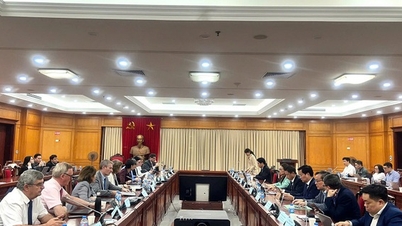
Regarding the discussion section, the Conference was divided into 6 scientific workshops corresponding to 6 thematic groups on sustainable development solutions associated with climate change adaptation, biodiversity, etc., attracting more than 100 scientists and managers to participate and offering many valuable directions and strategies for developing the Geopark model.
Sarah Gamble, a member of the Global Geopark Network Management Board of Canada, said: “I chose the workshop on investigating, assessing, preserving, and sustainably promoting the value of various types of heritage, with presentations from experts addressing methods for investigating the current state of geopark heritage to contribute to accurate assessment, strategy development, investment in conservation, and promotion of geopark heritage values.”
Ms. Do Thi Yen Ngoc (Vietnam Institute of Minerals and Geology) shared a paper on "Indigenous knowledge of the Tay and Nung ethnic groups in Lang Son province and community participation in the development of the Geopark," attracting many delegates, especially those from indigenous ethnic groups in Africa and North America.
Ms. Agness Onna Gidna, Director of the Tanzania Global Geopark Management Board, said: "Our Geopark has many tribes and ethnic groups that preserve their own customs and traditions, so the presentations at this session help us learn more about preserving the indigenous knowledge of ethnic minorities in the development of the Geopark."
The diverse cultural heritage of the Geopark
APGN-8 is also considered a unique cultural and heritage meeting point for the Geopark, as each participating delegation brings with them the distinct cultural identity of their respective countries to introduce and promote.
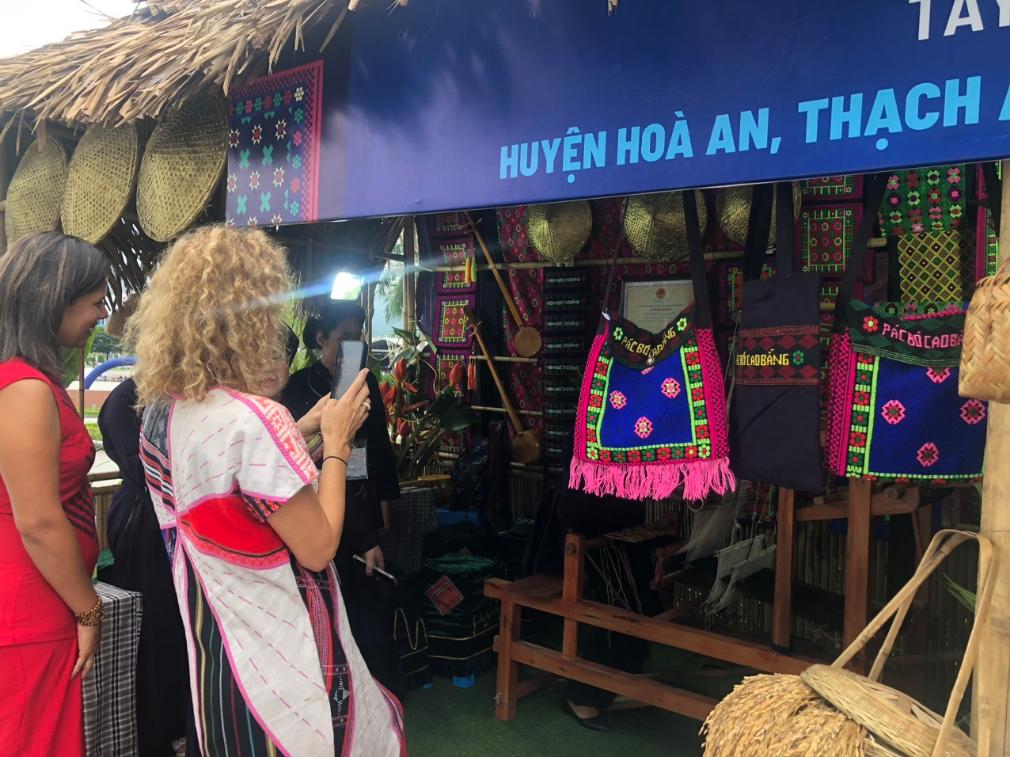
Cao Bang alone has more than 20 booths showcasing traditional handicraft products from villages specializing in brocade weaving, incense making, handmade paper, roof tiles, and many OCOP (One Commune One Product) products. Among them, the Cao Bang brocade display, featuring a variety of exquisitely designed handbags, scarves, wall hangings, and clothing, attracted a large number of delegates who came to visit and listen to presentations.
Luna, a Spanish fashion designer, excitedly shared: “For over 10 years, the allure of Vietnamese brocade has inspired me to design and organize successful brocade fashion events in Europe and Vietnam. At this conference, I also designed many shirts, dresses, and scarves made from brocade from Cao Bang and Ha Giang, and many European and North American customers came to buy them.”
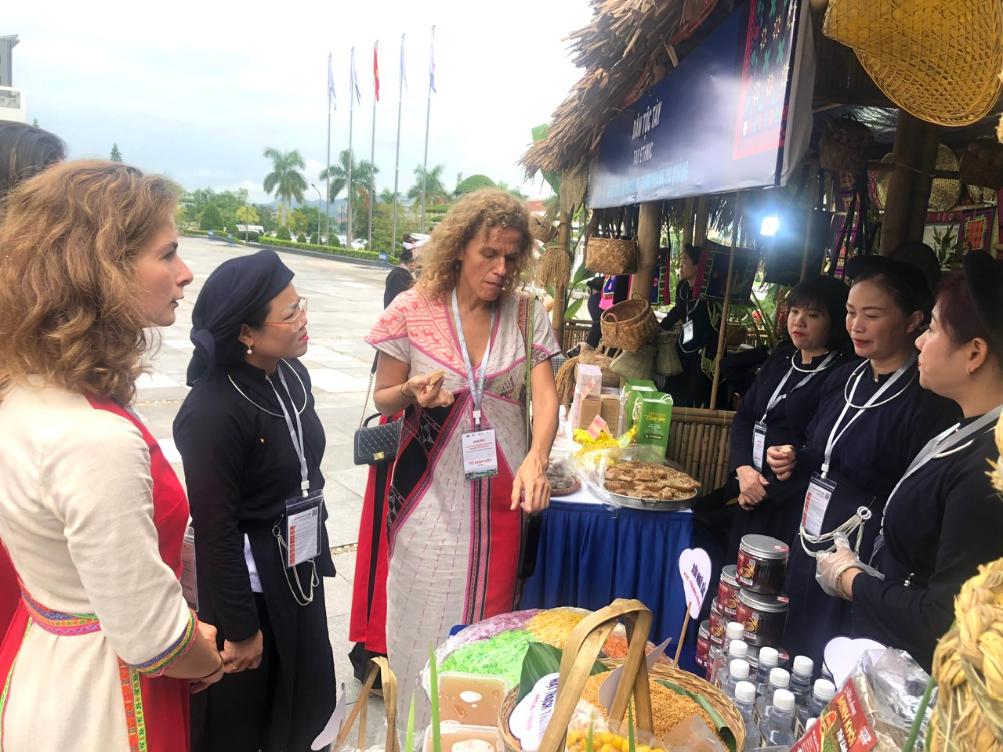
Cao Bang's OCOP products, such as Kolia tea, chestnuts, chestnut wine, banh chung (Vietnamese sticky rice cake), banh khao ( Vietnamese savory sticky rice cake), five-colored sticky rice, bee-shaped sticky rice, fragrant sticky rice, etc., have been praised by visitors for their delicious taste. Ms. Ranoria, a Global OCOP representative from Korat, Thailand, said: "I tried Kolia organic tea and found the taste and quality very good, so I bought 200 bags to give as gifts and introduce to distributors in Thailand ."
Sharing his thoughts on the allure of Cao Bang's cuisine, Paul (Management Board of Nannup Regional Geopark, Australia) enthusiastically said: "I've only recently arrived in Cao Bang, and although I haven't had the chance to experience it yet, I'm incredibly impressed by the delicious dishes like fragrant, sticky, colorful sticky rice, roasted pork, roasted duck, and beef with black pepper sauce... These dishes sparked our curiosity and prompted us to register to experience this land with its many beautiful landscapes where local farmers cultivate delicious sticky rice."
Mr. Sigit Tri Prabowo, a delegate from Indonesia, was very impressed with Cao Bang's culture: "Previously, I knew that Vietnamese Then singing and Tinh lute playing were recognized by UNESCO as representatives of the intangible cultural heritage of humanity. Coming to Cao Bang and watching young people perform these songs live, I was extremely impressed by the melodious, delicate, and sweet Then tunes that moved my heart… making me love Cao Bang even more."
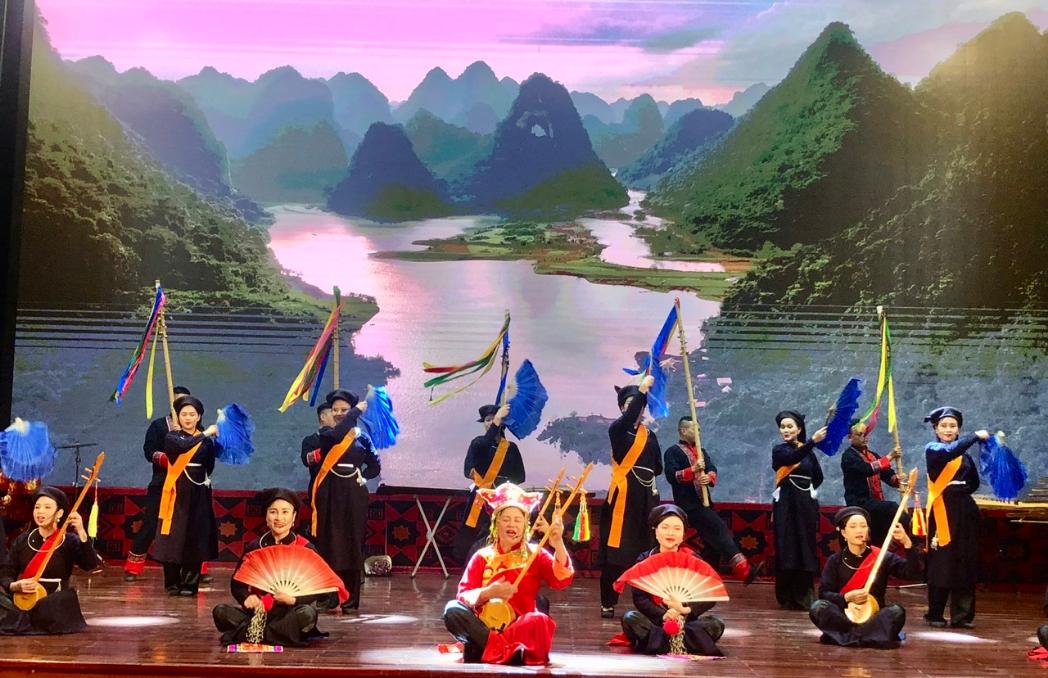
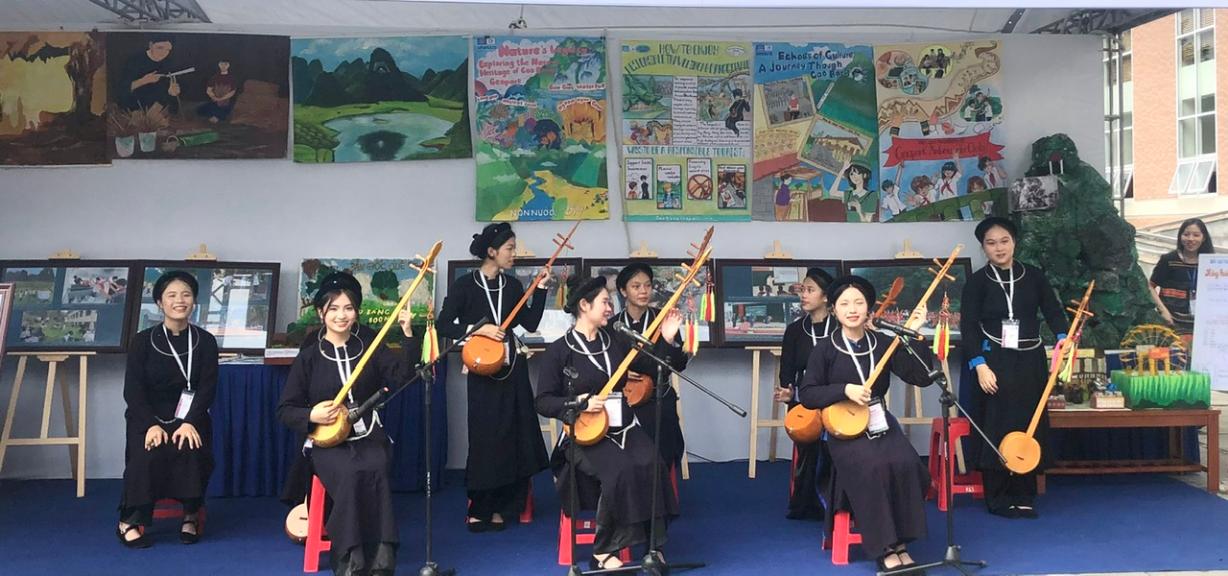
Besides Cao Bang, there are also booths from the Geopark of Ha Giang, Dak Nong, and Lang Son provinces showcasing products such as cinnamon, star anise, agarwood, and brocade…
Mr. Suk Chen Kang, Head of the Management Board of UNESCO World Heritage Sites in Jeju, enthusiastically stated: “Upon entering the Dak Nong Geopark booth, I was warmly welcomed. They tied a delicate brocade bracelet around my wrist and introduced it as a token of affection. After learning about the embroidery and weaving art of the Ede people living in the Central Highlands with its red basalt soil – a region with volcanic eruptions similar to those in Jeju Island (South Korea) – we developed a deep affection for Dak Nong and Cao Bang, two places that will become our destinations.”
Experiential activities showcasing the unique culture of the Cao Bang Geopark not only leave a lasting impression on domestic and international visitors but also open a bridge connecting geoparks across countries.

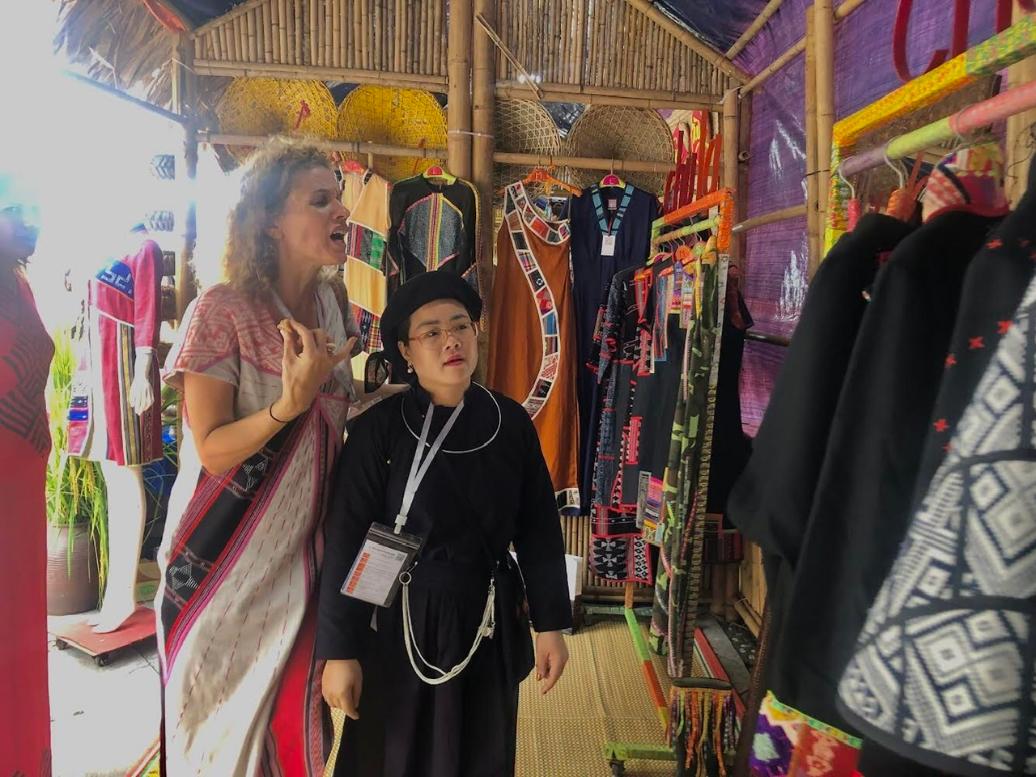
A bridge connecting and fostering tourism cooperation.
In addition to organizing scientific seminars and unique cultural exhibition spaces, APGN-8 also organizes experiential trips to Cao Bang so that delegates can learn more about community life and the heritage values preserved in the Cao Bang Geopark area.
Ms. Lidia Brito, Assistant Director-General of UNESCO for Natural Sciences, stated: "The Cao Bang Geopark is a treasure bestowed by nature, boasting majestic and poetic landscapes and unique cultural heritage rarely found elsewhere. In particular, the northern tour route, 'Journey to the Roots,' within the Cao Bang Geopark possesses significant heritage value of international significance, attracting numerous countries with geoparks to sign twinning agreements and tourism partnerships with Cao Bang."
Professor and Director of the Medungsan Geopark Management Board, South Korea, enthusiastically shared: “Five years ago, I came to Cao Bang to experience the eastern route themed “Experiencing the indigenous culture of a fairyland” and took many beautiful photos of the landscapes and lives of the Tay and Nung ethnic people. I brought them back to South Korea to introduce, impressing young Koreans who sought out the locations where I took those photos in Cao Bang. When I returned, they told me that they would regret it if they didn't visit Cao Bang in their lifetime because the scenery is even more beautiful in real life than in the photos. Today, I return to Cao Bang with the intention of promoting a sister-city relationship with the Cao Bang Geopark so that both sides can connect and share experiences in operating the geopark for sustainable development and promoting tourism.”
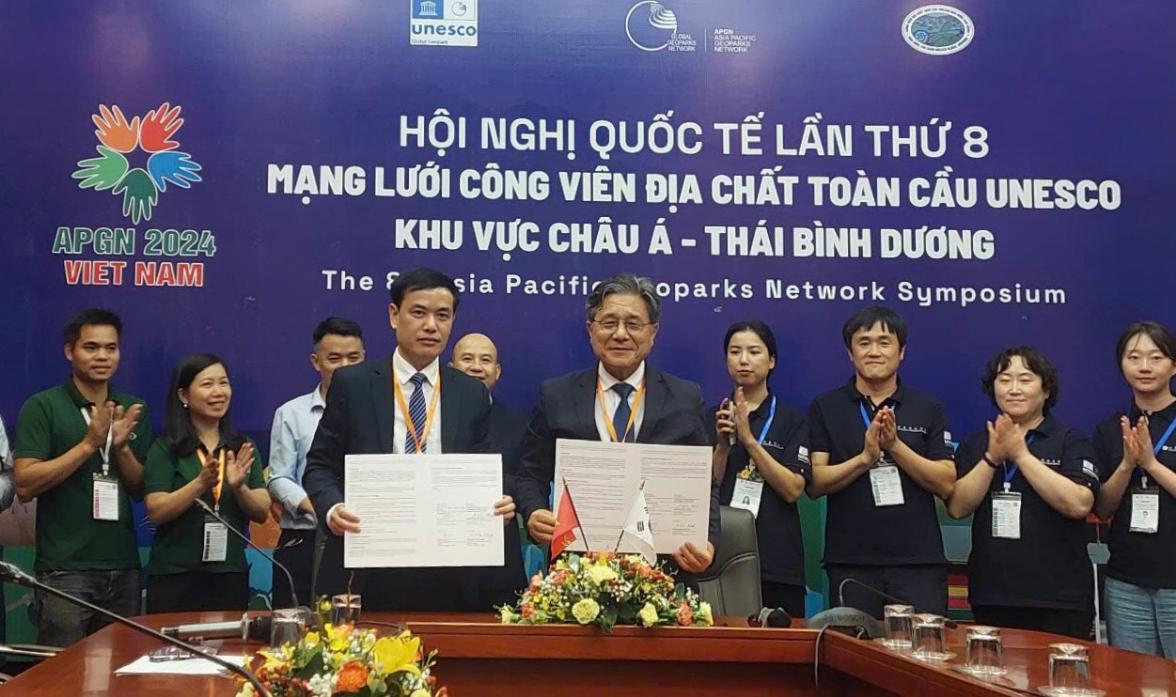
Notably, in addition to Medungsan Geopark (South Korea) signing a sister-park relationship with Non Nuoc Cao Bang Geopark, there are three other geoparks that have also signed sister-park relationships: Lac Nghiep - Phuong Son Global Geopark (China); Khorat Global Geopark (Thailand); and Haute Provence Global Geopark (France).
Also within the framework of the Conference, Dak Nong Global Geopark signed sister-park agreements with Jeju Island Global Geopark (South Korea) and Yangan-Tau Global Geopark (Russia). Several geoparks from China and Malaysia exchanged sister-park agreements to learn from each other's experiences and connect for tourism development…
Professor and Director of the Medungsan Geopark Management Board, South Korea, affirmed: "The APGN-8 conference is a bridge and an opportunity for our geopark to concretize the tasks of the Korean Government, which has signed many economic, cultural, and social cooperation agreements with the Vietnamese Government. Many Korean companies have large investment projects in Hanoi, Da Nang, and Ho Chi Minh City, and we are continuing to expand our reach to Cao Bang, promising Cao Bang as a new and promising destination in the near future."
Since the APGN-8 Conference, Cao Bang has had the honor of being a destination for UNESCO Global Geopark countries to exchange experiences, establish sister-city relationships, and connect tourism, contributing to strengthening solidarity among nations in preserving the Earth's heritage with greenery, peace, and happiness for humanity.


![[Photo] Prime Minister Pham Minh Chinh holds a phone call with the CEO of Russia's Rosatom Corporation.](/_next/image?url=https%3A%2F%2Fvphoto.vietnam.vn%2Fthumb%2F1200x675%2Fvietnam%2Fresource%2FIMAGE%2F2025%2F12%2F11%2F1765464552365_dsc-5295-jpg.webp&w=3840&q=75)


![[Photo] Closing Ceremony of the 10th Session of the 15th National Assembly](/_next/image?url=https%3A%2F%2Fvphoto.vietnam.vn%2Fthumb%2F1200x675%2Fvietnam%2Fresource%2FIMAGE%2F2025%2F12%2F11%2F1765448959967_image-1437-jpg.webp&w=3840&q=75)































![[OFFICIAL] MISA GROUP ANNOUNCES ITS PIONEERING BRAND POSITIONING IN BUILDING AGENTIC AI FOR BUSINESSES, HOUSEHOLDS, AND THE GOVERNMENT](https://vphoto.vietnam.vn/thumb/402x226/vietnam/resource/IMAGE/2025/12/11/1765444754256_agentic-ai_postfb-scaled.png)





































Comment (0)