



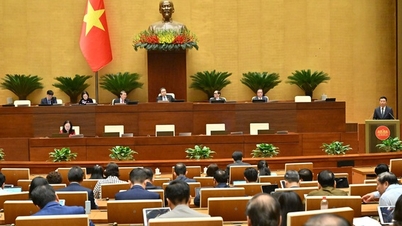
National Assembly Chairman Vuong Dinh Hue affirmed this when speaking to the press on the occasion of the 2024 Lunar New Year, about the milestones of innovation and the results of the National Assembly's activities in the past period, especially a series of "first-time" decisions in 2023.

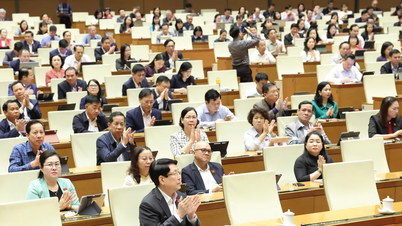
Over the past year, the National Assembly continued its proactive legislative spirit, fostering development and a long-term vision. In 2023, the National Assembly passed and commented on 46 draft laws and resolutions, including 15 draft laws, 12 resolutions, and comments on 19 other draft laws. At the 5th Extraordinary Session in early 2024, the National Assembly also passed two very important draft laws: the amended Land Law and the amended Law on Credit Institutions.
This is a record number of draft laws in two regular sessions and one extraordinary session, especially prioritizing laws in key areas that are crucial, highly feasible, create breakthroughs in socio -economic development, address immediate difficulties, and create conditions for sustainable national development and deep international integration.
National Assembly Chairman Vuong Dinh Hue stated that, for the first time, the National Assembly Party Committee, at the beginning of the term, proactively submitted to the Politburo a Conclusion on the program for drafting laws and ordinances for the entire term. Based on this, the National Assembly Standing Committee issued Plan 81 for implementation, clearly defining what to do, who will do it, and when to do it. This allowed for proactive research from an early stage and overcame the situation where necessary things were not yet available, while available things were not necessarily essential, or the situation of "waiting for others to provide" or a lack of long-term direction.
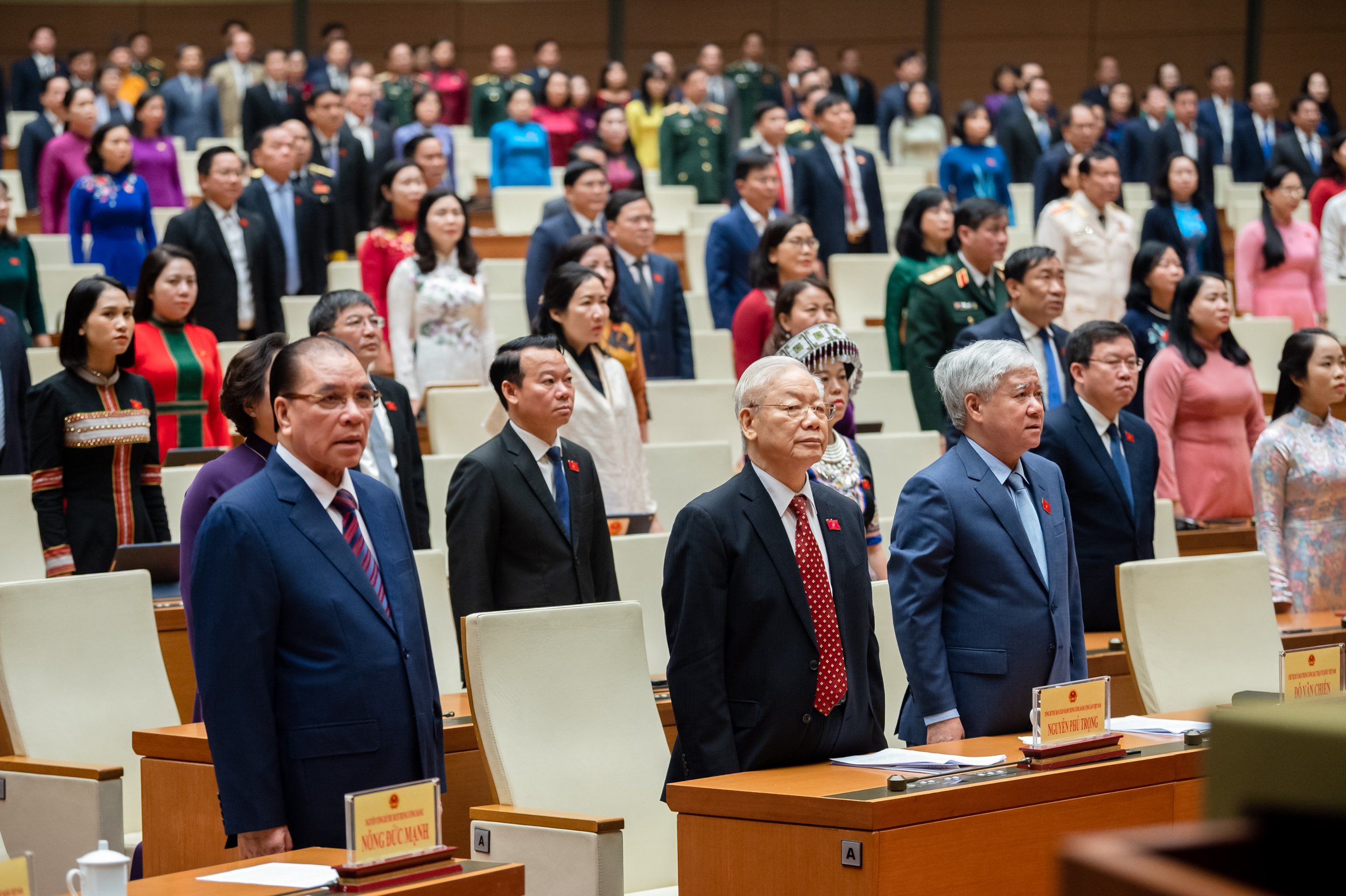
During the implementation process, based on practical experience, some tasks were added and some content was removed from the program, but overall, a plan was in place. This is a very valuable experience learned from previous terms and will likely continue to be applied to future terms. Therefore, even though it is only the middle year of the term, by the end of the 6th Session, the National Assembly had completed 114 out of 137 tasks, achieving 83.21% of the Plan 81.
In fulfillment of the requirement to "closely link lawmaking with law enforcement, ensuring that laws are implemented fairly, strictly, consistently, promptly, effectively, and efficiently," the National Assembly for the first time organized a conference to implement the laws and resolutions issued by the National Assembly from the beginning of the term to the end of the 5th session. Since the 6th session, this implementation has been carried out annually because "only when it becomes a regular practice can it be effectively enforced," contributing to overcoming the weakness in the implementation aspect.
According to the Speaker of the National Assembly, another highlight of the past year was the comprehensive review of the legal system. Overlapping, contradictory, and inadequate provisions exist, but the extent and nature of these issues must be clearly defined; we shouldn't blame the law for everything that cannot be done or is not done. Through Resolution No. 101/2023/QH15, the National Assembly assigned the Government to preside over and coordinate with relevant agencies to review the system of legal documents (from laws, ordinances, resolutions of the National Assembly and the Standing Committee of the National Assembly, decrees, circulars, etc.), focusing on 22 key areas and other areas with many obstacles raised by localities, citizens, and businesses.
The report presented to the National Assembly at its 6th session showed that the reviewed legal documents were fundamentally consistent with the Party's guidelines and policies, the provisions of the Constitution, and compatible with international treaties to which Vietnam is a signatory. More importantly, the identified problems and shortcomings were included in the term's work program for resolution, such as in the Law on Auctioning Assets, the Law on Housing, the Law on Land, etc.; and the subordinate legal documents were required to be rectified immediately.
“Vietnam is a developing country, and the need to amend and supplement the legal system to meet practical needs is perfectly normal. However, there cannot be overlaps, contradictions, or loopholes in the law to the point where officials cannot do their job,” Mr. Vuong Dinh Hue emphasized, adding that in 2024, a comprehensive review of administrative procedures will be conducted to examine the nature and extent of “sub-licenses.”
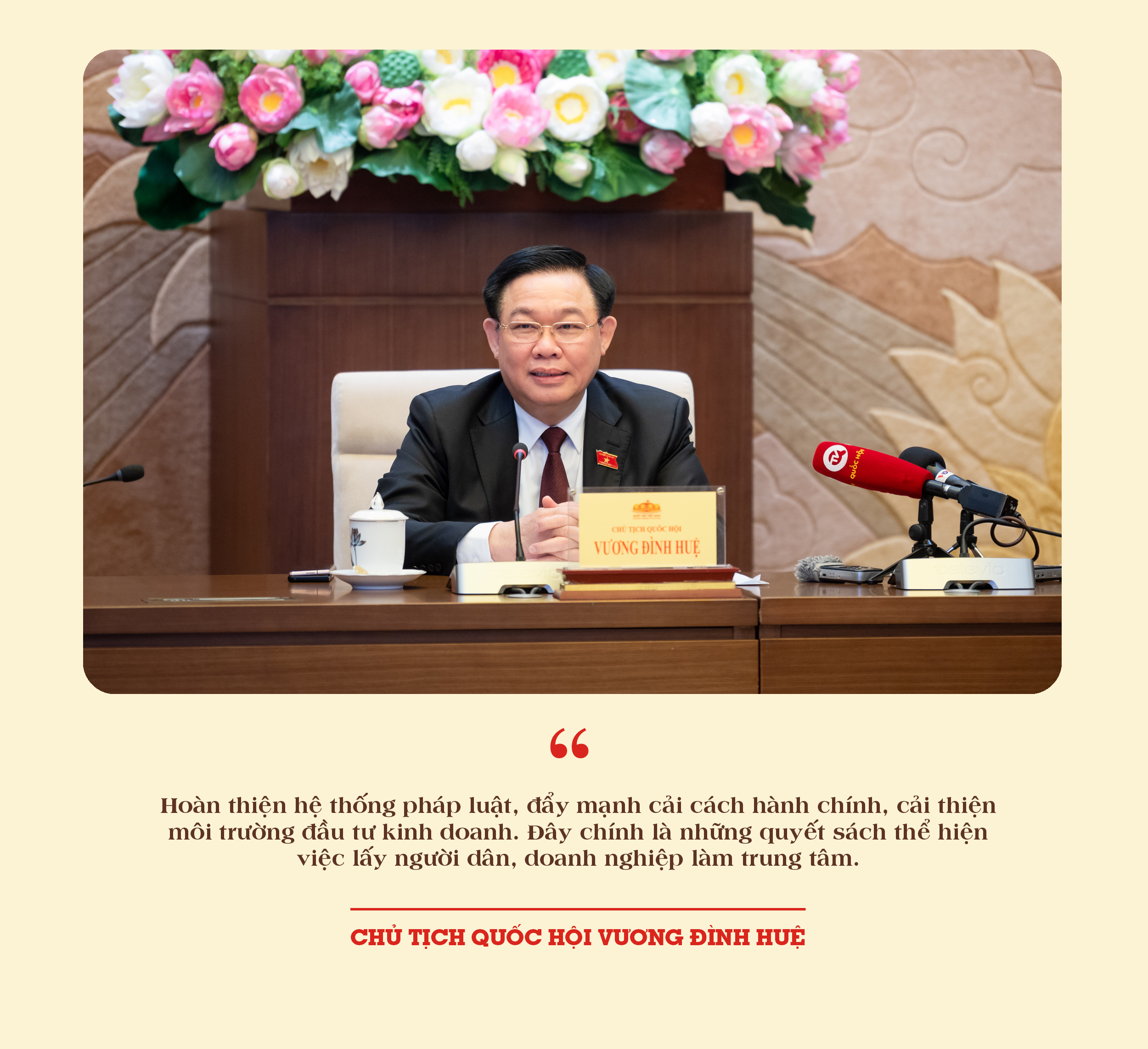
"Improving the legal system, accelerating administrative reforms, and enhancing the investment and business environment – these are policy decisions that demonstrate putting the people and businesses at the center," according to the Speaker of the National Assembly.

The supervisory work has remained consistent with the spirit of the General Secretary's assignment from the opening session of the 15th National Assembly, which emphasized that reforming supervisory work should be the central and key element in reforming the National Assembly's operations.
With a primary focus on perfecting the institutional framework for oversight, the National Assembly has devoted considerable effort and resources to promptly amending the Law on Oversight Activities of the National Assembly and People's Councils to make it more realistic, feasible, and substantive, thereby enhancing its capacity, effectiveness, and efficiency. The Standing Committee of the National Assembly has issued a resolution guiding the oversight work of the People's Councils, which is considered a valuable guide that resolves many difficulties at the local level.

The National Assembly Standing Committee is currently drafting a resolution guiding the implementation of accountability sessions at the National Assembly's Ethnic Council and other National Assembly bodies. "Strengthening accountability is essential for flexibility and relevance to real-life situations, especially regarding pressing issues. However, there are currently no guidelines, and many accountability sessions end without conclusions or resolutions, rendering them ineffective. Therefore, the National Assembly Standing Committee is determined to issue this resolution to empower the Ethnic Council and other National Assembly bodies," Mr. Vuong Dinh Hue emphasized.
In addition, the Standing Committee of the National Assembly is also focusing on coordinating efforts to revise the resolution on voter outreach by National Assembly and People's Council representatives to make it more substantive, thorough, and closer to the demands of life.
Elected bodies belong to the people and represent them, therefore, prioritizing the people is the key and core element. The 15th National Assembly made a breakthrough by considering citizen petitions on a monthly basis. In 2023, for the first time, the National Assembly discussed in the plenary session the results of monitoring the resolution of voters' petitions. This spirit has also created a new wave at the local level. Only then will the people place their trust in elected bodies.
"Some newspapers have also asked whether, when taking the oath of office, the Chairman of the National Assembly said that all policy decisions must put the people and businesses at the center, the National Assembly and the Chairman of the National Assembly have been doing so until now? I would like to report that everything mentioned above is geared towards the people and businesses," Mr. Vuong Dinh Hue expressed.

Then, the question-and-answer sessions became increasingly innovative and innovative. The question-and-answer session at the 6th Session was considered "innovative," "special," and even "unprecedented" in terms of the scope of the questions, the method of conducting them, and the nature of reviewing more than half of the term.
Regarding thematic supervision, it remains a bright spot, clearly demonstrating that supervision must also be constructive and developmental, focusing on monitoring what is happening rather than "post-auditing." The supervision process itself has created positive changes, and upon completion, these changes have been further strengthened. For example, the National Assembly has approved several specific mechanisms and policies to accelerate the progress of three national target programs.
"With that spirit in mind, in 2024, the National Assembly will exercise supreme oversight over real estate and social housing. Oversight is necessary only when the market is frozen; when it's operating normally, there's no need for it. The spirit is to oversee in order to foster development. As the saying goes, oversight requires close monitoring, and close monitoring requires oversight," the National Assembly Chairman emphasized.
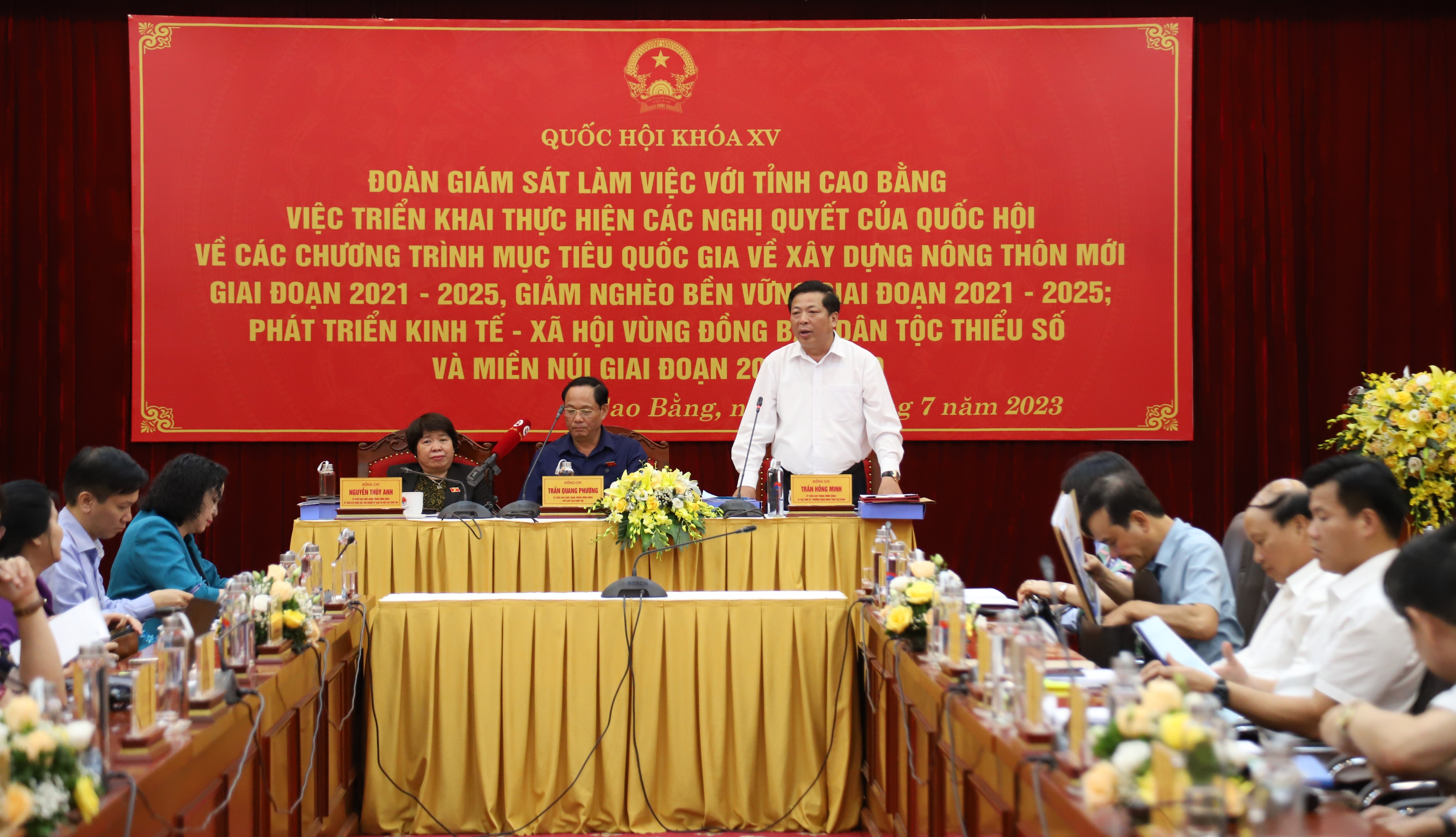
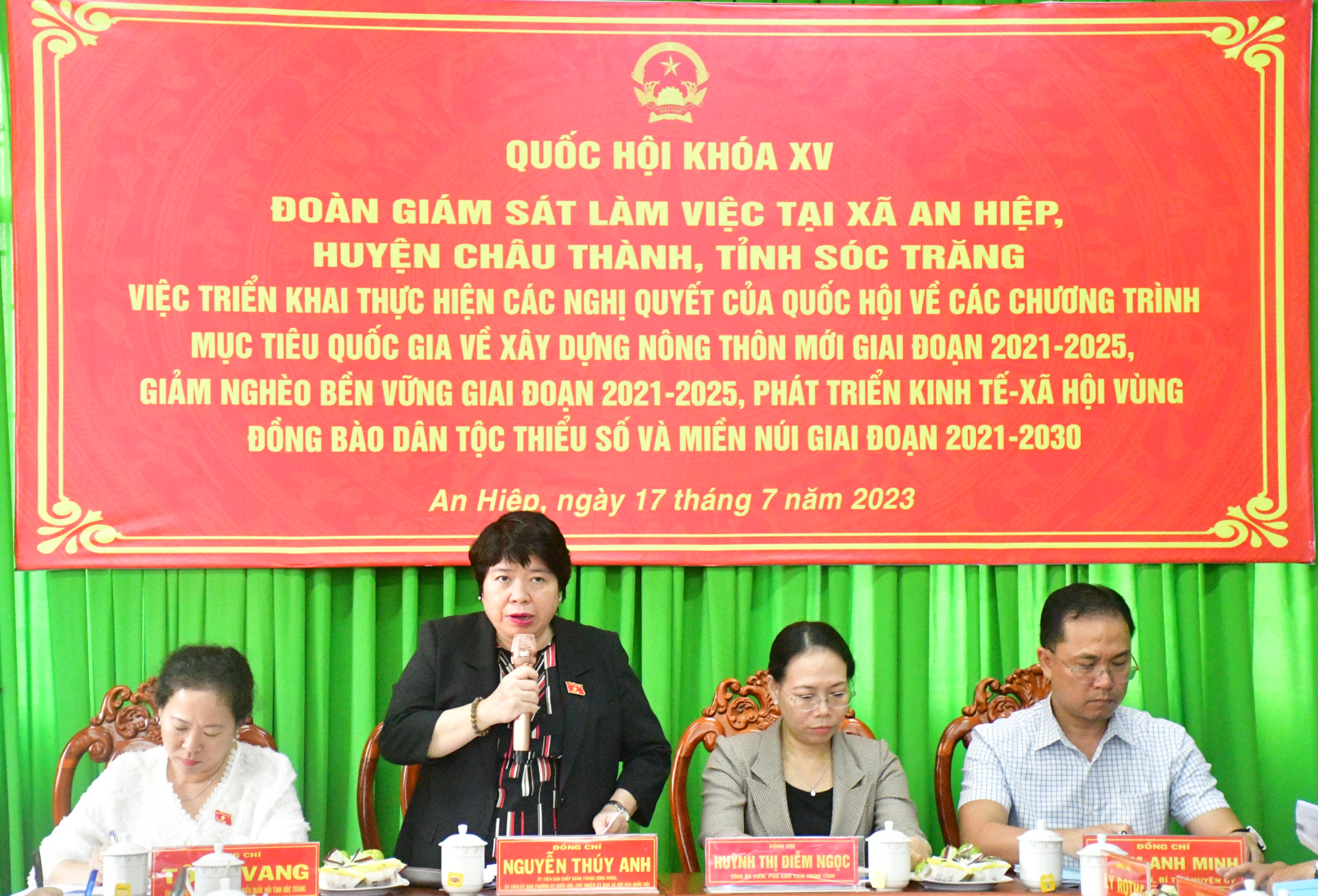
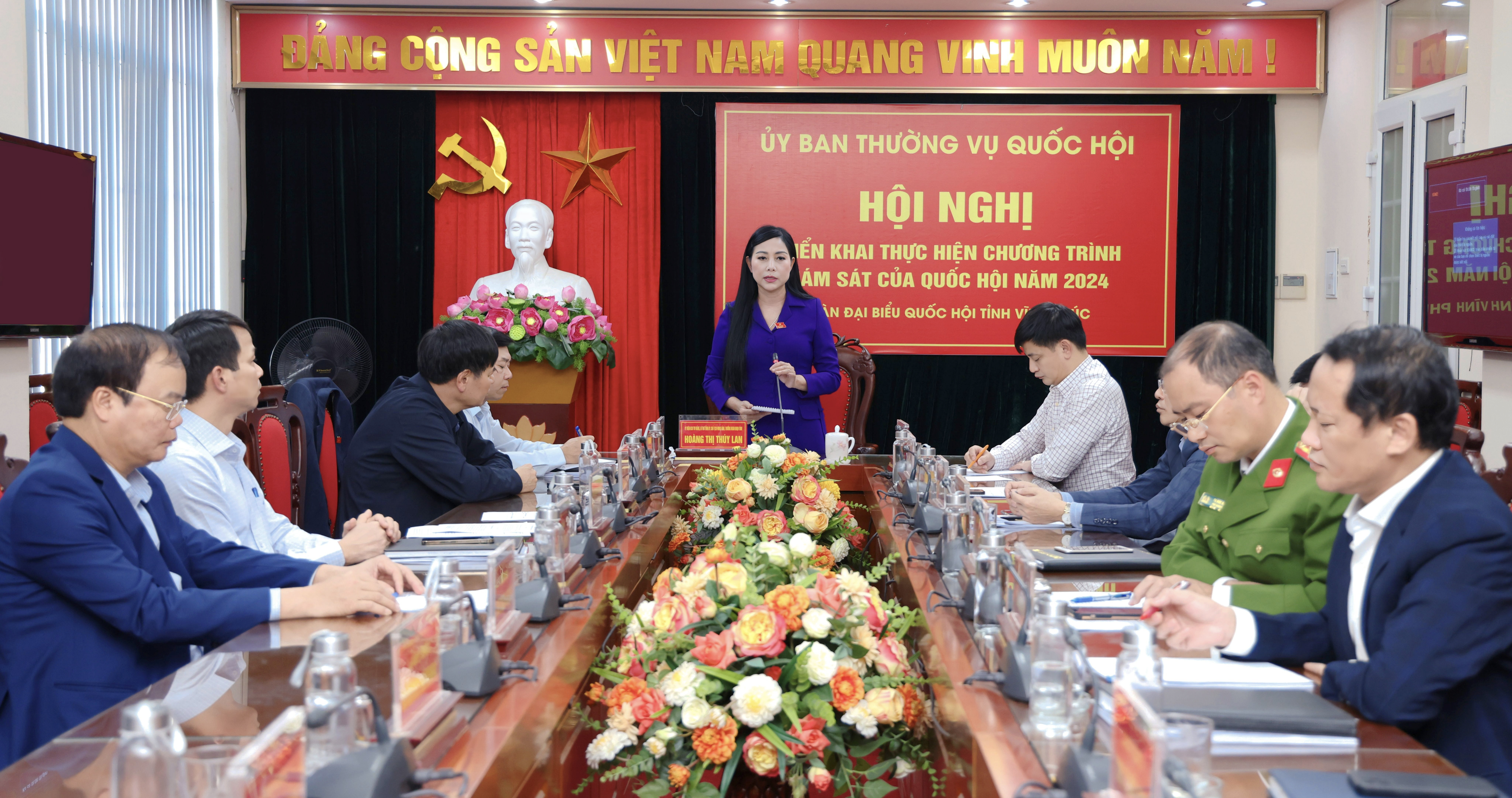

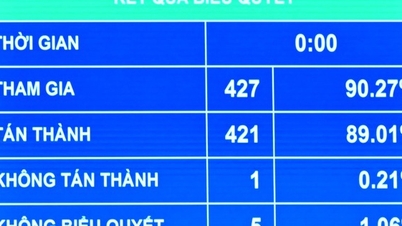
The recent decision by the National Assembly to allow unspent state budget funds for 2022 (including funds from 2021 carried over to 2022) to be extended into 2024 to continue implementing three national target programs is also unprecedented.
Explaining this, he argued that, on the one hand, tightening administrative discipline and order is not a fait accompli that must be followed, but rather, he felt that allowing time for allocation would be much better than canceling the budget and finding other sources of funding, which might create even more bottlenecks. Similarly, with the four nationally important projects, while rigidly canceling the budget and allocating funds elsewhere would be acceptable, the budget might take several years to develop, and determining the investment source would then be problematic…
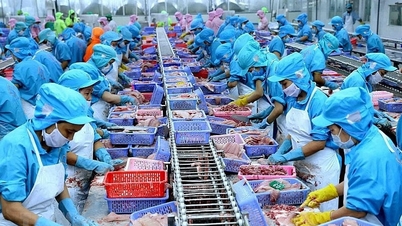
The National Assembly recently resolved to implement a comprehensive reform of the wage policy starting July 1, 2024. Emphasizing the significance of this decision, National Assembly Chairman Vuong Dinh Hue stated that the principle of people's participation is essential for the success of the reform process. He argued that if people do not benefit from the achievements of the reform, its meaning diminishes, not to mention the health and well-being of both people and businesses have been severely affected after the pandemic. Spending on human resources is also spending on development investment.

“When we announced that we have 560 trillion VND allocated for salary reform from 2024 to 2026, many countries were surprised. They said they thought Vietnam had spent all its money on highways. But that's not the case; each task is separate. 40% of increased central government revenue must be allocated to salary reform, while increased local government revenue should be split 50-50, with half set aside for salary reform. The Central Committee Resolution explicitly states this; there's no turning back. Only by persevering like this can we secure the necessary resources,” added National Assembly Chairman Vuong Dinh Hue.
Even as the 6th Session was underway, the National Assembly decided to adjust and add two draft resolutions to the 2023 legislative agenda for consideration within a single session, extending the National Assembly's working time by half a day. In particular, aiming to "ease the burden on the people," based on the Government's proposal, the National Assembly decided to continue implementing the value-added tax reduction to provide timely support to citizens and businesses.
“The National Assembly is now working together to resolve issues that are necessary for the national economy and people's livelihoods, based on the Government's proposals or by proactively discussing with the Government to make timely decisions. Recently, localities and ministries have expressed their joy using Buddhist terms, as the National Assembly recently resolved issues very correctly and effectively,” said National Assembly Chairman Vuong Dinh Hue.
However, the Speaker of the National Assembly also noted that, in addition to focusing on removing immediate bottlenecks and obstacles, it is always necessary to look at the fundamental, long-term issues. Institutional and policy development must adhere to the Party's guidelines and resolutions. Urgent issues that are mature, clear, and have received high consensus should be legalized and implemented; those that are urgent but not yet mature, clear, or have not received consensus should continue to be studied. Those approved by competent authorities should be piloted, but with specific scope, locations, and timeframes.
The achievements are considerable, but many difficulties and challenges still lie ahead. However, according to National Assembly Chairman Vuong Dinh Hue, opportunities always exist, especially with the foundation built over the past years, and sometimes we must turn "danger" into "opportunity," because "after the rain, the sun will shine again!"

Source


![[Photo] Explore the US Navy's USS Robert Smalls warship](/_next/image?url=https%3A%2F%2Fvphoto.vietnam.vn%2Fthumb%2F1200x675%2Fvietnam%2Fresource%2FIMAGE%2F2025%2F12%2F10%2F1765341533272_11212121-8303-jpg.webp&w=3840&q=75)



















































































Comment (0)