

The risk of a US government shutdown – which would disrupt White House services and leave thousands of federal employees unpaid – is increasing daily as US lawmakers have yet to pass a temporary budget for the fiscal year beginning October 1st.
If no agreement is reached by midnight on September 30th (Saturday) on funding for the new fiscal year, the U.S. government will have to shut down. Because the risk of a shutdown could become a reality over the weekend, its impact will not be seen until the work week begins on Monday (October 2nd).
Starting on September 22nd, the Office of Management and Budget has reminded senior officials in agencies to update and review their shutdown plans.
Financial pressure
Nearly 4 million Americans who are federal employees will feel the immediate consequences. Employees in sectors deemed “essential” will remain employed, but others will be furloughed until the government has the funds to reopen. No payments will be made to workers during the shutdown.
For many of them, the shutdown will put pressure on their own finances, just as happened during the record-breaking 35-day US government shutdown in 2018-2019.
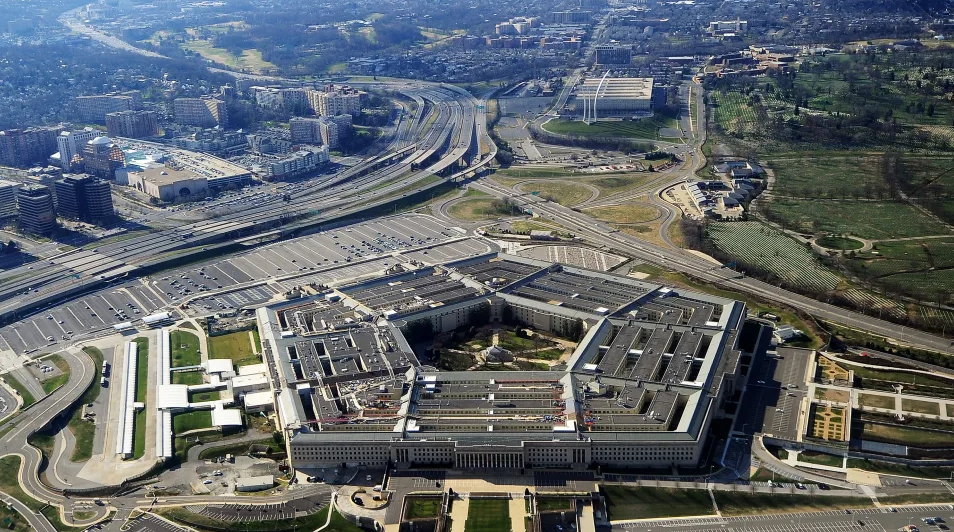
Although 2 million U.S. military personnel would continue in their duties, approximately half of the Pentagon's 800,000 civilian employees would be furloughed temporarily if the U.S. government shut down. Photo: CNN
“Back then, thousands of members across the country returned holiday gifts because they needed cash, couldn’t make mortgage payments, had to take out short-term loans, increased credit card debt, because they didn’t have a month’s paycheck,” said Doreen Greenwald, president of the National Treasury Employees Federation, which represents 150,000 employees at 35 agencies.
"They're standing in line at food banks, dropping their children off at daycare, unable to fill their cars with gas, and begging creditors for extensions. This is not how America should treat its employees," Greenwald said.
On average, members of the American Union of Government Employees earn $55,000-$65,000 per year, while hourly workers earn an average of $45,000 per year. But thousands of people earn just under $15 per hour, or $31,200 per year.
“Most of our members live on a monthly salary and can’t afford to miss a payday, let alone more,” said Everett Kelley, president of the American Federation of Government Employees. “That’s why we’re calling on Congress to do its job and pass the budget to prevent a government shutdown.”
Unpaid leave
Although 2 million U.S. military personnel will continue to perform their duties, approximately half of the Pentagon's 800,000 civilian employees will be temporarily furloughed. Contracts completed before the U.S. government shutdown will continue, and the Pentagon can still place new orders for supplies or services to ensure national security.
The National Nuclear Security Administration of the U.S. Department of Energy will maintain nuclear weapons. According to the U.S. Department of Justice 's 2021 contingency plan, agents from the FBI, the Drug Enforcement Administration (DEA), and other federal law enforcement agencies will continue to work alongside prison personnel.
All criminal prosecutions, including two federal cases against former President Donald Trump, will also proceed. However, most civil lawsuits will be postponed.
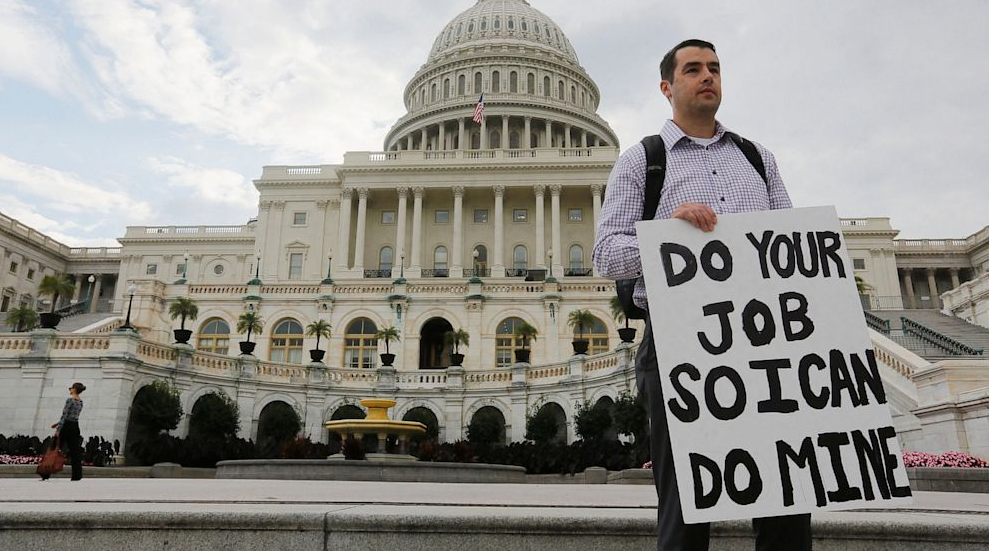
A furloughed federal employee holds a sign on the steps leading to the Capitol building after the U.S. government shutdown on October 1, 2013. Photo: ABC News
Border patrol, immigration control, and customs officials will continue to work as per the U.S. Department of Homeland Security's 2022 plan. Consumer protection officers from the Federal Trade Commission will be temporarily furloughed.
Federal courts will likely have enough money to continue working until October 13th. The Supreme Court will also continue working. Air traffic controllers and airport security personnel will continue working.
U.S. embassies and consulates will likely operate according to the State Department's 2022 closure plan. Passport and visa processing will also continue as long as sufficient funding is available to cover operations.
Most employees of agencies such as the National Institutes of Health, the National Science Foundation, and the National Oceanic and Atmospheric Administration (NOAA) will likely be furloughed without pay.
The International Space Station (ISS) will continue to receive support from the National Aeronautics and Space Administration (NASA), and the agency will continue to monitor the satellites; however, they will have to furlough 17,000 of their 18,300 employees.
The Centers for Disease Control and Prevention (CDC) will continue to monitor the outbreak, but other public health activities may be affected as more than half of the agency's staff are likely to be furloughed temporarily.
Short-term agreement
A US government shutdown could also have significant economic impacts because the Bureau of Labor Statistics has indicated it will stop releasing data, including key figures on inflation and unemployment. The lack of crucial government data would make it difficult for investors and the Federal Reserve to assess the state of the US economy.
According to 2021 guidance, the Small Business Administration will not provide new loans to any businesses, and the Commodity Futures Trading Commission “will cease most of its activities,” including market supervision.
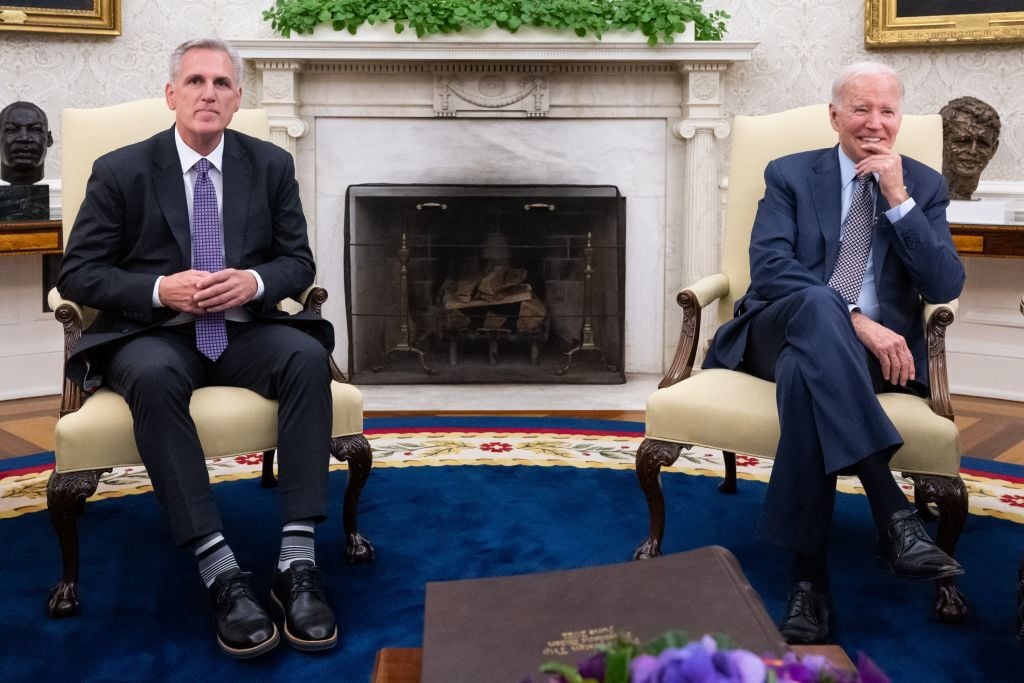
US House Speaker Kevin McCarthy (Republican) and US President Joe Biden (Democrat). Photo: Bloomberg
Currently, there is a deep divide between the House and Senate, making it difficult to reach a consensus on the year's spending bill. Hardline conservative lawmakers in the House have called for deeper spending cuts and proposed controversial additional policies, which have been rejected by Democrats as well as some Republicans.
As the deadline approaches, leading bipartisan lawmakers are hoping to pass a short-term funding extension, known as a continuation resolution (CR). The U.S. government frequently uses these short-term measures as a temporary solution to avoid a shutdown and buy time to reach a broader, full-year funding agreement.
U.S. House Speaker Kevin McCarthy, a Republican, said he believes he can prevent a government shutdown, but it remains unclear whether he can secure enough votes to proceed with his plan.
The US House of Representatives is expected to convene on September 26th. There, McCarthy hopes to focus on a short-term spending agreement, covering two weeks to two months, to maintain government funding while negotiations continue .
Minh Duc (Based on CNN, Reuters, WSJ)
Source
































































































Comment (0)