

Professionalizing the workforce in line with new trends in labor relations.
Looking back over the past five years, the development of a strategy for training full-time trade union officials has seen significant progress at many levels, both in terms of awareness and implementation methods.
While in previous periods, cadre training was sporadic or in batches, this period sees units adopting a more systematic, long-term approach, closely linked to the requirements for reforming trade union organization in accordance with Resolution 02-NQ/TW dated June 12, 2021, of the Politburo on "Reforming the organization and operation of the Vietnam Trade Union in the new situation" and the need to professionalize the workforce in line with the new trends in labor relations.
Many localities, sectors, and corporations have proactively issued long-term plans, specific projects, or phased training programs, which define overall objectives, targets to be achieved, key tasks, and implementation solutions.
For example, the Lao Cai Provincial Federation of Labor has issued Plan No. 52/KH-LĐLĐ along with a project to develop a team of full-time trade union officials, setting requirements for standardizing and improving the comprehensive skills of officials in the context of the province's accelerated industrialization and expansion of industrial zones.
Similarly, the Vietnam Education Union has developed a modular training program, grouping content according to each field of work and each level of the union, helping officials have a clear and scientific learning path.
Meanwhile, the Vietnam Airlines Corporation Trade Union maintains and develops Program 583/CTr-CĐTCTHK, continuing to refine it in the 2023-2028 period with specific requirements of the aviation industry, emphasizing safety capabilities, situation handling, and coordination in a high-risk environment.
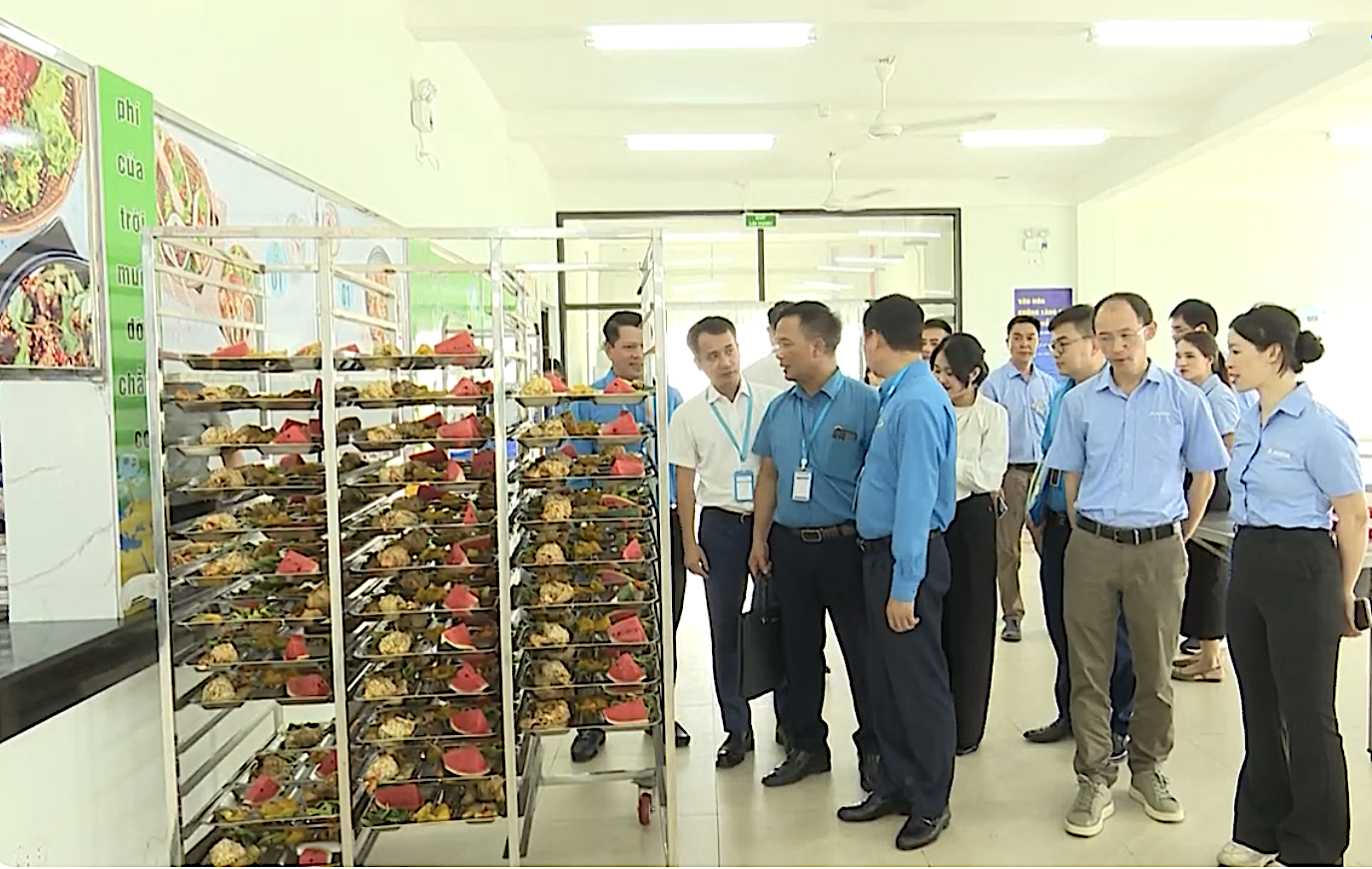
Emphasis is placed on training according to plans, roadmaps, and competency standards.
A notable point during this period was the close connection between training and personnel management. Many units considered training a mandatory requirement for personnel planning, personnel appointments, and annual personnel evaluations.
Standardizing job title standards is also a focus for many units, with initial steps taken to develop competency frameworks for key positions. Some localities have implemented models for assessing staff competency based on core skill groups. These models not only support training but also help to screen and classify staff, thereby identifying more realistic training needs.
Furthermore, training strategies in many units are developed to align with the specific characteristics of their respective industries, sectors, or geographical areas. Provincial Labor Federations in mountainous regions focus on training ethnic minority cadres and trade union officials in small and micro-enterprises. This demonstrates a flexible approach, avoiding uniformity in training, and applying Resolution 10b/NQ-BCH to the specific conditions of each sector.
Another significant step forward is that many units have proactively forecasted their staffing and training needs for the next 5-10 years, especially the needs of staff in the non-state sector. This proactive approach helps training move away from reactive demands and towards a competency-based and needs-driven approach.
In addition, some units have strengthened their training partnerships with universities, research institutes, and international organizations. This helps to update training programs more quickly, access modern models, and expand training content to meet international standards.
The above observations show that the strategy for training cadres in the 2020-2025 period has undergone a fundamental transformation, shifting from training in classes and batches to training based on plans, roadmaps, and competency standards.
Lan Chi
Source: https://vietnamnet.vn/cong-doan-viet-nam-chu-trong-xay-dung-doi-ngu-can-bo-chuyen-trach-2471912.html








































































Comment (0)