

Speaking at the European Regional Trade Counselor Conference held in Italy, Mr. Nguyen Anh Son, Director of the Import-Export Department ( Ministry of Industry and Trade ), stated: Over the years, the logistics service industry has made significant contributions to import and export activities, making Vietnam an important link in the global supply chain. Import and export activities have become a bright spot due to their exceptional growth rate compared to previous periods. Vietnam's total import and export turnover increased from US$428.1 billion in 2017 to US$681.1 billion in 2023, with an average growth rate of approximately 8.4% per year for the entire period from 2017 to 2023.
In 2023, total bilateral trade between Vietnam and Europe (including both EU and non-EU countries) reached US$71.15 billion, a decrease of approximately 4.4% compared to 2022 (US$74.28 billion). Of this, Vietnam's exports to Europe reached US$52.22 billion, a decrease of 4.7%; while Vietnam's imports from Europe reached US$18.93 billion, a decrease of 2.7%.
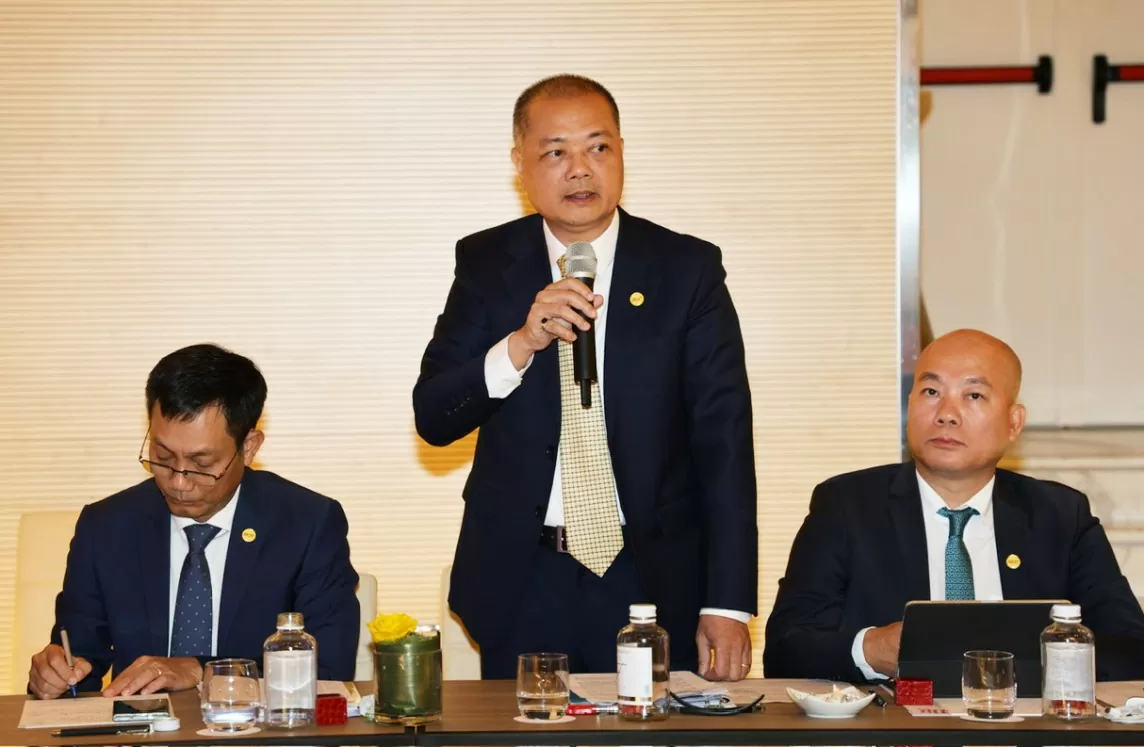 |
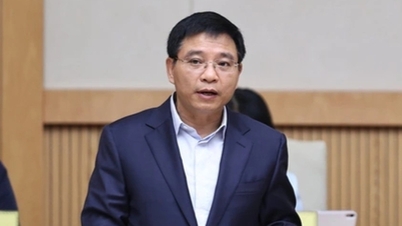
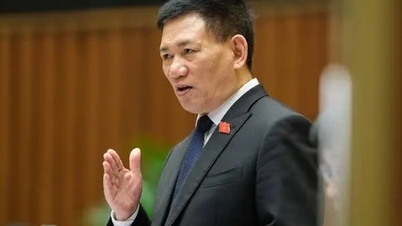
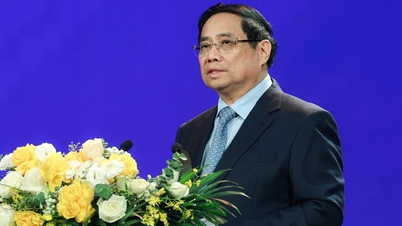
| Mr. Nguyen Anh Son, Director of the Import-Export Department, delivered a speech at the Conference of Commercial Attachés in the European region. |
In recent years, Vietnam has been undergoing a strong transformation to become a major global manufacturing hub. Vietnamese businesses produce a wide variety of goods, offering competitive prices and increasingly improved quality. Simultaneously, following the pandemic and recent geopolitical and economic uncertainties, many corporations and retail and wholesale distribution channels are accelerating diversification strategies to ensure sustainable supply sources and have chosen Vietnam as a strategic location in their global supply chains.
However, according to the Director of the Import-Export Department, Vietnam's import and export activities have recovered but continue to face difficulties due to instability in the Red Sea, the Russia-Ukraine war, escalating tensions between Israel and Iran in the Middle East, and other unpredictable factors that have caused freight rates and surcharges to skyrocket, a shortage of empty containers, and congestion at some major international transshipment ports. This truly necessitates targeted and practical support solutions to assist Vietnamese businesses' import-export and logistics operations.
In this context, to mitigate the negative impacts of geopolitical instability on import and export activities and the transportation of goods from Vietnam to the EU, and to maintain a sustainable supply chain, the leaders of the Import-Export Department have suggested several solutions, as follows:
First, stabilize shipping rates and maritime surcharges.
Shipping companies are strictly complying with Vietnamese laws and regulations, especially those concerning the listing and public disclosure of freight rates. They are not imposing unfounded or excessively high fees and surcharges that negatively impact import and export activities. Increased supervision of maritime transport businesses and container shipping service providers is being implemented to ensure compliance with regulations regarding the listing of prices and surcharges beyond the standard container shipping rates.
Strengthen the management of port and maritime transport operations, and support import and export businesses during periods of high freight rates. Actively work with industry associations, logistics associations, shippers' associations, and shipowners' associations to enhance capacity and bring member businesses together to develop production and business plans, transportation plans, and import and export plans as a basis for signing long-term contracts with shipping lines, minimizing the impact of freight rates and surcharges in the current period of complex and unpredictable international market conditions.
Secondly, rerouting goods and creating alternative routes.
Besides the current sea routes, businesses importing and exporting to Europe can consider alternative routes, for example, a rail link from Vietnam through China, Russia, and Belarus to Europe. Alternatively, they can consider a combined multimodal transport route, traveling by sea to ports in the Middle East, then transferring to Europe by air, rail, or road.
Thirdly, enhance the utilization of the benefits of FTAs.
With its multilateral and open foreign policy, Vietnam is becoming one of the most open economies and a major global manufacturing hub, with 17 Free Trade Agreements (FTAs) currently in effect, including the EVFTA and UKVFTA. However, the utilization rate of FTA benefits is still not commensurate with its potential. Promoting diversification of supply sources, prioritizing those from FTA partner countries and countries sharing international treaties, is crucial. Ministries and agencies need to strengthen administrative procedure reduction, simplify and digitize specialized inspection procedures, and enhance trade facilitation to increase the utilization rate of FTAs in the import and export activities of Vietnamese businesses with Europe. Organizing numerous conferences and seminars to disseminate information about the benefits of the EVFTA and UKVFTA is also essential.
Fourth, address the backlog of goods and procedures related to import and export goods.
The process of clearing accumulated cargo to free up warehouse space at seaports is a long-standing issue. Allocating funds for this task is difficult, procedures are lengthy, and funding is not regularly provided. It is necessary to expedite the process of clearing accumulated cargo and to add regulations allowing port enterprises to temporarily advance funds for handling accumulated cargo at the port, with the funds recovered after the completion of the liquidation sale of the accumulated cargo.
Fifth, support training and capacity building in negotiating sales and insurance contracts for small and medium-sized enterprises.
Strengthening communication and improving the capacity of small and medium-sized import-export enterprises in negotiating and signing foreign trade contracts and insurance contracts is crucial to protecting businesses against risks and losses in the event of incidents, especially for goods transported by sea through routes affected by complex and unpredictable incidents today.
Sixth, develop a prevention and rapid response plan.
Government agencies, associations, and import-export businesses should proactively develop prevention and response plans to minimize risks, damages, and losses from similar complex and unpredictable incidents in the future.
Develop emergency response plans, diversify supply sources and transportation routes to minimize risks. Develop a strategy for diversifying the supply of raw materials and fuels for the economy by industry and sector; gradually eliminate dependence on a few markets, in order to maintain production in the event of supply chain disruptions and geopolitical instability.
Seventh, improve the mechanism for managing port prices and surcharges to strengthen the management of various surcharges at Vietnamese seaports.
Eighth, adjust development plans and overall strategies for production and business in each region, industry, and sector when there are changes in the content of economic liberalization, globalization, global supply chains, the return of protectionism, and unpredictable uncertainties occurring with greater frequency.
Simultaneously, it is necessary to build and effectively implement an independent and self-reliant economic strategy to enhance resilience and competitiveness; to adapt flexibly and effectively to fluctuations in the international, regional, and domestic situations. Difficulties and obstacles related to mechanisms and capital must be removed to develop a maritime transport fleet with sufficient capacity to participate in the long-haul transport segment, expanding to other continents, in line with international maritime transport trends.
Ninth, international cooperation
Strengthen international cooperation with European partners to share information and technology, and jointly develop sustainable standards and regulations.
Build a team of compliance experts and collaborate closely with regulatory agencies to ensure full compliance with standards. Strengthen international cooperation agreements with certification, accreditation, and consulting organizations on standards, product quality, and food safety and hygiene.
Tenth, the application of high technology.
Utilize artificial intelligence (AI) and machine learning to predict and manage risks in the supply chain. Provide financial support and skills training programs to enable businesses to easily access and adopt new technologies.
Providing financial support and skills training programs will enable businesses to easily access and adopt new technologies.
Eleven is green infrastructure development.
Develop green infrastructure such as warehouses that utilize renewable energy, water recycling systems, and efficient waste management.
Twelve is human resource training and development.
Research and prepare the necessary infrastructure and workforce to anticipate, participate in, and develop new types of products and services in line with changing global supply chain trends. Invest in training employees in sustainable supply chain management and technological skills to enhance efficiency and sustainability.
Providing financial support and skills training programs will enable businesses to easily access and adopt new technologies.
By addressing these challenges strategically and effectively, building sustainable supply and logistics chains in the import and export of goods with the European region will become more feasible and contribute to global sustainable development.
Source: https://congthuong.vn/cuc-truong-xuat-nhap-khau-goi-mo-giai-phap-xay-dung-chuoi-cung-ung-logistics-ben-vung-sang-chau-au-333626.html


![[Image] Close-up of the newly discovered "sacred road" at My Son Sanctuary](/_next/image?url=https%3A%2F%2Fvphoto.vietnam.vn%2Fthumb%2F1200x675%2Fvietnam%2Fresource%2FIMAGE%2F2025%2F12%2F13%2F1765587881240_ndo_br_ms5-jpg.webp&w=3840&q=75)




































































Comment (0)