

Merging provinces, abolishing district-level administration, and expanding commune-level government are essential. This is also to serve the people, and the new system will certainly be better than the old one...
Associate Professor Dr. Nguyen Thuong Lang - Senior Lecturer at the Institute of International Trade and Economics , National Economics University - had an exchange with a reporter from the Industry and Trade Newspaper regarding this issue.
The space for growth must be larger.
-Sir, following the Politburo 's Conclusion No. 127-KL/TW dated February 28, 2025, the Standing Committee of the Government Party Committee held two meetings to discuss the plan for rearranging and reorganizing administrative units at all levels and establishing a two-tiered local government. The Steering Committee for the implementation of the plan has also been officially established and has held its first meetings. It is expected that after the rearrangement, the whole country will only have about 30 provinces and approximately 2,000 communes. What is your view on this matter?
Mr. Nguyen Thuong Lang: The story of merging or splitting provinces in Vietnam is not a new issue. Previously, we had provinces like Binh Tri Thien, Nghe Tinh, Hoang Lien Son, and Quang Nam - Da Nang. Or, like the present-day provinces of Ninh Binh, Ha Nam, and Nam Dinh, which were separated from the former Ha Nam Ninh province. After these previous mergers and splits, this merger will provide us with valuable experience in implementation.
 |
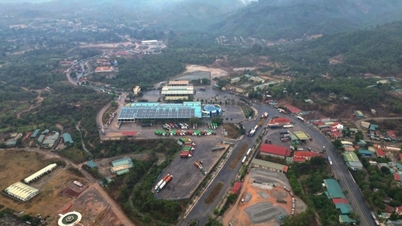
| Bac Kan province failed to meet all three minimum standards regarding area, population, and the number of subordinate district-level units. |
I believe that for a country to thrive, it needs a large space for development, and this space for administration must also be large. Currently, we are in a flat world, with digital technology, online platforms, online information, VNeID, cyberspace, etc., which will help to handle administrative management issues quickly and efficiently.
In fact, in some countries, a province is even larger than the entire country of Vietnam, and they still manage it effectively. Therefore, we cannot allow a province to be too small... Maintaining the old administrative management mechanism will result in a cumbersome management apparatus, hindering rapid progress because the system is "too heavy," requiring approval through many layers and intermediate levels. Therefore, under current conditions, to progress quickly, we must streamline. A major revolution in streamlining the local administrative apparatus is necessary.
Here, I believe we should only change the administrative apparatus, streamline the system, and eliminate unnecessary intermediaries that waste people's time and money. This is also to serve the people. This is a time when we desperately need to do this, and we should boldly take action.
The new will definitely be better than the old.
- Merging provinces, abolishing district-level administration, and expanding commune-level government are necessary. To ensure the effectiveness of this implementation, what recommendations do you have?
Mr. Nguyen Thuong Lang: I think that when the Politburo and the Secretariat issued the policy, they must have had certain plans in mind and conducted extensive research.
Currently, we also have many favorable factors for implementation. These include the application of advanced and modern achievements of the fourth industrial revolution, digital transformation, the development of the digital economy, digital society, and digital citizenship, which are being strongly, decisively, and effectively implemented in practice. This will be an important prerequisite for our country to merge provinces, abolish districts, expand communes; implement a two-tiered local model; and not affect the cause of national development and defense.
It is also through this digital technology that we can measure the changes in economic development conditions, people's living conditions, business development, transportation systems, etc., of the merged provinces, and see that the new is better than the old, and specifically how it is better.
 |
| Economist, Associate Professor Dr. Nguyen Thuong Lang. Photo: NH |
Some have expressed concerns that the process of merging provinces, abolishing districts, and expanding communes may create certain disruptions to social welfare. However, these issues will also be addressed using digital technology.
For example, with administrative procedures, I believe that using cyberspace is a way for us to build a paperless strategy. We need to encourage large corporations to participate in providing this service.
Standardized forms for official documents should be created in advance, and when needed, the information can simply be filled in. The government agency that issues these documents will handle the processing for the people, as this information is already fully recorded in the records of the relevant agencies. This will minimize disruptions to social welfare.
No area should be missed, no 'battlefield' should be left undefended.
-According to the plan, the proposal to merge provinces, abolish district-level administration, and expand commune-level government will be submitted to the Central Committee of the Party before April 7, 2025, which is just over a month after the Politburo issued Conclusion 127.... In your opinion, how should this roadmap be implemented?
Mr. Nguyen Thuong Lang: Since March 1, 2025, the restructured, streamlined, and merged government apparatus has become operational. The government's organizational structure comprises 14 ministries and 3 ministerial-level agencies. The fact that these ministerial agencies have become operational according to plan, ensuring continuity in state management, clearly demonstrates the spirit of "The Party has directed, the Government has agreed, the National Assembly has concurred, the people have supported, and the nation has expectations – we should only discuss and act, not retreat."
In the revolution to streamline the local government apparatus, specifically the merger of provinces, the elimination of districts, and the expansion of communes, I believe that with a scientific, optimized approach, a clear roadmap, and the highest level of determination, we will certainly succeed.
This merger, in my opinion, is primarily about administrative procedures and paperwork. For a long time, we've been working with paper documents, but now we're shifting to online operations. Besides that, we already have population data and land ownership documents in state records. The task now is to resolve the remaining issues that haven't been processed yet; this volume isn't too large, only about 15-20%.
Here, we are merging provinces together, and we already have established boundaries. Of course, in this transitional phase, we must appoint leaders to guide this process scientifically.
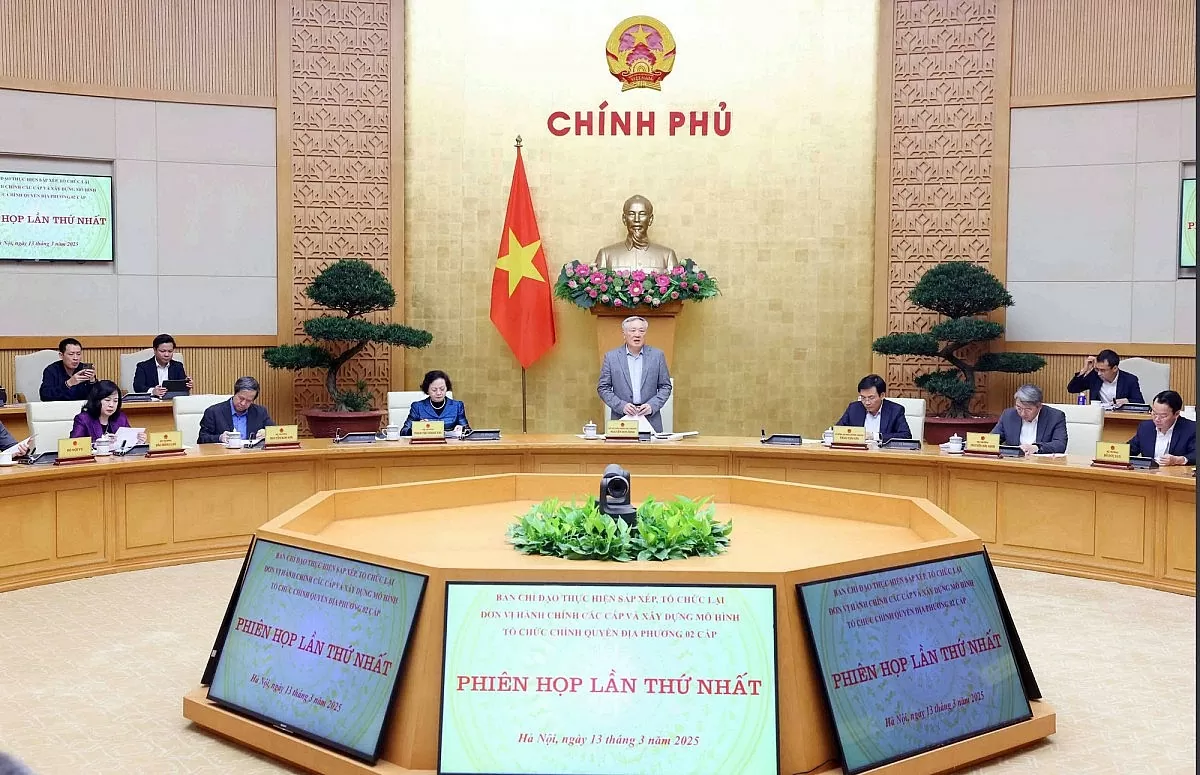 |
| Permanent Deputy Prime Minister Nguyen Hoa Binh chaired the first meeting of the Steering Committee for the implementation of the rearrangement and reorganization of administrative units at all levels and the construction of a two-tiered local government organizational model. Photo: VGP/Dinh Hai |
Recently, the Prime Minister signed Decision No. 571/QD-TTg dated March 12, 2025, establishing the Steering Committee for the implementation of the rearrangement and reorganization of administrative units at all levels and the development of a two-tiered local government organizational model.
At the first meeting of the Steering Committee held on the afternoon of March 13, Deputy Prime Minister Nguyen Hoa Binh also emphasized that the process of rearranging and reorganizing administrative units at all levels and building a two-tiered local government model must be implemented in a solid manner and in strict compliance with the law.
Accordingly, it is crucial to ensure that leadership, management, and public services for citizens are not disrupted or interrupted. Emphasizing that although the Steering Committee will only exist for a few months, we must work diligently and with high quality, the Deputy Prime Minister also requested that ministries and agencies fulfill their functions and tasks effectively.
Another issue that many people are concerned about is the criteria for merging provinces. I believe that provinces should only be merged if they are adjacent to each other. This is appropriate given their geographical and topographical conditions.
It's not a matter of merging strong provinces with weaker ones to support each other. This isn't a policy for the equal development of all provinces, but rather a policy for all provinces to develop together. Developed provinces should continue to develop, while those that are less developed will have development models tailored to them. Achieving equal development among provinces is very difficult and, in my opinion, impossible.
The merging of provinces also needs to consider economic aspects to expand the economic space, for example, the space for infrastructure development, airports, etc., which need to be strategically planned to ensure suitability.
With a scientifically sound roadmap and a unified approach, the implementation of the plan to reorganize administrative units at all levels and establish a two-tiered local government system will certainly be successful and highly effective. We must do something we've never done before to make a difference. To develop, we need to move quickly; we can't keep going slowly.
Alongside the reorganization of the administrative apparatus and the two-tiered local government system, I believe that the mechanism of decentralization and delegation of power to local governments must be expanded, moving towards a system where localities decide, act, discuss, and take responsibility.
In streamlining this system, eliminating a certain level (e.g., district level) will require another level to take over its functions; this is perfectly normal. This is part of the management model: if one level is eliminated, another must manage the work. We must avoid leaving any areas untouched or any "battlefields" unattended.
We are expanding the scope of the commune-level model, but the new communes must be better than the old ones, more efficient and more innovative. I believe that when we set such requirements, we can and must achieve the desired results. Of course, this is just an expectation. However, the realities that arise require us to develop contingency plans and backup options.
We must accelerate our deployment and be decisive in our implementation in order to achieve significant progress and breakthroughs; otherwise, if we keep waiting, there will never be any change.
Thank you, sir!
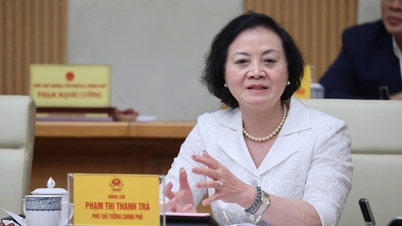
At the second meeting of the Standing Committee of the Government Party Committee on the afternoon of March 11th, which focused on further discussions regarding the plan for rearranging and reorganizing administrative units at all levels and establishing a two-tiered local government, delegates unanimously agreed to propose to the competent authorities a plan that, after the rearrangement, would reduce the number of provincial-level administrative units by approximately 50% and the number of grassroots-level administrative units by approximately 60-70% compared to the current situation. At the first meeting of the Steering Committee for the implementation of the reorganization of administrative units at all levels and the construction of a two-tiered local government model, held on the afternoon of March 13th, regarding the reorganization of commune-level administrative units, Minister of Home Affairs Pham Thi Thanh Tra - Deputy Head of the Standing Committee of the Steering Committee - stated that currently there are 10,035 units, which will be reorganized to a scale of only about 2,000, "almost like a small district". In the Government's proposed plan for reorganizing administrative units at all levels and establishing a two-tiered local government system, approximately one-third of the district's tasks are to be transferred to the province, and two-thirds to the commune – to the grassroots level. Next week, the Politburo will seek feedback from all Party organizations, ministries, departments, and localities. |
Source: https://congthuong.vn/sap-nhap-tinh-dat-nuoc-muon-vuon-minh-khong-gian-phat-trien-phai-lon-378407.html








































































Comment (0)