

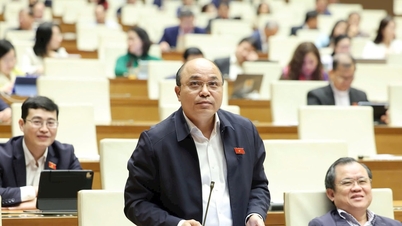
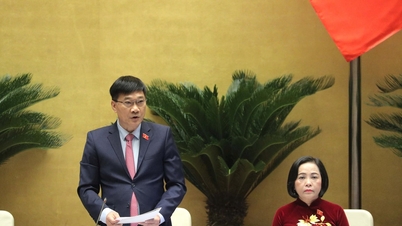
Through reviewing the State Audit Report on the implementation of a number of resolutions of the 14th and 15th National Assembly on thematic supervision and questioning, delegate Nguyen Tam Hung found that the Report comprehensively reflected the implementation of the Resolutions of the 14th and 15th National Assembly on thematic supervision and questioning, showing the great efforts of the State Audit in strengthening financial and budgetary discipline and preventing and combating corruption and negativity as required by the National Assembly.
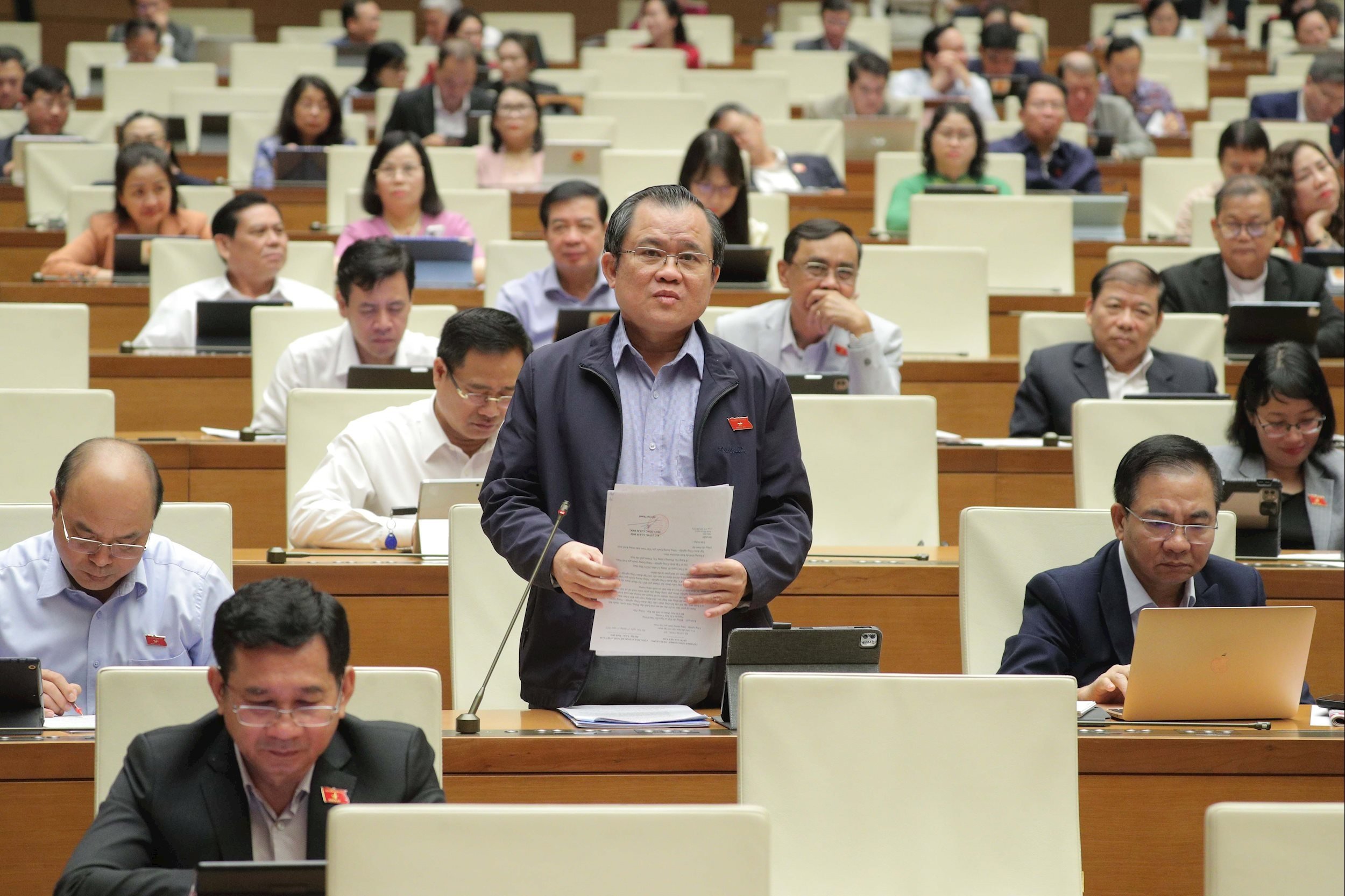
Acknowledging the results of the State Audit, the delegate pointed out that the average rate of financial recommendations implemented reached over 80%; many legal documents and policy mechanisms have been amended according to the recommendations of the State Audit; especially in 2024-2025, the State Audit proactively transferred 7 cases with signs of violations to the investigation agency, clearly demonstrating the spirit of "no forbidden zones" and "no exceptions". "Those results contribute to strengthening voters' trust in the supreme supervisory role of the National Assembly and the national audit agency", the delegate emphasized.
In addition, delegate Nguyen Tam Hung also noted that a number of recommendations of the State Audit Office related to amending and promulgating management documents at the local level have been pending for a long time, typically the group of recommendations after the Covid-19 audit, to date only 6/28 contents have been completed, mostly due to changes in the context and lack of corresponding transitional regulations.
This situation requires perfecting regulations on accountability of the drafting agency and the agency responsible for implementing audit recommendations, creating a mechanism to attach personal responsibility, especially that of the head.
From the State Audit report, delegates also found that the management and use of land and public assets in many localities still exists widely and repeatedly over many years. Land allocation and leasing without auction; exemption and reduction of land rent for the wrong subjects; delay in granting certificates; incomplete legal documents; leaving land fallow or encroached; using land for the wrong purpose... still occur in many audited units.
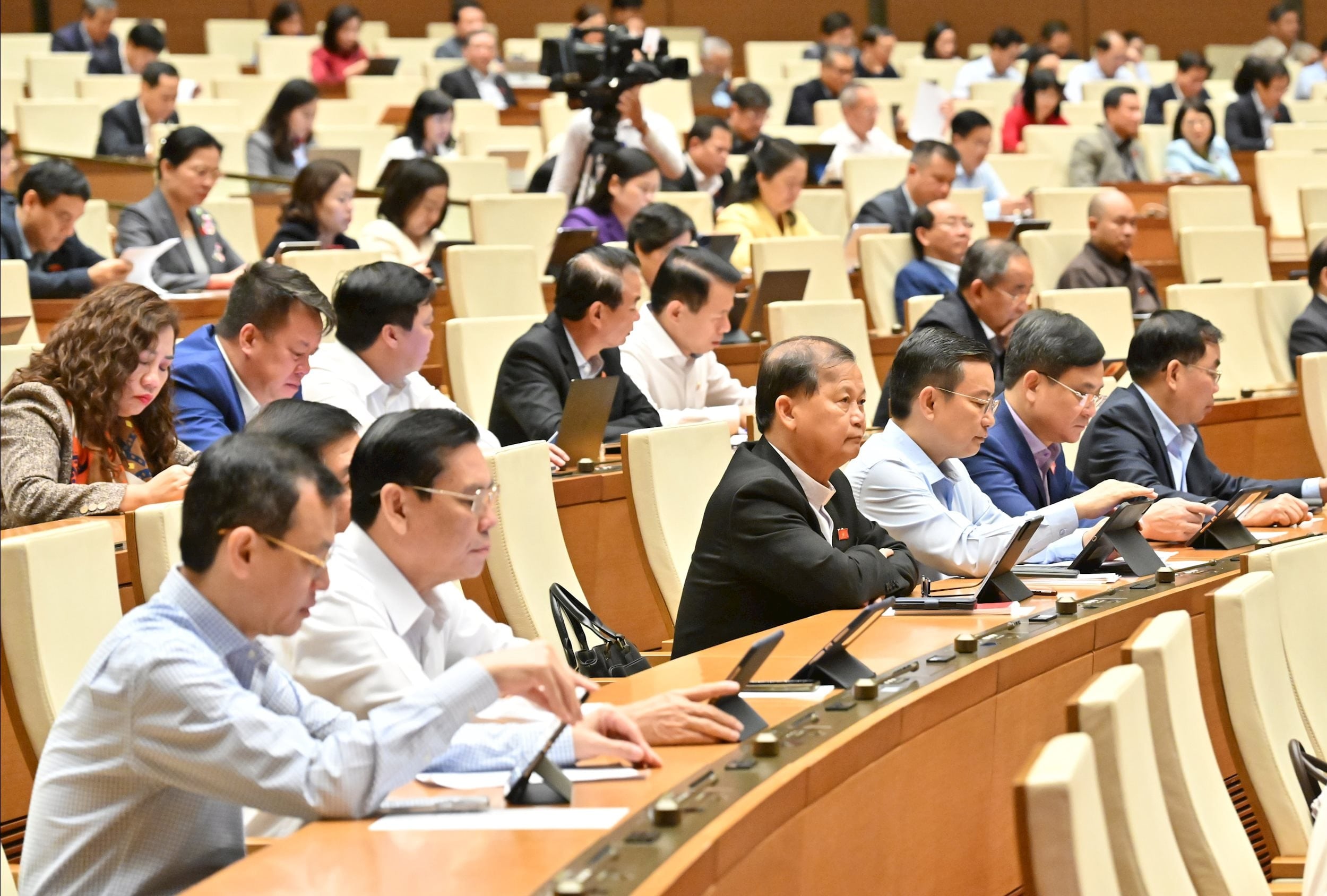
Believing that "this proves that the effectiveness of audit recommendations is not yet commensurate, and post-audit remedies have not yet created synchronous and timely changes", the delegate suggested that the National Assembly consider requiring localities with a high rate of backlog of recommendations to periodically report to the National Assembly Standing Committee.
Regarding the progress of implementing audit conclusions and recommendations, delegates noted that by September 30, 2025, the rate of implementing audit recommendations of the previous year had only reached 58%, and recommendations on reviewing collective and individual responsibilities had only reached 22.5%. This shows that the deterrent effect of audit conclusions is not strong enough; the inter-agency monitoring mechanism is still scattered; and it is especially necessary to strengthen the publicity of organizations and individuals who do not implement recommendations as prescribed in Resolution 141/2024/QH15.
From the above-mentioned shortcomings, delegate Nguyen Tam Hung suggested that it is necessary to continue to improve the law on state audit, especially the revised State Audit Law expected for the period 2027-2030, in the direction of increasing access to data, increasing the bindingness of audit conclusions and especially clearly defining the responsibilities of agencies in implementing recommendations. The synchronization of new audit standards must be associated with the strong application of big data analysis and digital audit to reduce dependence on paper records and increase the ability to detect violations.
The delegate also said that the National Assembly should require ministries, branches and localities to develop their own plans to overcome audit shortcomings, with detailed roadmaps for each group of recommendations; and strengthen sanctions against units that are slow to implement, prolonged or unable to explain the reasons. Including the rate of implementation of audit recommendations in the criteria for assessing the level of task completion of the head is necessary and consistent with the requirement to tighten public financial discipline.
At the same time, it is necessary to improve the effectiveness of coordination between the State Audit and inspection, investigation and examination agencies of the Party and the State, especially in sharing databases and handling signs of violations during the audit process. The State Audit has initially applied artificial intelligence (AI) to analyze data in digital bidding packages, and the test results show that AI can quickly point out volume deviations and budget overruns. Because, according to delegates, this is the right direction and needs to be replicated in high-risk areas such as public investment, land, environment and digital transformation.
Appreciating the spirit and responsibility of the State Audit, delegate Nguyen Tam Hung also suggested that the National Assembly continue to create favorable conditions in terms of institutions, resources and inter-sectoral coordination mechanisms for the State Audit to better perform its "pillar" role in the public financial power control system, towards transparent, modern and honest national governance.
Source: https://daibieunhandan.vn/dia-phuong-co-ty-le-thuc-hien-kien-nghi-kiem-toan-ton-dong-cao-phai-bao-cao-dinh-ky-10398024.html


![[Photo] Cat Ba - Green island paradise](/_next/image?url=https%3A%2F%2Fvphoto.vietnam.vn%2Fthumb%2F1200x675%2Fvietnam%2Fresource%2FIMAGE%2F2025%2F12%2F04%2F1764821844074_ndo_br_1-dcbthienduongxanh638-jpg.webp&w=3840&q=75)
























































































Comment (0)