

 |
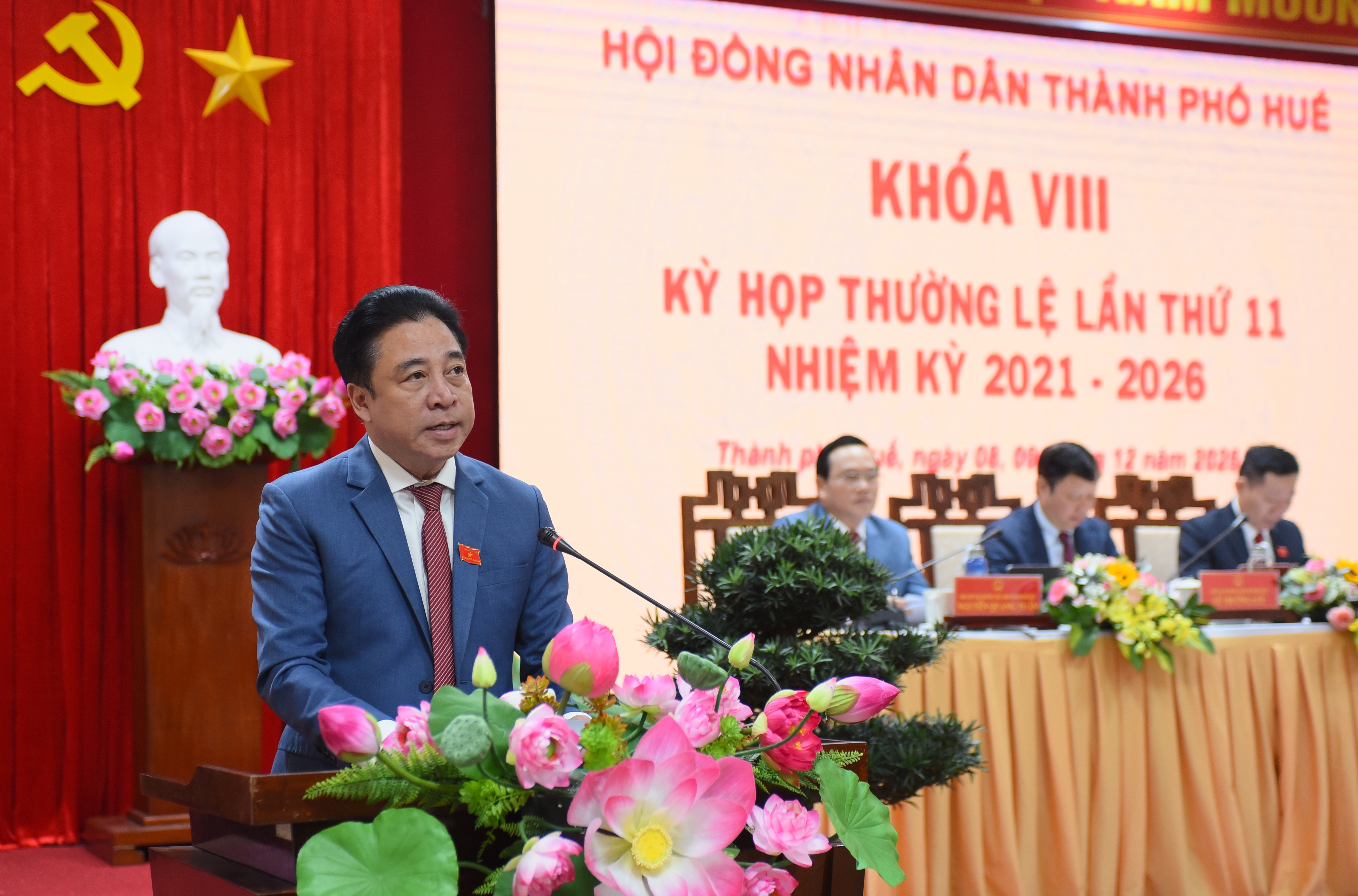
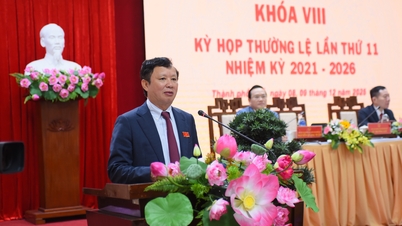
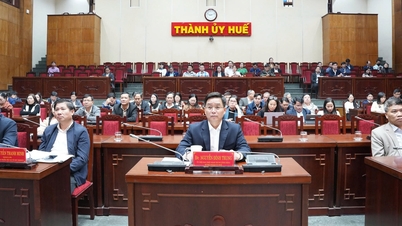
| Chairman of the City People's Committee Nguyen Khac Toan presented a summary of the socio -economic report at the meeting. |
Industrial breakthrough , tourism boom
Providing information on the socio-economic situation at the 11th session of the 8th Hue City People's Council on the morning of December 8, Chairman of the City People's Committee Nguyen Khac Toan emphasized: "2025 is a particularly challenging year". The 23-day flood in late October and early November caused production to stagnate, supply chains to break down, and services and tourism to be severely affected.
However, Hue still achieved GRDP growth of 8.5%, among 12/34 provinces and cities with the highest growth rate in the country. The economic scale reached 91,000 billion VND, GRDP per capita reached 3,100 - 3,200 USD. Budget revenue reached 14,960 billion VND, up 14.5% over the same period. Total social investment capital reached 39,350 billion VND, up 22.7%.
Hue hosted the National Tourism Year 2025, and took advantage of this opportunity as a “launching pad”. A series of national and international events took place continuously: Hue Festival - Culinary Capital, Mega Booming, Health Care Week, Hello Cosmo, Miss Vietnam final, East Asia Local Government Conference…
Thanks to that, Hue welcomed 6.3 million visitors, exceeding the plan by 13%; international visitors reached 1.9 million; cruise ship passengers reached a record 131,300, the highest ever. Tourism revenue reached 13,000 billion VND, up 64.4%.
The tourism picture also has new colors: Digitizing 4,000 destinations, AI application suggesting itineraries, 3D Hue cuisine, and 500,000 visits on the Hue-S platform.
Another important milestone in 2025 is the rise of industrial production. The IIP index increased by 14 - 15%, with a series of large-scale projects creating new production capacity such as Kim Long Motor Automobile Complex increasing capital by 21,000 billion VND, Kanglongda Factory Phase 2, EON Industry Factory (helmet), Okura Industrial Factory, Phu Bai Brewery Expansion, High-quality Sand - Quartz Powder Processing Line. These projects are gradually creating a new industrial growth pole for Hue, reducing dependence on tourism and services.
The output of many products increased impressively, typically 4,200 cars (2.4 times), 35,000 tons of gloves (5.5 times increase), and 2,690 million kWh of electricity production (32.9% increase).
Chairman of the City People's Committee Nguyen Khac Toan said that the total disbursement reached nearly 70% of the plan, higher than the national average. Capital sources are focused on dynamic projects, such as Nguyen Hoang Street and the Huong River overpass, To Huu Street extended to the airport, the coastal route - Thuan An bridge, Chan May port breakwater (phase 2), resettlement area serving the high-speed railway, Hue Citadel Conservation Phase 2...
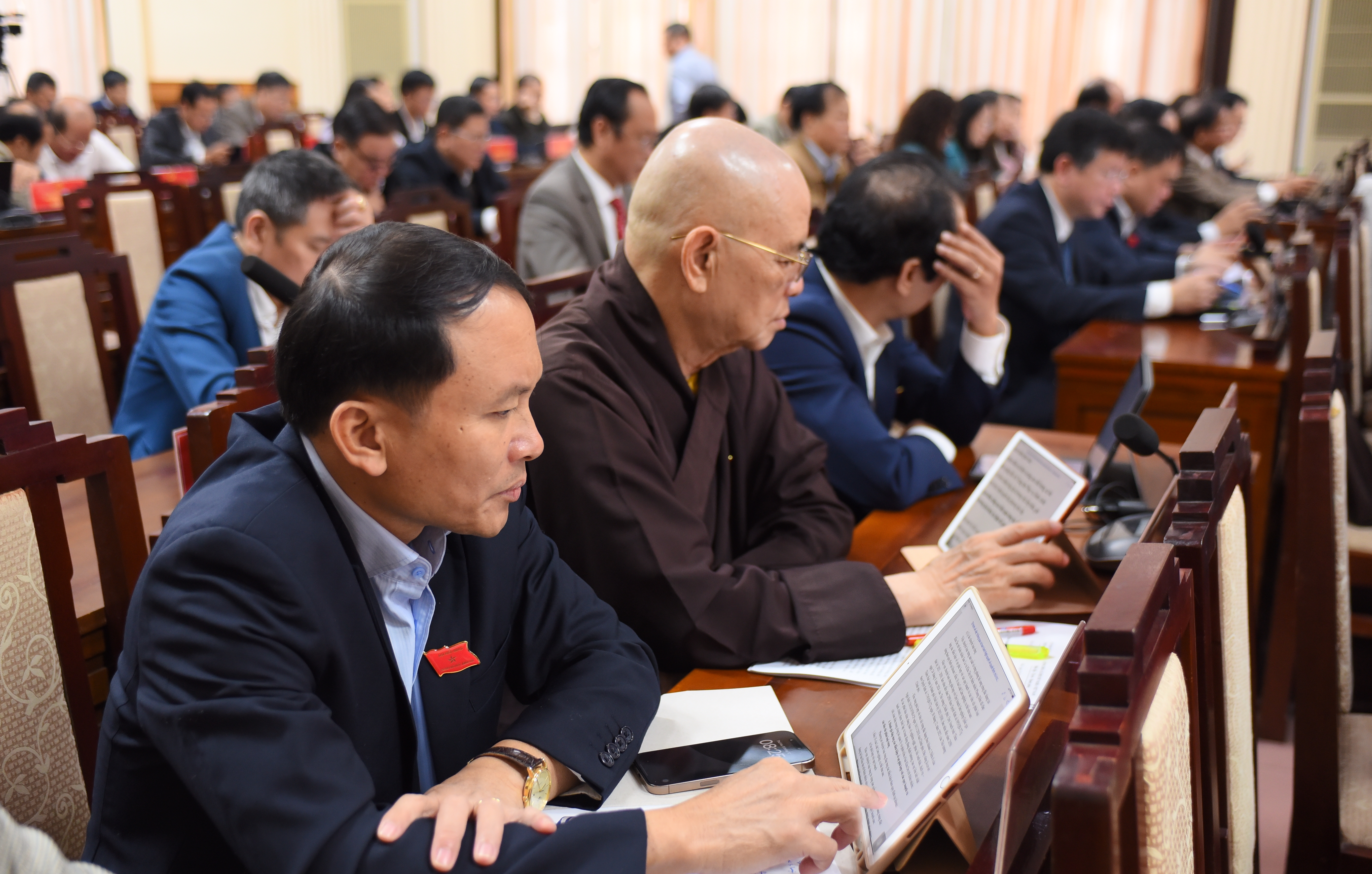 |
| Delegates study documents at the meeting. |
In 2025, Hue will grant 44 new projects with a total capital of 31,788 billion VND; 10 FDI projects. The economic and industrial zones alone will record an additional capital of 21,700 billion VND, mainly from Kim Long Motor.
In addition, many important service and trade projects were implemented. Notably, the city completely handled 16/38 projects that were behind schedule, a step to "clean up" the investment environment that was highly appreciated by businesses.
In the context of complicated floods and epidemics, the agricultural sector only increased by 1.1 - 1.3%. However, there were many remarkable results, such as 10/19 communes meeting new rural standards after the arrangement, the output of planted forest wood reached 700,000 m³, 1,838 hectares of forest achieved FSC certification, the output of aquatic products reached 65,000 tons...
Identify bottlenecks , strive for double-digit growth
Despite many positive results, Chairman of the City People's Committee Nguyen Khac Toan pointed out that production and business activities in the area continue to be under a lot of pressure. Many traditional industries such as beer, textiles, cement, frit yeast, etc. are facing a lack of orders and a shrinking consumer market. The number of businesses temporarily ceasing operations has increased, almost equal to the number of newly established businesses, an indication that the resilience of the private economic sector is declining.
Agricultural production also faces many disadvantages when it is continuously affected by epidemics and heavy rains and floods. Productivity and output of grain food decreased compared to the same period. The production linkage in the value chain between enterprises - farmers - cooperatives is still limited and ineffective; some agricultural support mechanisms and policies have revealed inconsistencies with practical implementation.
Although tourism has recovered strongly, it has not yet fully exploited its potential to become a key economic sector. The quality and diversity of tourism products are still limited; the length of stay of tourists is low. The city lacks resorts and high-end hotels of 4-5 stars and lacks specialized human resources, especially those with international communication skills. There is still a shortage of positions for tourism management experts, event organizers, and cultural researchers. There are many shortcomings in heritage management and exploitation.
Disbursement of public investment capital and three national target programs has not met the plan. Many projects have been stuck in prolonged site clearance, becoming a permanent "bottleneck". The progress of non-budget projects is slow, and the newly increased capacity is still modest. Investment preparation, construction - environment - fire prevention and fighting procedures, and planning adjustments at a number of projects in economic zones and industrial parks continue to face difficulties, affecting the progress of new construction.
In the cultural and social fields, the socialization process in preserving and promoting heritage values is still slow; investment resources for education have not met the requirements. Many schools still lack facilities to ensure 2 sessions/day; the rate of schools meeting national standards, especially at the high school level, is still low. Investment in sports, especially high-performance sports, is still limited; infrastructure for organizing national and international tournaments is degraded, not enough to meet the needs of attracting events and developing sports tourism.
New growth drivers such as science and technology, innovation, and digital transformation are still in their early stages and have not yet created clear changes. The application of science and technology to production and life is still limited; the number of science and technology enterprises is growing slowly.
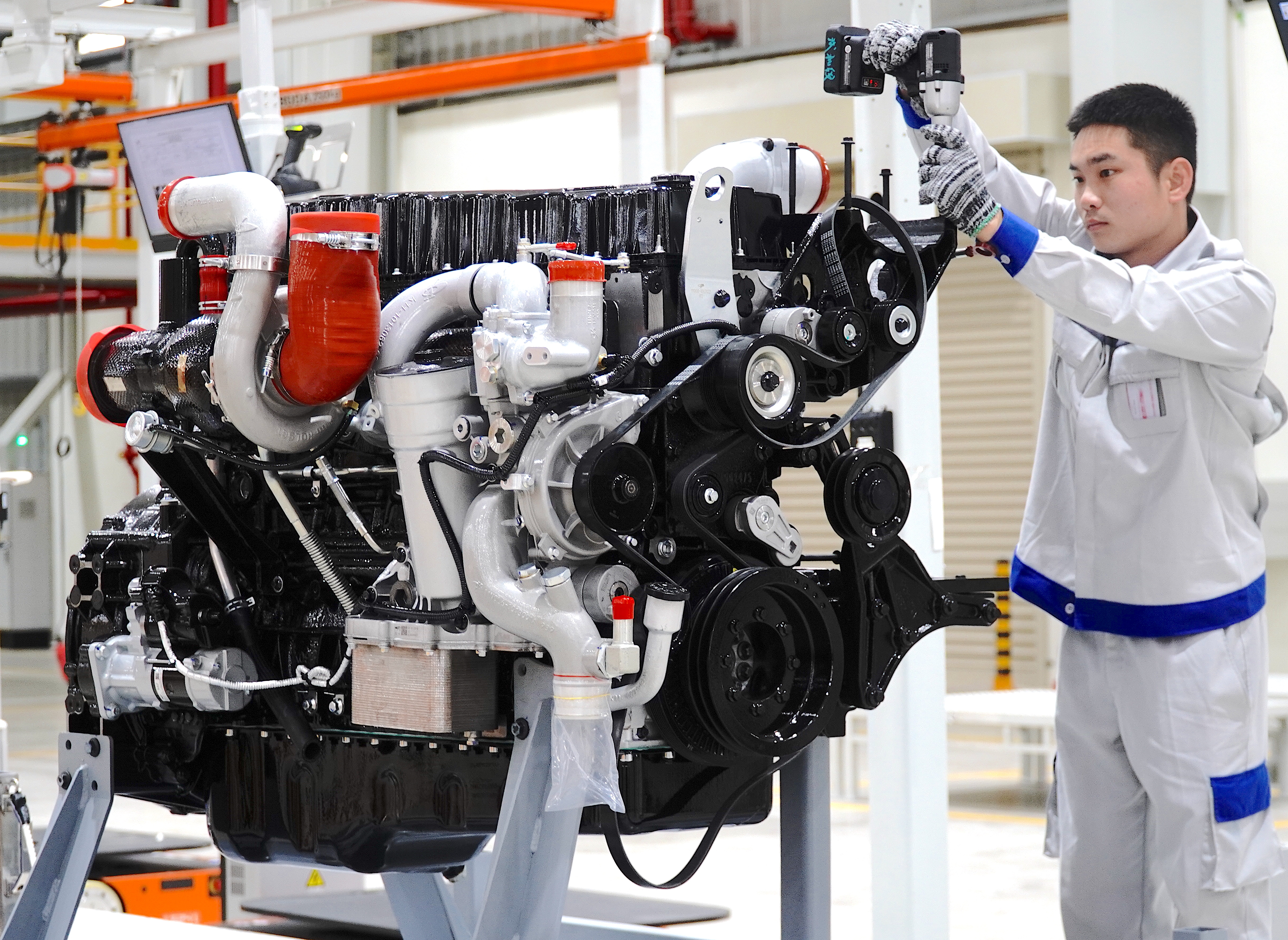 |
| Workers of Kim Long Motor Hue Joint Stock Company perform engine assembly steps. |
The real estate market continues to face difficulties; the progress of implementing the 145 trillion VND social housing credit package has not met expectations. The work of ensuring food safety and hygiene, handling counterfeit goods, fake goods, and commercial fraud still faces many challenges, causing frustration among the people.
Mr. Nguyen Khac Toan commented that the world and domestic situation is complicated, natural disasters, storms and floods occur continuously, strongly affecting production and people's lives. The legal system is in the process of adjusting to suit the 2-level local government model, some regulations are slow to be amended and supplemented. The city must simultaneously implement many types of planning (general urban planning, zoning, details...), significantly affecting investment attraction. Support resources from the Central Government are still limited.
Coordination between departments, branches and localities is sometimes not timely. Some officials and civil servants have not met the requirements of new tasks. Guidance for businesses and people to access support policies has not been given due attention, causing implementation results to fall short of expectations.
According to Mr. Nguyen Khac Toan, in 2026, Hue sets a very high target, GRDP increases by 10% or more, GRDP per capita reaches 3,500 - 3,600 USD, budget revenue increases by 14 - 15%, exports increase by 10 - 12%, urbanization rate reaches 67%, schools meet national standards over 85%, trained workers reach 76%... along with that, 6 key programs will be implemented: Developing synchronous, modern, smart urban areas associated with heritage urban areas; developing industry; developing culture, tourism, services; developing science, technology, innovation and digital transformation; developing private economy; developing high-quality human resources.
Source: https://huengaynay.vn/chinh-tri-xa-hoi/theo-dong-thoi-su/hue-dat-muc-tieu-cao-cho-chu-ky-phat-trien-moi-160714.html


![[Photo] General Secretary To Lam receives the Director of the Academy of Public Administration and National Economy under the President of the Russian Federation](/_next/image?url=https%3A%2F%2Fvphoto.vietnam.vn%2Fthumb%2F1200x675%2Fvietnam%2Fresource%2FIMAGE%2F2025%2F12%2F08%2F1765200203892_a1-bnd-0933-4198-jpg.webp&w=3840&q=75)









































































Comment (0)