

Fourth and fifth graders still read slowly and have to spell out words.
Previously, reporters received numerous reports alleging that many 4th and 5th grade students at Pờ Ê Primary School read and write slowly, or even don't know how to read or perform simple calculations... To provide a broader perspective, reporters contacted and accompanied leaders from the Kon Plông District Department of Education and Training to investigate the matter.
At Pờ Ê Primary School, our reporter, along with the Department of Education and Training, school leaders, and homeroom teachers, had some students in classes 5A and 5B read passages, write letters, and perform simple calculations. However, observations showed that many students in these two classes were still slow at reading, writing, and calculating.
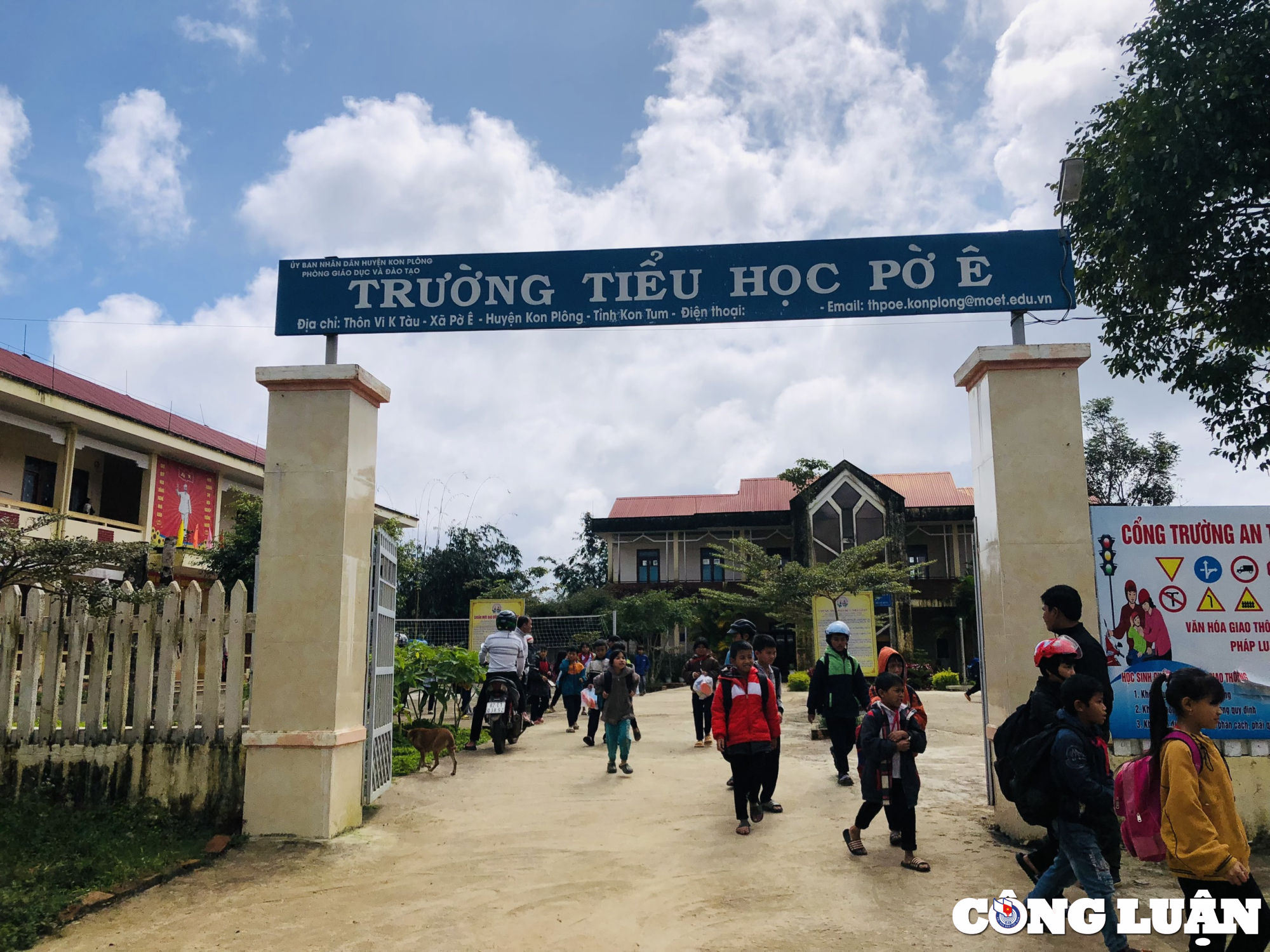
Pờ Ê Primary School is located in a disadvantaged commune in Kon Plông district, nearly 100km from the center of Kon Tum city.
For example, students YN and YSN (classes 5A and 5B) not only read and write slowly, but even when shown each letter, they still mispronounce words. Only when their homeroom teacher reminds them and reads "for them" can they complete their reading assignments. Furthermore, their listening, writing, and arithmetic skills are also very slow.
Ms. Vo Thi Bich Co, the homeroom teacher of class 5B, said: “All the students in the class know how to read, write, and do calculations, but some are a bit slow, especially YSN and AK, who are the slowest. Their current academic performance is probably due to gaps in their knowledge from lower grades. In addition, they haven't been able to combine many letters correctly. Most students here also frequently mispronounce tones, such as the grave accent as the acute accent, leading to incorrect pronunciation.”
According to Ms. Y Kieu, the homeroom teacher of class 5A, the students are a bit slow learners, from reading and writing to basic arithmetic. The teachers have to teach slowly and patiently for them to grasp the concepts. Many students in the class are slow readers, with YN being the slowest.
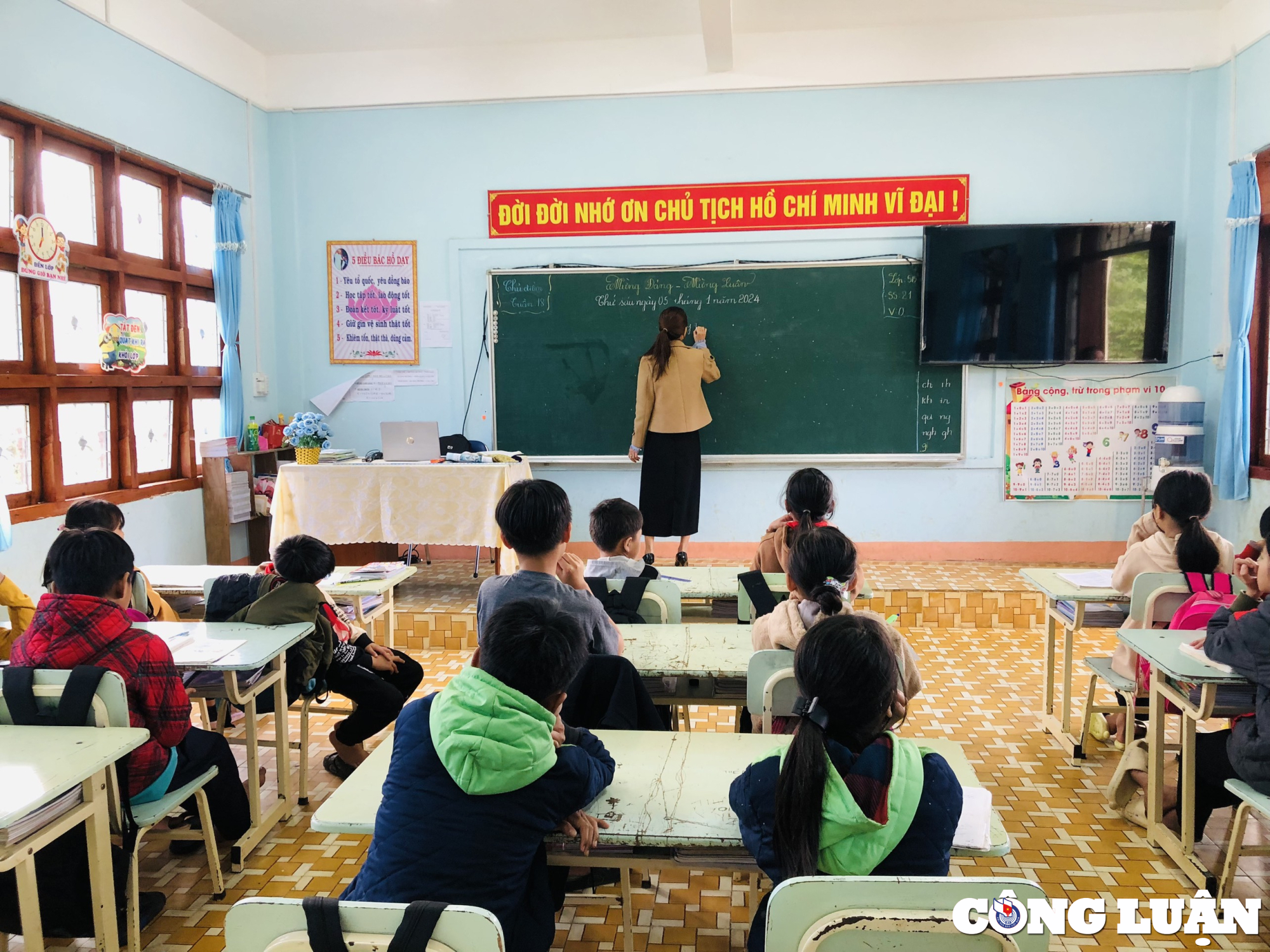
Many fifth-grade students still read and write slowly because they miss a lot of school and can't keep up with the curriculum.
Besides the 5th graders, many 4th graders are in a similar situation. In particular, A.D., despite having completed the first semester of 4th grade, not only reads slowly but also has to spell out each letter. For example, in the reading practice exercise "Going to work in the fields," the first line has about 16 words, but A.D. took more than a minute to read it. However, most of the words he pronounces are incorrect, especially compound words.
According to Mr. Le Tan Truong Anh, Principal of Po E Primary School, the school has 227 students, 98% of whom are from the Hre ethnic minority. The school conducts weekly and monthly assessments of student performance across all five grade levels. To maintain student enrollment and ensure quality teaching, the school has mobilized various funding sources to implement projects such as "Sponsoring Children" and "Supporting Poor Students in Highland Areas." However, improving the quality of education in Po E commune still faces many difficulties and obstacles.

Even though they've reached the fourth grade, the children are still learning to read and spell.
Typically, parents are not attentive to their children's needs, especially regarding farming. Although the school, in coordination with the authorities, has gone to people's homes to raise awareness, the economic situation of the people is still difficult, so parents often bring their children along to school to look after them or help with household chores. Because they do not attend school regularly, the children's academic performance is weak and they learn slowly.
Is it possible for students to be placed in the wrong class?
After surveying the students' learning quality with the reporter, teacher Le Tan Truong Anh said: "For the 4th grade, many students have slow reading speeds and do not meet the standard. Compared to 4th graders, they have not reached the standard; their reading speed is similar to that of 2nd or 3rd graders. As for the 5th graders, it's better; they don't spell out words and read more fluently, but their speed is still slow. According to the basic knowledge standard, the slow-reading students in 5th grade are only at the level of 3rd or 4th graders."
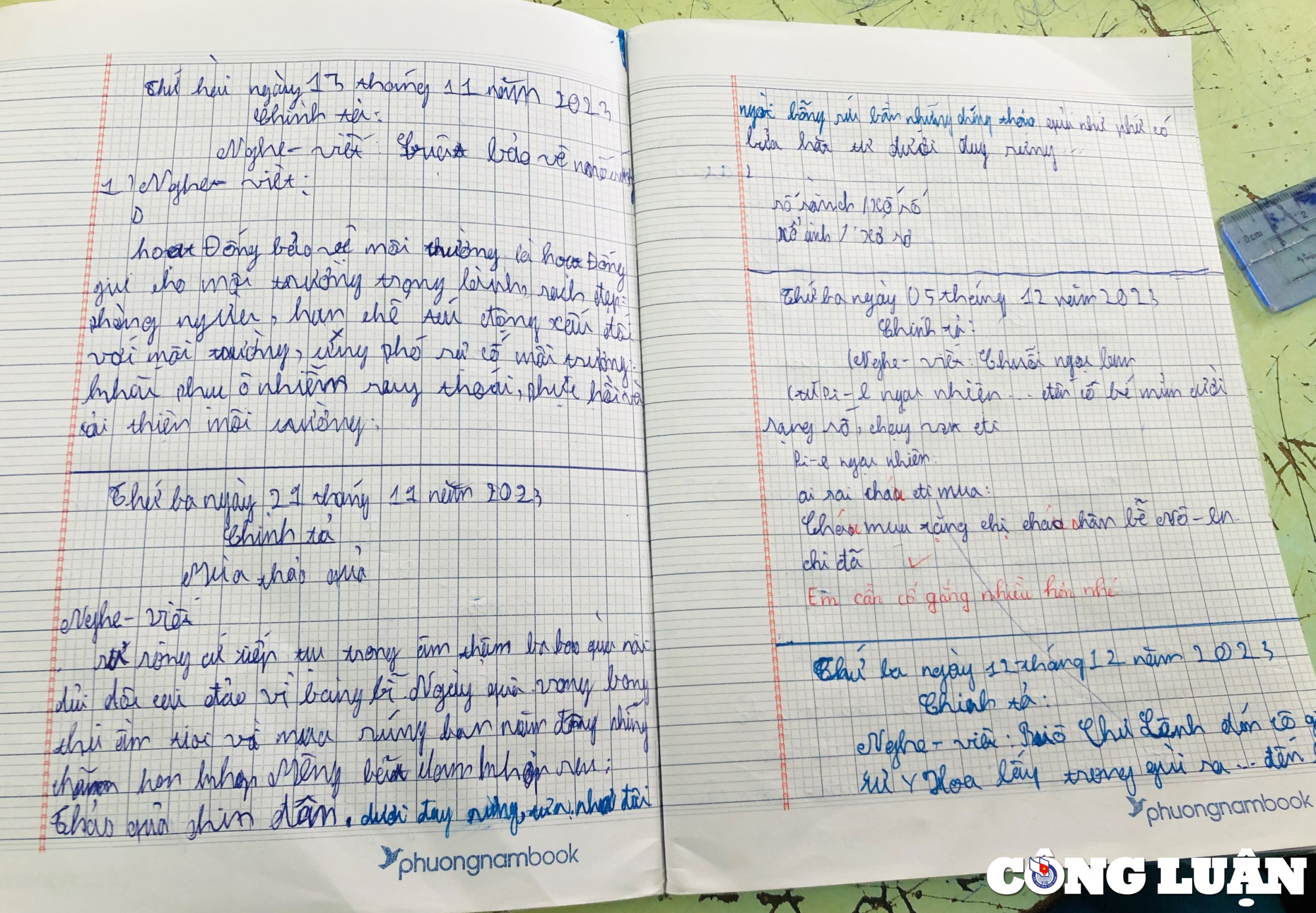
In addition, their listening and writing skills are also very slow.
Explaining the reasons for this situation, the Principal of Pờ Ê Primary School said: “Families haven't paid enough attention to their children, leaving them entirely to the teachers and the school. However, parents don't leave their children to the school completely; during harvest season, they take their children away to work. As a result, the children frequently miss school, preventing them from catching up with their classmates. Furthermore, their participation in learning is poor and they lack self-discipline. In addition, the majority of teachers at the school are contract teachers who are frequently rotated, which also affects teaching and learning.”
According to Mr. Anh, if the students attend school regularly, the school can provide remedial classes and knowledge enhancement for weaker students. However, if the students continue to miss school frequently, it is projected that in the 2023-2024 school year, approximately 10 students in grades 3, 4, and 5 will have to repeat the year.
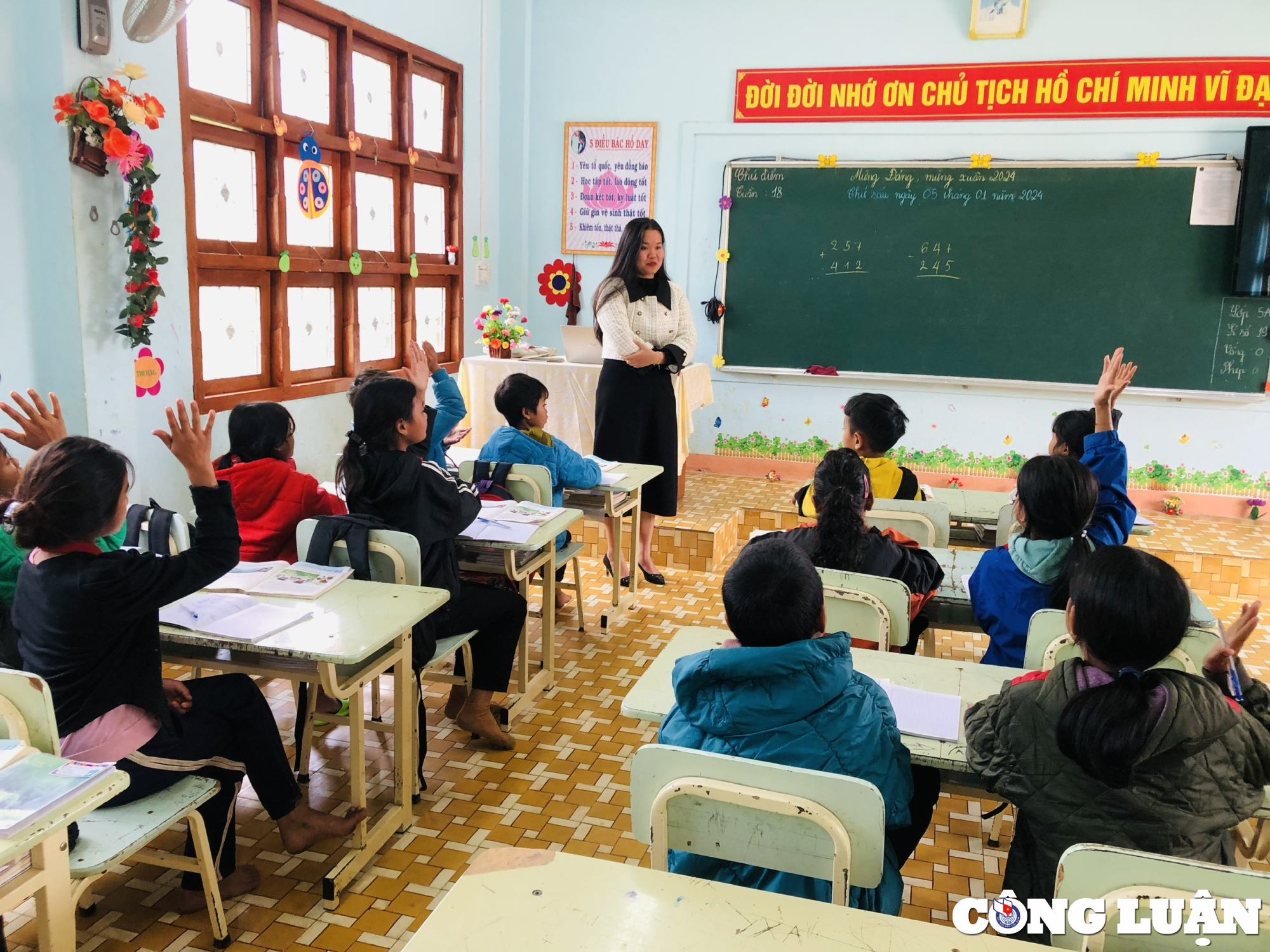
Besides the high rate of absenteeism, the majority of teachers at the school are contract teachers who are frequently rotated, which more or less affects teaching and learning.
Mr. Le Van Dong, Deputy Head of the Education and Training Department of Kon Plong District, said: “In addition to implementing the resolution on improving the quality of education in mountainous areas of the Kon Plong District Party Committee and the Kon Tum Provincial Party Committee, each school will have a specific plan. For example, at Po E Primary School, the department directs the school's management board, after surveying which students have slightly weak reading skills, to develop a plan to tutor them. Furthermore, homeroom teachers must pay more attention to these students. At each stage, the school must report specifically, and at the end of the year, they must commit to ensuring these students reach the required level for their grade.”
According to Mr. Dong, while the issue of students being placed in the wrong class no longer exists, some communes that have been upgraded to new rural areas still have a few students with weak reading skills. For example, in the Pờ Ê commune, the overall quality of education for some students, as we observed, hasn't reached the required grade level. However, the school and the education department have solutions to ensure students can advance to the next grade, with the motto "no student should be left behind, every student should have the opportunity to learn."
Text and photos: Tran Hien
Source


![[Photo] Prime Minister Pham Minh Chinh holds a phone call with the CEO of Russia's Rosatom Corporation.](/_next/image?url=https%3A%2F%2Fvphoto.vietnam.vn%2Fthumb%2F1200x675%2Fvietnam%2Fresource%2FIMAGE%2F2025%2F12%2F11%2F1765464552365_dsc-5295-jpg.webp&w=3840&q=75)
![[Photo] Closing Ceremony of the 10th Session of the 15th National Assembly](/_next/image?url=https%3A%2F%2Fvphoto.vietnam.vn%2Fthumb%2F1200x675%2Fvietnam%2Fresource%2FIMAGE%2F2025%2F12%2F11%2F1765448959967_image-1437-jpg.webp&w=3840&q=75)

















































![[OFFICIAL] MISA GROUP ANNOUNCES ITS PIONEERING BRAND POSITIONING IN BUILDING AGENTIC AI FOR BUSINESSES, HOUSEHOLDS, AND THE GOVERNMENT](https://vphoto.vietnam.vn/thumb/402x226/vietnam/resource/IMAGE/2025/12/11/1765444754256_agentic-ai_postfb-scaled.png)








































Comment (0)