

According to the victim's friends, she went to the lake to try floating a "bobo boat," as videos of these tiny boats are very common on TikTok. This shows that the rapid spread of social media trends, coupled with the curiosity and exploratory nature of young children, has created dangerous situations that parents may not fully anticipate.
However, the problem isn't just about the "bobo boat" game. This incident reflects the fact that children are too easily exposed to unverified content, some of which even poses significant risks. Meanwhile, children's awareness is limited, and their ability to assess risks is almost nonexistent. Faced with a video that has millions of views, children only see what is "fun" or "interesting," without understanding that there could be accidents, injuries, or even death behind it.
 |
| Many children imitate the "bobo boat" racing game they see online, making their own boats and playing in ponds, lakes, and streams without anticipating the potential dangers and unexpected accidents. (Illustrative image) |
Following the tragic incident, the school where the second-grade student attended promptly addressed the issue, organizing awareness campaigns about the dangers of this game and other online trends. This is a necessary step given the increasing influence of the digital environment on children. However, these efforts within the school grounds only address the surface of the problem. Once outside the school gates, children still face a vast and much more difficult-to-control online world .
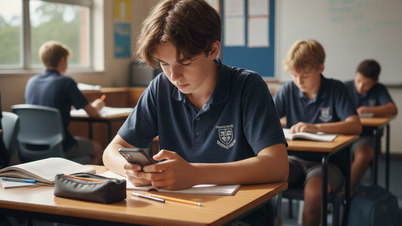
The biggest gap today is children's use of social media without adult supervision. TikTok, Facebook, and YouTube all have censorship mechanisms, but they are not enough to completely prevent misleading, harmful, or unsafe content. Young children, especially elementary school students, cannot distinguish between correct guidance and dangerous challenges. This responsibility rests with adults, primarily families.
Parents need to monitor their children's use of phones and social media, and guide them to stay away from ponds, rivers, streams, or other dangerous places. More importantly, parents need to proactively equip children with the skills to identify risks from online videos: not to imitate self-made content, not to participate in unverified trends, and not to attempt dangerous challenges.
This is also the time for us to re-evaluate the role of digital skills education in the curriculum. As social media becomes a part of life, children need to be taught how to protect themselves online, just as they are taught to swim, escape skills, or how to handle emergency situations. Online safety is now a real and urgent need.
The heartbreaking incident in Ea Wer once again reminds us that the innocence of young children always comes with great risks if they are not properly guided. Social media brings joy and knowledge, but it also hides negative aspects that children cannot foresee. When adults loosen their supervision, videos lasting only a few dozen seconds can lead to lifelong consequences.
To prevent such tragic losses, adults must take a proactive approach: paying more attention, being more vigilant, and being more responsible for children's access to social media. Because just one moment of imitating a trend can cost children their entire future.
Source: https://baodaklak.vn/xa-hoi/202512/mang-xa-hoi-va-moi-nguy-doi-voi-tre-em-f981582/












































































Comment (0)