

Once considered the “capital” of dairy farming, there was a time when the herd of dairy cows in Vinh Phu commune, Phu Tho province reached more than 30,000. However, up to now, the total herd is only more than 20,000 and the trend continues to decrease. More alarmingly, the cause of the total herd decline is not only due to disease or the market, but mainly because fresh milk is gradually losing its stability in consumption.

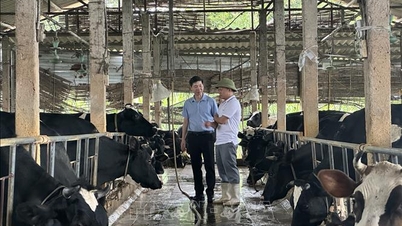
Mr. Ha Van Long, Vinh Phu commune, Phu Tho province said, “We can still stick with the profession because we have been doing it all our lives, but our children and grandchildren no longer want to continue. Seeing the difficulties piled up, the risks are high, and the output is too uncertain, they are discouraged. Photo: Duy Hoc.
According to people's feedback, recently, many milk purchasing enterprises have continuously cut production, some even announced that they will stop purchasing completely after December 31, 2025. The sudden "lockdown" of output has caused many livestock farmers to be passive and struggling to find a way to cope.
The most obvious consequence is that the born female calves are not kept for breeding but are forced to be sold as beef calves. This not only causes the herd size to decline rapidly, but also seriously impacts the ability to restore and develop the dairy herd in the coming years.
As a direct participant in the local dairy farming cooperative, Mr. Ha Van Long, Vinh Phu commune, Phu Tho province said: “In just 5 years, from 2020 to now, the commune's cow herd has decreased by about 30%. At the peak, there were 26,000 - 27,000 cows, now there are only about 21,000 - 22,000 cows.”
According to Mr. Long, the biggest reason is the impact of purchasing activities of milk processing factories. “The company has just sent a notice that it will stop purchasing from the beginning of 2026. This directly affects the psychology of farmers. If the milk produced is not known to whom to sell, how can they dare to invest?”, he shared.
Not only losing output, dairy farmers also have to bear double risks in terms of costs. Fresh milk is a product that cannot be stored for a long time, so it must be consumed on the day it is milked. Meanwhile, cows still have to eat, still have to invest in food, care, veterinary care, etc. If there is no stable purchasing company, the risk of "congestion" is not milk but... the economy of the farmers.
In fact, local milk production has decreased by about 20% compared to 2020. Many households have had to accept "raising in moderation", even selling cows to reduce losses.
Another major difficulty is the problem of land for livestock and grass growing. According to the people, in the past, dairy cow development was linked to central and agricultural projects, so the raw material areas for grass growing were planned relatively systematically. However, the rapid urbanization process has caused the grass growing area to increasingly narrow.
“Without clear planning for land for livestock and raw material areas, it will be difficult for people to develop even if they want to. Land for growing grass is becoming less and less, and feed costs are getting higher and higher,” Mr. Long said.
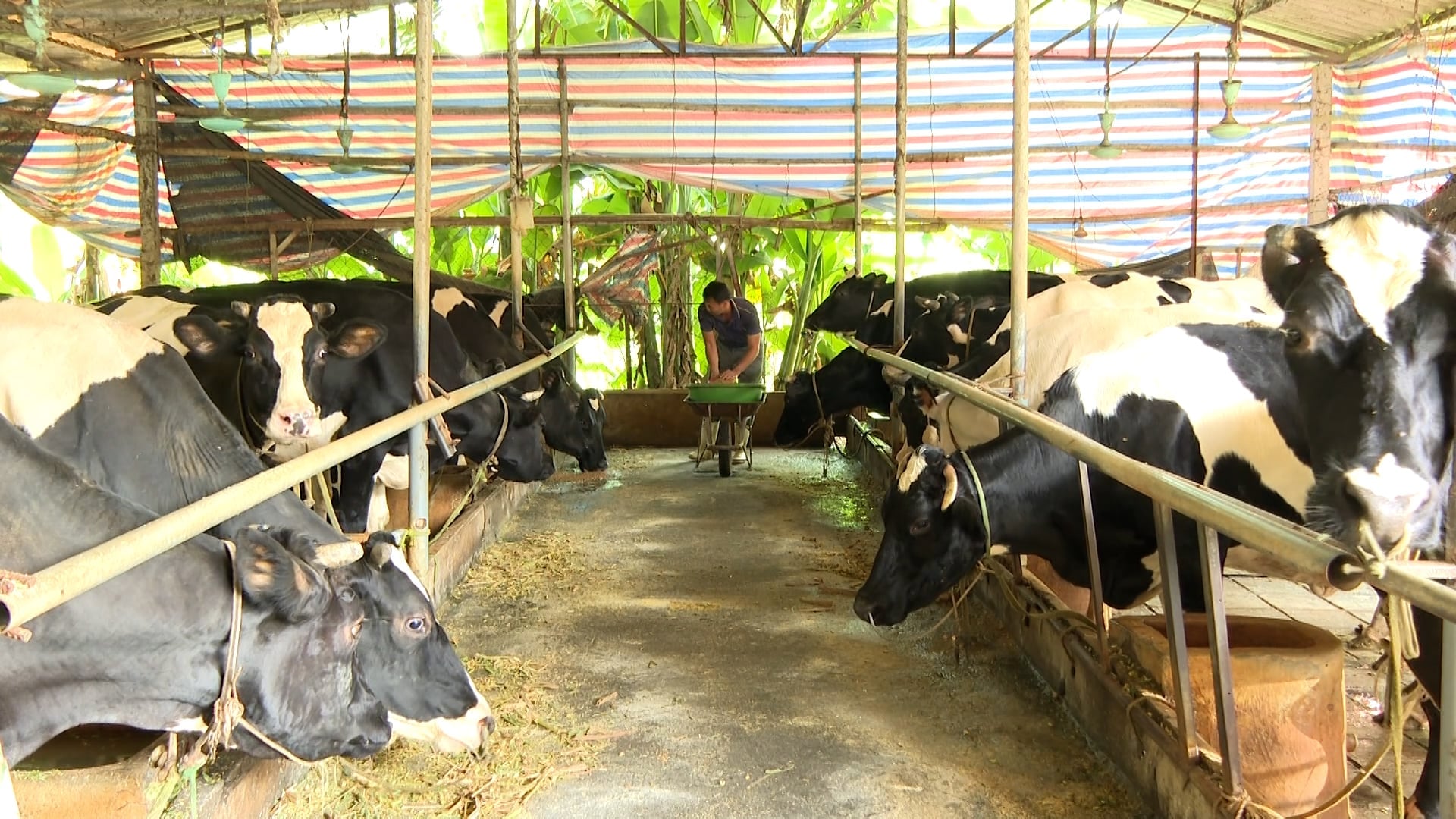
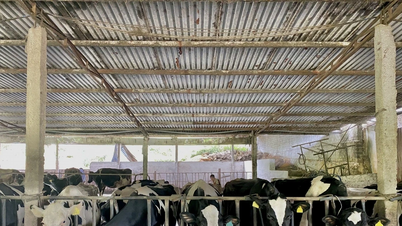
At one point, the dairy herd of Vinh Phu commune, Phu Tho province reached more than 30,000 cows. However, up to now, the total herd is only more than 20,000 cows and the trend continues to decrease. Photo: Duy Hoc.
In addition, disease prevention work also requires closer attention from local authorities to form a sustainable, disease-free milk material area. Although people are now more proactive in disease prevention, long-term development still requires synchronous direction from all levels.
What farmers want most is to have long-term, stable, transparent contracts for the consumption of raw milk in terms of quality and price. According to Mr. Long, the previous purchase contract only lasted for 2 years, and was terminated before it could stabilize, causing people to be "shocked" and lose confidence.
“We can still stick with the profession because we have been doing it all our lives, but our children and grandchildren no longer want to continue. Seeing the difficulties piled up, the risks high, and the unstable output, they are discouraged. Thinking about that, we are both sad and worried about the future of the dairy industry,” Mr. Long pondered.
Faced with the difficulties surrounding us, restoring confidence in livestock farmers cannot be limited to a temporary “rescue” solution. The dairy industry needs long-term visionary policies, from planning livestock areas, linking production - processing - consumption chains, to credit, land, and science and technology policies.
Source: https://nongnghiepmoitruong.vn/nguoi-chan-nuoi-bo-sua-nong-ho-khong-con-man-ma-d788179.html


![[Photo] General Secretary To Lam receives the Director of the Academy of Public Administration and National Economy under the President of the Russian Federation](/_next/image?url=https%3A%2F%2Fvphoto.vietnam.vn%2Fthumb%2F1200x675%2Fvietnam%2Fresource%2FIMAGE%2F2025%2F12%2F08%2F1765200203892_a1-bnd-0933-4198-jpg.webp&w=3840&q=75)












![Varieties Revolution: [Lesson 3] Tissue-cultured bananas aim for billion-dollar trees](https://vphoto.vietnam.vn/thumb/402x226/vietnam/resource/IMAGE/2025/12/07/1765099407833_488761353918024933-114743_324-162058.jpeg)






















































Comment (0)