

By studying the upbringing of Nobel laureates, researchers have found that these successful individuals come from very different family backgrounds. Some have parents who were ordinary intellectuals, workers, farmers, small business owners, or even illiterate people.
So what aspects of their family background contribute to their healthy personalities and exceptional abilities?
1. Learn to respect children's choices.
Professor Tu Youyou (China) - Winner of the 2015 Nobel Prize in Medicine.
Tu Youyou was born into a family practicing Traditional Chinese Medicine. Her father was a doctor who ran clinics. When choosing her university major, she didn't hesitate to choose medicine, but not Traditional Chinese Medicine as her family expected, but rather Pharmacy, a field that most people at the time were not interested in.
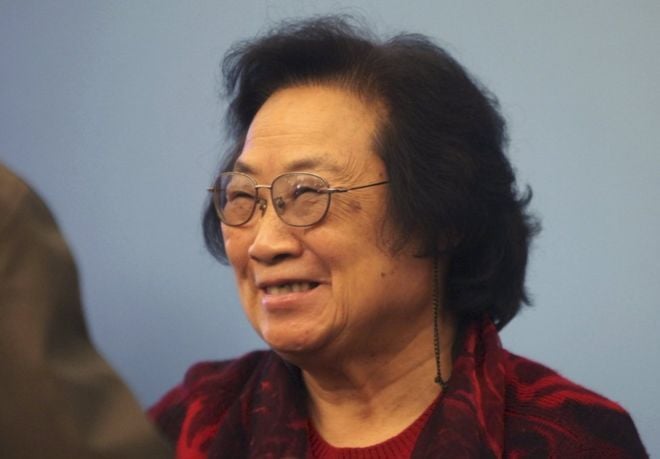
Professor Tu Youyou
This decision surprised her father: "If you choose this major, won't all the knowledge of traditional medicine you've accumulated become useless?" However, Tu Youyou believed that only a major in Pharmacology could systematically explore the field of traditional Chinese medicine.
The father thought for a moment and then said, "I only ever hoped you would grow up to be a doctor. I never imagined you had bigger ambitions than me! I believe in you, keep trying, you will succeed!"
As children grow up, many parents like to interfere in their choices. But there are countless possibilities for their future lives. How can it be entirely within your control and follow your specific path?
Gordimer, a Nobel laureate in Literature, once said: "Family education must be democratic and enlightening. First and foremost, parents must respect their children's choices and never force them to follow their own."
Many parents believe they are intelligent and that their children don't understand, so they deprive their children of the right to choose. Without the right to choose, children lack motivation and may become stuck in the sheltered environment their parents have built for them. Ultimately, this may not be good for children, as they need to follow their own path, and parents are merely a stepping stone for them to lean on.
Even when children make mistakes, we must stand aside and wait for them to activate their self-healing abilities, their self-correction skills, their self-discipline, and their resilience to errors.
2. Tolerance is a sentiment that needs to be cultivated from a young age.
Mo Yan (China) - Winner of the 2012 Nobel Prize in Literature
Mo Yan's mother was illiterate; she had never read a book, but she was optimistic, kind, strong, and sensitive. When he was a child, Mo Yan used to go gleaning wheat in the fields with his mother. When the field guard arrived, the gleaners scattered and ran away. His mother couldn't run fast enough, so the guard slapped her in the face and confiscated the wheat stalks they had gathered. Her mouth bled, and she sat helplessly on the ground.
Many years later, the field keeper had become a white-haired old man and met Mo Yan at the market. Mo Yan wanted to rush forward to take revenge, but his mother stopped him. She calmly said, "Son, the person who attacked me is not someone like this old man."
Parents' behavior influences their children's minds! How parents treat their work and how they treat others will have a very direct and subtle impact on their children.
Having an open mind is a lesson parents must teach their children. Look, Mo Yan's mother did just that! Don't waste your emotions and time on other people's mistakes, and don't let resentment tarnish your soul.
Emotions need to be nurtured from a young age; the most important elements such as willpower, intelligence, and moral character are not developed through parental lectures but are transformed through parental behavior.
Furthermore, the best way for children to develop broad thinking, besides setting a good example for their parents, is to encourage them to read classic works and biographies of famous people, so they can learn to view society and themselves from different perspectives.
3. Playing is a skill, and can be a talent.
Steven Chu (USA) - Winner of the 1997 Nobel Prize in Physics
"Playing is natural, and children have the right to play."
Steven Chu grew up in a family with many outstanding talents. As a child, Steven Chu was very focused on everything and very playful. However, his mother allowed her children to do this, saying that playing could train their physical strength and courage.
She believed that "playing is natural, children have the right to play." Later, these "play" experiences inspired him to think about science .

Steven Chu
Regarding this style of play, Steven Chu said: "More importantly, I developed the habit of doing things myself from a young age, which also made my hands more dexterous. It stimulates Steven Chu's brain activity and enhances his sense of space."
One parenting concept we always emphasize is letting children learn how to "play".
A child is naturally very active, able to laugh, jump, run, play, and be mischievous. Many parents fear their children will lose ambition because of playing with toys and delaying their studies, but do you remember the views that Jack Ma expressed? Let children play freely! If you don't let them play, in 30 years they won't have jobs! Knowledge can be learned, but wisdom can only be gained through experience.
Playing is not only a way for children to live, but also a crucial way for them to learn. Through play, children will try to use their existing knowledge to explain the questions they are exploring, using their own methods to learn how to solve various problems they encounter in life.
4. Don't let our denial hinder children's ability to explore.
Niels Bohr (Denmark), winner of the 1922 Nobel Prize in Physics.
"Let it do it. It knows what to do."
As a child, Bohr was a slow but attentive boy. His father taught at a university and often invited several colleagues to his home for gatherings. Artists, writers, musicians, and foreigners also attended. Bohr was allowed to sit aside and listen. These elites would often tell a story and express their views alone, after which the others would discuss it. Their insightful and unique perspectives left a deep impression on his young mind.
Bohr enjoyed tinkering with and repairing watches and other household items. One time, the flywheel of a bicycle broke, and Bohr volunteered to fix it, taking the bike apart himself. He didn't know how to put it back together. Someone offered to help, but his father insisted, "Let him do it himself; he knows what to do." After carefully studying each part, Bohr successfully reassembled the flywheel.
Many parents are unhappy with what their children do, saying things like: "You're not allowed to do this"; "You're not allowed to touch that"; "You should do this"; "Put it down so I can do it."
If a child's exploration process is constantly interrupted and parents are always pointing fingers at them, this not only deprives them of the joy of self-discovery and independent development but also fails to foster their ability to master learning.
American parents have one characteristic: they dare to let their children pursue their passions wholeheartedly and maximize their children's ability to explore.
Although children sometimes have unconventional thoughts, we still need to encourage them to continue exploring and provide certain guidance so that they have the endless motivation to seek truth, goodness, and beauty.
5. Give your child opportunities to practice.
Ernest Rutherford (New Zealand) - Winner of the 1908 Nobel Prize in Chemistry
"Every member must share the responsibility."
Rutherford had twelve siblings. Because there were so many people in the family, her mother instructed them: "Everyone must share the responsibility." She believed that knowledge was power and placed great emphasis on her children's education.
A book that played a significant role in Rutherford's life was the textbook "Introduction to Physics," which his mother gave him when he was 10 years old. This book not only introduced physics concepts but also described a series of simple experimental procedures. Rutherford realized that important natural laws could be discovered from simple experiments.
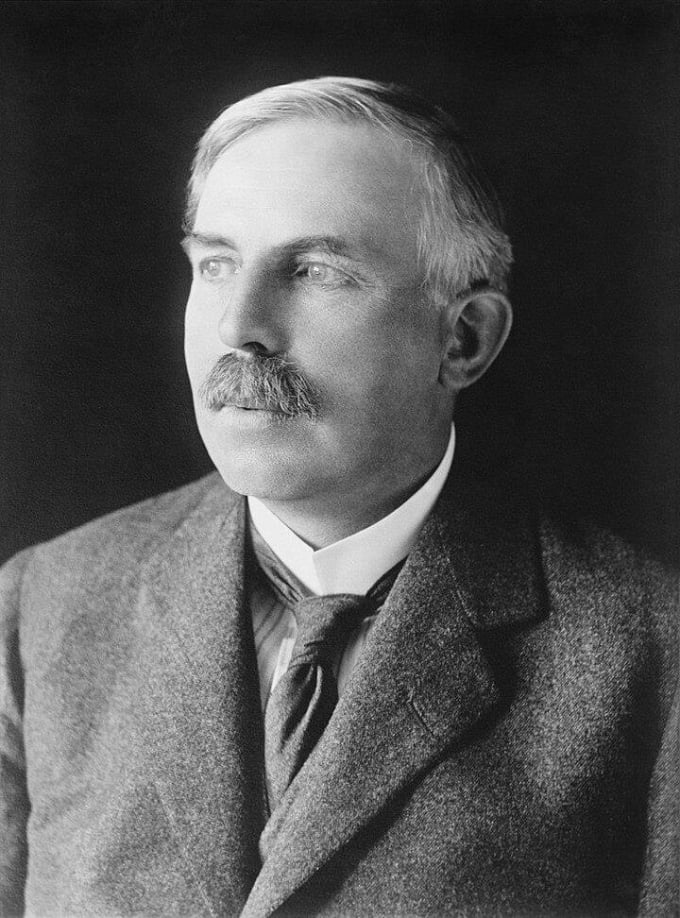
Ernest Rutherford
Responsibility is fundamental to human life and the foundation for development. For example, when it comes to household chores, many parents fear their children will fall behind in their studies, so they try to avoid involving them.
Dr. Dennis Waitley, dubbed the "Godfather of Leadership" in America, once said: "The most important thing parents need to give their children is not money, but teaching them how to live right and work responsibly."
From now on, give your child a chance to practice.
Before the age of 18, family education accounts for over 60% of a child's development, school education accounts for 30%, and the remaining 10% comes from social education. In reality, many parents do not know how to educate their children.
This highlights the importance of family education for children. School education is important, but parental methods of education are even more crucial, because children see more in their parents' words and actions.
Schools teach children knowledge and learning methods, while parents teach them character and morality. Whether a child's character and morality are well-developed is the key to their lifelong success. Simply being a respected person will make life exceptionally smooth.
Source: https://giadinh.suckhoedoisong.vn/nhung-nguoi-doat-giai-nobel-den-tu-nhung-gia-dinh-nao-5-cau-chuyen-sau-co-the-khien-cac-bac-phu-huynh-suy-ngam-172240919154611051.htm














































![[OFFICIAL] MISA GROUP ANNOUNCES ITS PIONEERING BRAND POSITIONING IN BUILDING AGENTIC AI FOR BUSINESSES, HOUSEHOLDS, AND THE GOVERNMENT](https://vphoto.vietnam.vn/thumb/402x226/vietnam/resource/IMAGE/2025/12/11/1765444754256_agentic-ai_postfb-scaled.png)









































Comment (0)