


Deputy Director of the Tax Department Vu Manh Cuong
The pillars reviewed by the World Bank are compliance, information technology, and data analytics.
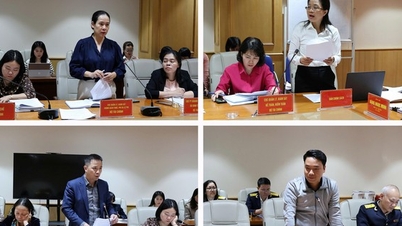
The meeting was attended by Deputy Director of the Tax Department Vu Manh Cuong, and representatives from various departments and units of the Tax Department. On the World Bank side, Mr. Nguyen Viet Anh – Senior Public Sector Expert, Head of the World Bank delegation, along with other senior experts, directly discussed and assessed the results of technical assistance provided from November 24th to December 12th, 2025.
According to Director Mai Xuan Thanh, during the three weeks of work, the World Bank expert team collaborated closely with units under the Tax Department in a serious, professional, and effective manner. The Tax Department leadership highly appreciated the World Bank's support in comprehensively reviewing three key areas: compliance management, information technology systems, and data analytics – artificial intelligence. These are areas of particular interest to the Tax sector, which has allocated significant resources to guide development in line with international best practices.
Based on the comprehensive report of the WB expert team, the Director of the Tax Department acknowledged many valuable recommendations, reflecting international standards, aligning with modern trends, and closely following Vietnam's realities.
Regarding compliance management, the World Bank noted issues such as taxpayer segmentation, the fragmentation of risk management, and the need to develop annual compliance improvement plans (CIPs). In particular, the World Bank proposed piloting a risk monitoring program for large multinational corporations that frequently report losses – a proposal that the Tax Department considered highly practical in the context of integration and increasing cross-border investment flows.
These recommendations aim to shift from a traditional management approach to a risk-based compliance management model, enabling tax authorities to focus resources on high-risk groups, thereby improving management efficiency and fairness in tax policy enforcement.
Regarding the information technology sector, the World Bank suggested that the Tax Department continue to strengthen its IT system architecture, emphasizing the need to address data fragmentation. According to the World Bank, this fragmentation can limit the ability to utilize the centralized data warehouse and affect the readiness for advanced analytical activities.
The World Bank recommends that the tax sector should soon finalize its digital transformation strategy, build a unified data governance framework, and redesign business processes. This is considered a crucial foundation for forming a new core tax system that meets the requirements of more modern, transparent, and efficient management.
Regarding data analysis and artificial intelligence applications, the World Bank outlined the overall picture of areas where the Tax Department needs to continue upgrading, from standardizing industry codes and increasing data integration capabilities to perfecting the database analysis infrastructure. These recommendations aim to facilitate the deployment of advanced analytical tools and AI in tax administration.

The World Bank highly appreciates the proactive spirit, open-mindedness, and strong commitment to reform shown by the Vietnam Tax Department in the process of modernizing the tax system according to the best international practices.
Identify priority tasks for the next phase.
Based on the World Bank's recommendations, Director Mai Xuan Thanh emphasized that these are all strategic directions for the modernization of the tax sector. The head of the Tax Department stated that he will direct units to focus on several priority tasks, first and foremost building a comprehensive compliance management process and designing an annual compliance improvement program, including piloting compliance monitoring for large multinational corporations that frequently report losses.
Simultaneously, the tax sector will continue to refine its digital transformation strategy, data governance framework, and redesign business processes towards compliance management. This will be the foundation for building a new core tax system, while also establishing an AI governance mechanism and implementing pilot projects on data analytics and artificial intelligence. Data consolidation, integration, and standardization are also identified as key tasks to support advanced analytics in the future.
Representing the World Bank, Mr. Nguyen Viet Anh – Head of the World Bank delegation – highly appreciated the proactive spirit, open-mindedness, and strong determination of the Vietnam Tax Department in the process of modernizing the tax system according to the best international practices.
According to Mr. Nguyen Viet Anh, the World Bank was particularly impressed with the Tax Department's substantive approach in comprehensively assessing three key areas: compliance management, information technology, and data analytics – artificial intelligence. From the World Bank's perspective, the recommendations and action plans proposed during this working session will contribute to improving tax management efficiency, enhancing taxpayer compliance, increasing transparency, and creating a fairer, more stable, and sustainable business environment.
According to Deputy Director of the Tax Department Vu Manh Cuong, the results of the three-week in-depth work have yielded many important insights, laying the groundwork for the next phase of tax reform. The World Bank's recommendations are not only relevant to Vietnam's practices but also adhere to international standards, thereby supporting tax authorities in developing a modern, efficient, and data-driven management model.
TT
Source: https://baochinhphu.vn/phan-tich-du-lieu-ai-la-tru-cot-quan-ly-tuan-thu-cua-nganh-thue-102251212153814428.htm





































































Comment (0)