

The key to development
After the merger, the new Phu Tho province has a natural area of over 9,360 km2, ranking 15th nationwide, with a population of over 4 million people, ranking 11th among provinces and cities nationwide. Currently, the workforce in the province is approximately 1.83 million people, an increase of 126,000 people compared to 2021. This is an abundant labor supply, creating an advantage for the development of industries and services, while also ensuring human resources for the integration and digital transformation process.
In Phu Tho province, the employment rate for those aged 15 and above exceeds 50% of the population, with approximately 575,000 workers employed in nearly 23,260 enterprises. Of these, 31 state-owned enterprises employ nearly 9,000 workers, while the remaining 23,000 are foreign-invested and privately-owned enterprises, employing over 559,000 workers.
Recognizing the role and importance of human resource quality for the socio -economic development of the province, Phu Tho has early on paid attention to and issued many mechanisms and policies for human resource development.
As a result, the quality of human resources has improved significantly; over 73.3% of the province's workforce has received training and vocational skills transfer, an increase of 4% compared to 2021; of which 34.6% have degrees, certificates, or certifications, an increase of 3.1%. Labor productivity reached approximately 212.2 million VND, an average increase of 5.8% per year. The labor structure has also shifted noticeably: agriculture, forestry, and fisheries now account for only 13.2%, industry accounts for 53%, and services account for 33.8%.
In particular, thanks to policies aimed at attracting and recruiting outstanding graduates and young scientists to work in the province, the qualifications and capabilities of the civil servant workforce have been gradually improved. In 2020, 69.8% of civil servants held doctoral, master's, or bachelor's degrees, and this figure is projected to increase to 82.8% by 2025. The age of civil servants is being rejuvenated, ensuring the quantity, quality, and structure based on job positions and meeting task requirements.
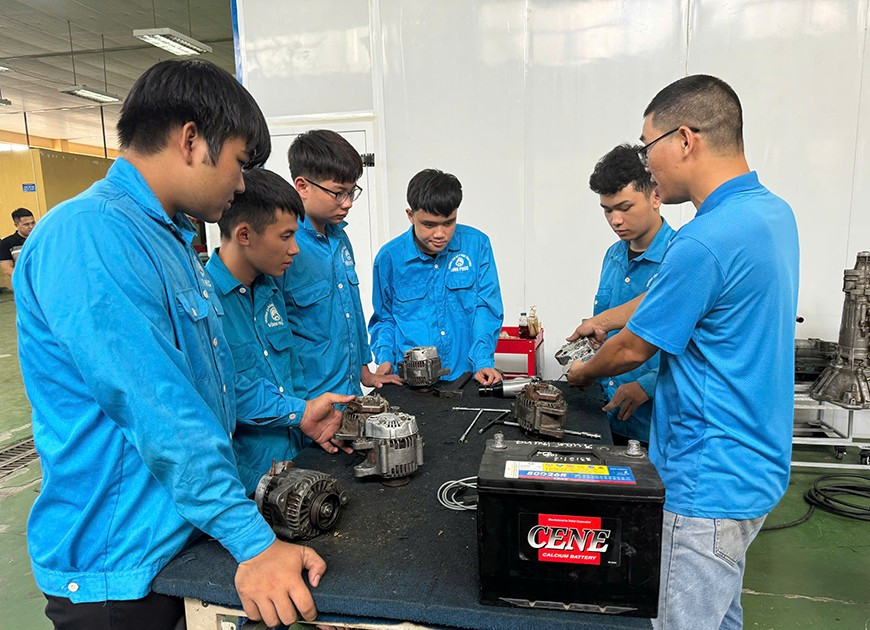
With its rapid socio-economic development, the province is focusing on restructuring and developing its network of vocational education institutions to improve the quality of human resource training towards international standards. As of July 2025, the province will have 5 universities, including 2 under the provincial government and 3 under central ministries and agencies.
In addition, there are 43 vocational education institutions, including 20 colleges, 12 secondary schools, and 11 vocational training centers. The average annual training capacity of universities is 35,250 students; the vocational education system has approximately 64,700 trainees, of which over 39,000 are at the college level and over 10,000 at the secondary level.
In 2024 alone, vocational education institutions enrolled more than 77,000 students; universities enrolled more than 12,000 undergraduate students, including nearly 740 postgraduate students.
In addition to leveraging policy support to improve student recruitment, educational institutions in Phu Tho province are also proactively enhancing the quality of training. Accordingly, schools have developed training programs at various levels; actively innovated curricula, content, and training methods to comprehensively develop students' moral character, professional work style, and abilities; integrated knowledge and skills, especially practical skills and teamwork; and fostered students' initiative, proactiveness, and creativity in professional practice at schools and businesses.
This demonstrates that the province's training system is large-scale and capable of supplying skilled labor for many sectors.
Long-term vision
Despite its achievements, Phu Tho's human resource development journey faces many obstacles. One of the biggest challenges is that talent attraction policies are not yet truly attractive enough, leading to continued localized brain drain. Furthermore, the quality of training in some fields has not kept pace with market demands, especially in the context of constantly changing technology.
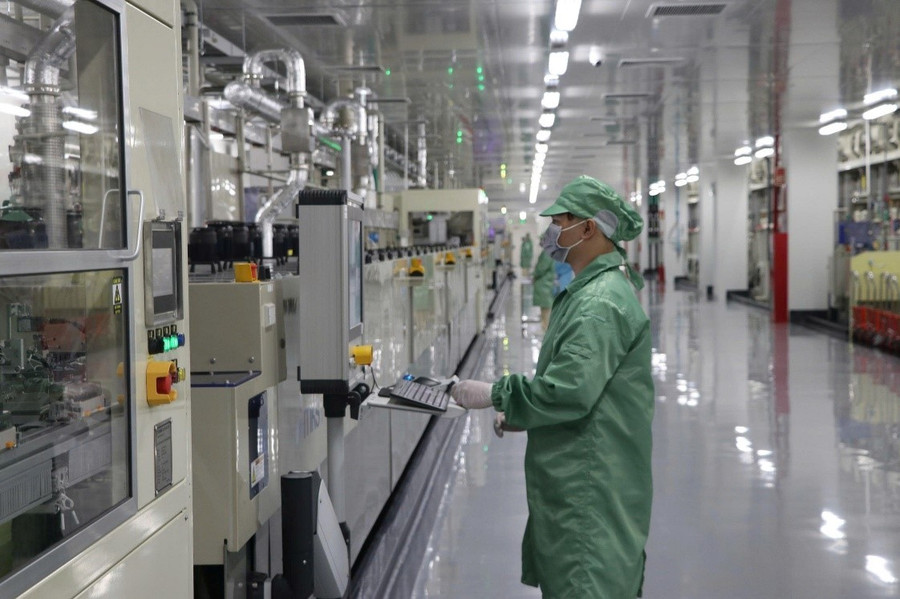
Lessons learned from the past period show that human resource development is not a short-term race but a long-term journey. To attract and retain talent, it requires not only good compensation policies but also an open work environment that encourages innovation and creativity. At the same time, closer links between training institutions and businesses/employers are needed to ensure that training quality meets the actual needs of the locality.
In that spirit, the Executive Committee of the Phu Tho Provincial Party Committee has issued a Resolution on the development of high-quality human resources, considering this as a pillar for the province's rapid and sustainable development in the period 2025-2030, with a vision to 2045.
Accordingly, the province's goal is to build a highly skilled workforce with professional expertise, vocational skills, foreign language proficiency, digital technology, and artificial intelligence, with a particular focus on key sectors.
By 2030, the province aims to standardize at least 70% of vocational and university training programs according to national and international standards; and to develop a workforce of 50,000 high-quality workers in key sectors such as processing and manufacturing, digital technology, healthcare, tourism, and green energy. Simultaneously, the province aims to train and cultivate 5,000 experts, engineers, and technicians in artificial intelligence; equip 80% of the workforce with basic digital skills; and ensure 50% of graduates meet international foreign language standards.
In addition, Phu Tho will complete its human resource data infrastructure, deploy a digital job exchange platform using artificial intelligence, and is expected to achieve over 100,000 transactions per year. Human resource supply and demand forecasting will be conducted annually from 2026, aiming to create a comprehensive database to support policy planning. The province also aims to reduce the urban unemployment rate to below 2.5%, increase the percentage of workers with degrees and certificates to 75% by 2030, and create approximately 250,000 new jobs, of which over 50% are skilled jobs.
Source: https://giaoducthoidai.vn/phat-develop-education-improves-quality-human-resources-in-phu-tho-post753346.html

![[Photo] Prime Minister Pham Minh Chinh holds a phone call with the CEO of Russia's Rosatom Corporation.](/_next/image?url=https%3A%2F%2Fvphoto.vietnam.vn%2Fthumb%2F1200x675%2Fvietnam%2Fresource%2FIMAGE%2F2025%2F12%2F11%2F1765464552365_dsc-5295-jpg.webp&w=3840&q=75)
![[Photo] Closing Ceremony of the 10th Session of the 15th National Assembly](/_next/image?url=https%3A%2F%2Fvphoto.vietnam.vn%2Fthumb%2F1200x675%2Fvietnam%2Fresource%2FIMAGE%2F2025%2F12%2F11%2F1765448959967_image-1437-jpg.webp&w=3840&q=75)













































![[OFFICIAL] MISA GROUP ANNOUNCES ITS PIONEERING BRAND POSITIONING IN BUILDING AGENTIC AI FOR BUSINESSES, HOUSEHOLDS, AND THE GOVERNMENT](https://vphoto.vietnam.vn/thumb/402x226/vietnam/resource/IMAGE/2025/12/11/1765444754256_agentic-ai_postfb-scaled.png)














































Comment (0)