

Prohibition of taking advantage of the state of emergency for personal gain
Accordingly, the Law on State of Emergency consists of VI Chapters and 36 Articles, regulating the principles, order, procedures, and authority to declare, announce, and abolish a state of emergency; measures to be applied in a state of emergency; organization of implementation of resolutions and orders on the state of emergency; and responsibilities of agencies, organizations, and individuals in a state of emergency.
Prohibited acts in a state of emergency include opposing, obstructing, failing to comply with, or failing to fully comply with, the direction, command, management, or request of an agency or person with authority in a state of emergency. Taking advantage of a state of emergency for personal gain, infringing upon the interests of the State, national security, social order and safety, and the legitimate rights and interests of organizations and individuals. Taking advantage of, abusing one's position, power, or being irresponsible in a state of emergency, causing damage to the interests of the State, the legitimate rights and interests of organizations and individuals. Delaying or refusing to return mobilized or requisitioned assets from organizations and individuals, or failing to compensate for damage caused by the mobilization or requisition of assets to organizations and individuals in accordance with the provisions of this Law and relevant laws. Providing false information about a state of emergency.
The Law also regulates litigation activities in a state of emergency; time limits and statute of limitations for handling administrative violations, resolving civil cases and enforcing administrative and civil judgments in a state of emergency; international cooperation on a state of emergency; authority and procedures for declaring, announcing and abolishing a state of emergency; authority to apply measures in a state of emergency...
Ensuring communication to respond to and overcome emergencies
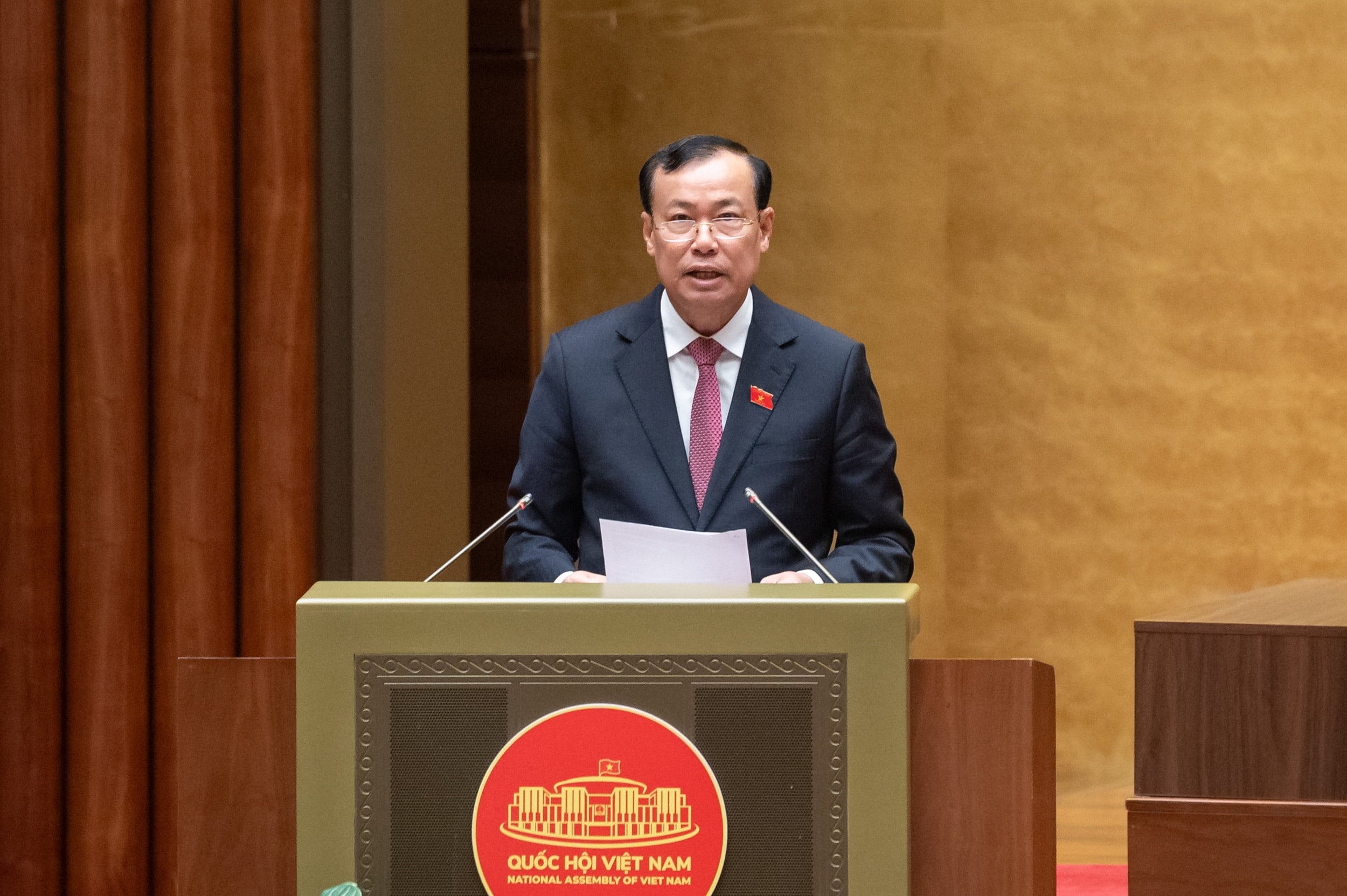
Previously, the Report on explanation, acceptance and revision of the draft Law on State of Emergency presented by Chairman of the National Defense, Security and Foreign Affairs Committee Le Tan Toi stated that regarding the state of emergency (Article 2), there were opinions suggesting to change this Article into an article explaining terms and explaining: state of emergency; disaster; core force; broad force; four on-the-spot motto.
The National Assembly Standing Committee believes that, inheriting the provisions of the Emergency Ordinance, Article 2 of the draft Law is absorbed and revised in the direction of only providing general provisions on the state of emergency and classifying the state of emergency.
Accordingly, emergencies related to natural disasters, epidemics, health , environment and other incidents fall into the group of emergency situations related to disasters. These concepts have been regulated in specialized laws. Therefore, the interpretation of the terms in this Article is unnecessary and avoids overlap.
However, based on the opinions of National Assembly deputies, to ensure consistency and consistency, the Standing Committee of the National Assembly has revised the content of the articles 13, 14 and 15 as in the draft Law submitted to the National Assembly for approval. Accordingly, the types of emergency situations are included in the content of the articles to be associated with the application of measures corresponding to each type of emergency situation.
Regarding information on emergency situations (Article 11), there is a proposal to add regulations on the responsibility of local authorities in receiving, synthesizing, and publicizing the results of handling feedback from people and businesses and ensuring communication in emergency situations.
The National Assembly Standing Committee said that currently, the 112 phone number is being used to receive information about incidents, natural disasters, catastrophes, risks, and requests for assistance from organizations and individuals nationwide. The Provincial Military Command is the standing agency of the Civil Defense Command at the same level, responsible for managing, operating, receiving and processing information, feedback, and requests for assistance from organizations and individuals.
Based on the opinions of National Assembly Deputies, to be strict and consistent with the regulations on measures to overcome consequences in a state of emergency and emergency relief and support and ensure communication to respond to and overcome the state of emergency, the National Assembly Standing Committee has supplemented and revised Clause 3 of this Article as in the draft Law submitted to the National Assembly for approval.
Source: https://daibieunhandan.vn/quoc-hoi-thong-qua-luat-tinh-trang-khan-cap-10398039.html



















![[Photo] Parade to celebrate the 50th anniversary of Laos' National Day](/_next/image?url=https%3A%2F%2Fvphoto.vietnam.vn%2Fthumb%2F1200x675%2Fvietnam%2Fresource%2FIMAGE%2F2025%2F12%2F02%2F1764691918289_ndo_br_0-jpg.webp&w=3840&q=75)

































































Comment (0)