

According to experts, in the coming period, the development structure will shift from ground-level spaces to underground spaces, digital spaces, etc., which will open up growth opportunities for the real estate market.
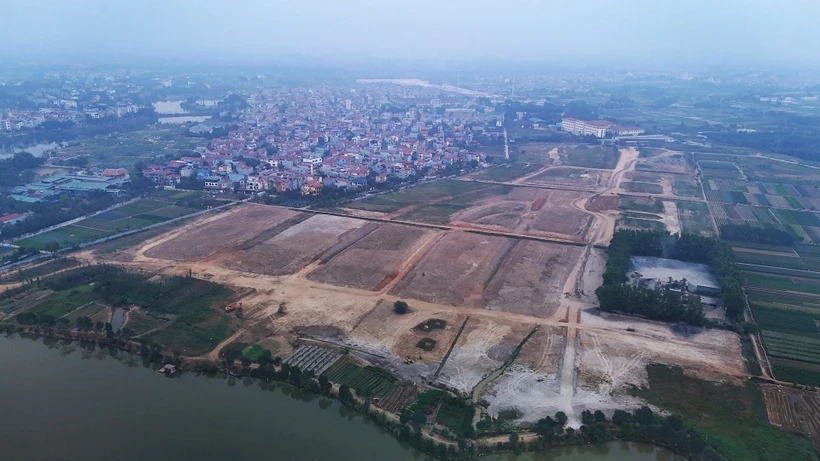
With fundamental new laws (especially the Land Law, Housing Law, and Real Estate Business Law) coming into effect in 2024 and gradually taking effect, along with the rapid implementation of reforms to the administrative apparatus in a "do it right, do it immediately, and comprehensively" manner, many experts believe that the Vietnamese real estate market will experience positive changes in 2025.
In particular, the upcoming development structure will shift from ground-based spaces to underground spaces, marine spaces, and digital spaces (especially the TOD model, which is being emphasized in transportation infrastructure development strategies), opening up new growth opportunities for the real estate market and the economy .
Opportunities to stimulate growth
Speaking at the 5th Spring Real Estate Forum, organized by the Vietnam Real Estate e-magazine in collaboration with the Vietnam Institute of Real Estate Research (VIRES) on the morning of February 19th, Associate Professor-Doctor Tran Dinh Thien (member of the Prime Minister 's Economic Advisory Group, former Director of the Vietnam Institute of Economics) emphasized the government's efforts in 2024, such as implementing three important laws (the Land Law, the Real Estate Business Law, and the Housing Law) five months ahead of schedule. These efforts are seen as decisive solutions to address the biggest bottlenecks in the economy at present.
According to experts, before the Lunar New Year of the Year of the Snake 2025, the demand for real estate decreased significantly; however, in just the first week after the holiday, search indicators for buying apartments and houses increased again.
In addition, new land price frameworks in some areas have been adjusted to be closer to market prices, impacting the input costs of businesses, product selling prices, and the financial obligations of people when engaging in real estate transactions.
In particular, transportation infrastructure, especially expressways and high-speed rail, is receiving significant investment, opening up development opportunities for many regions, changing investment mindsets, and leading to a shift of capital flows towards emerging markets.
In line with this shift, Mr. Thien predicts that in the future, the development structure will change from terrestrial space to underground space, maritime space, outer space, digital space, and so on.
According to Mr. Thien, this trend will open up growth opportunities for the real estate market; however, the crucial factor is the capacity to implement and execute it.
Dr. Can Van Luc, a member of the National Financial and Monetary Policy Advisory Council, believes that factors affecting the real estate market include: macroeconomic conditions; legal framework and management supervision; planning, urbanization and infrastructure policies; finance; supply and demand, price and confidence; information, data, and transparency.
Accordingly, the main factors that have helped the real estate market recover in recent times include: global economic growth remaining relatively flat, while the Vietnamese economy is expected to grow quite strongly in 2024-2025, laying the groundwork for a new era; macroeconomic stability is maintained, inflation is under control; interest rates in Vietnam remain low; and exchange rates and bad debts are within controllable limits.
Along with that, there has been a breakthrough in institutional reform, with new laws being amended and officially promulgated as quickly as in recent times; organizational structures have been streamlined; planning at all levels has been issued; public investment and infrastructure policies have been boosted; financial obligations have passed their most difficult phase; interest rates have been maintained at a low level, creating favorable conditions for businesses and people to access capital…
Challenges to consider
However, Dr. Can Van Luc also noted that, in addition to the opportunities mentioned above, the real estate market in 2025 will also face a number of challenges and obstacles.
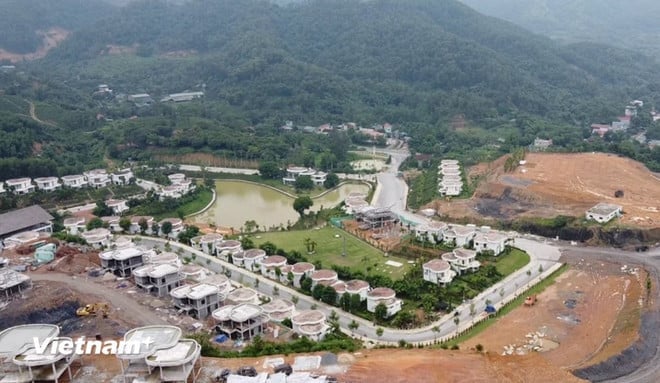
For example, the issue of housing prices remaining high stems from many causes; difficulties in calculating land use fees in many localities and projects; some localities have not yet published new land price lists; and the issuance of guiding documents for new laws and resolutions related to land, housing, and the real estate market is still slow.
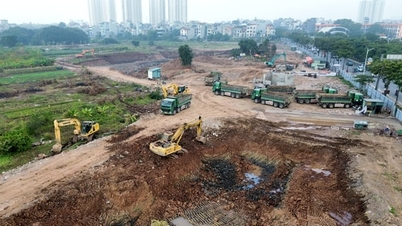
There are still obstacles in land clearance, especially regarding the need for investors to negotiate directly with residents for small and medium-sized projects. Land use fee auctions still have shortcomings (starting price, capacity of participating parties, penalties, etc.). The approach to social housing development also has inadequacies, and funding for social housing still needs attention.
Representatives of the Vietnam Real Estate Association also acknowledged that the Vietnamese real estate market in 2025 is predicted to have many development opportunities but still faces many challenges to overcome. In reality, although fundamental new laws have been in effect since 2024, creating a new legal environment for the market, their effectiveness still needs more time to be verified.
Furthermore, businesses remain concerned about overlapping and inconsistent regulations related to land, construction, and investment, which could pose risks to project developers. In addition, according to the Vietnam Real Estate Association, bank interest rates and access to capital are also issues that require continued solutions to ensure the market operates efficiently in the new development cycle.
Associate Professor-Doctor Tran Dinh Thien, former Director of the Vietnam Institute of Economics, also expressed the view that in the context of a volatile global situation, realizing ambitious growth targets, including in the real estate market, requires strong political determination, flexible policies, and the cooperation of businesses to create a solid foundation for an era of remarkable development.
"I believe that when faced with new opportunities, the potential risks for real estate businesses need to be carefully considered. Perhaps we still have much to discuss to help the real estate market gain momentum," Mr. Thien said.
Source


















![[Photo] Prime Minister Pham Minh Chinh holds a phone call with the CEO of Russia's Rosatom Corporation.](/_next/image?url=https%3A%2F%2Fvphoto.vietnam.vn%2Fthumb%2F1200x675%2Fvietnam%2Fresource%2FIMAGE%2F2025%2F12%2F11%2F1765464552365_dsc-5295-jpg.webp&w=3840&q=75)















































Comment (0)