

This year, Mrs. Do Thi Tuoi's family in Nhi Trai village, Trung Chinh commune, planted nearly 8 sao (approximately 0.8 hectares) of rice, including varieties such as Khang Dan 18, glutinous rice, and fragrant non-glutinous rice. Thanks to proactive care immediately after transplanting, the entire rice crop of her family is growing and developing well. Recently, due to the impact of storms and heavy rain, some areas are at risk of bacterial leaf blight. In addition, the sixth generation of small leaf-rolling caterpillars has emerged, potentially causing damage if not controlled with pesticides. After field inspections and following instructions from the People's Committee of the commune and the Plant Protection and Cultivation Sub-Department (Department of Agriculture and Environment), Mrs. Tuoi's family purchased pesticides to spray on the entire rice crop. To date, all 8 sao of her family's rice have safely bloomed.
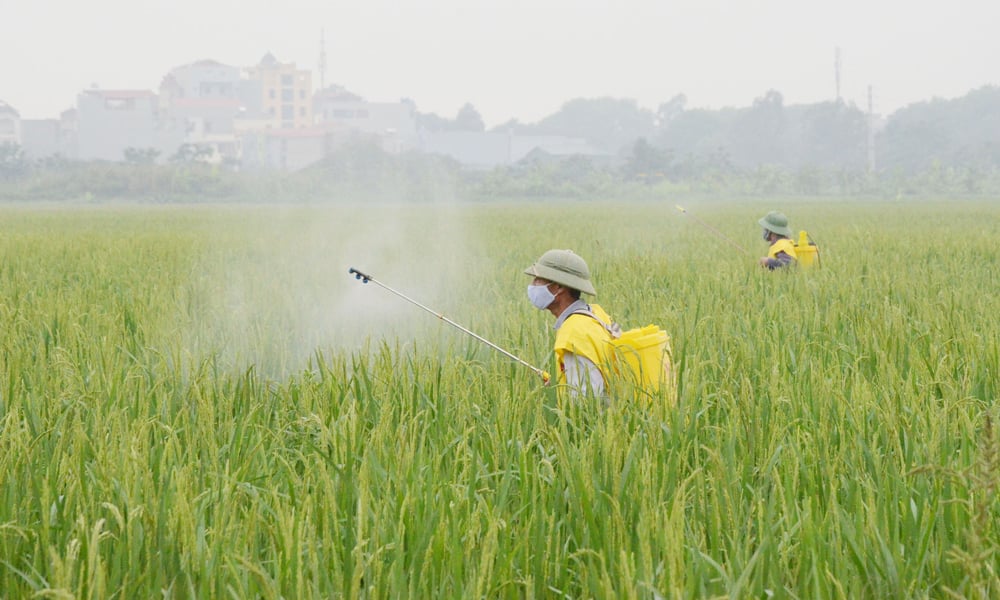 |
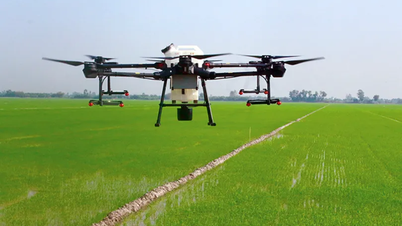
Farmers in Yen Phong commune are spraying pesticides to control leaf-rolling caterpillars. |
According to statistics from the People's Committee of Trung Chinh commune, in the 2025 crop season, the entire commune planted approximately 900 hectares of rice, with an expected average yield of 62 quintals/hectare, and a total production of about 5,600 tons. This year, the commune is prioritizing direct sowing on 100% of the area, using high-quality varieties such as Khang Dan 18, Q5, TBR1, fragrant rice, and glutinous rice. According to Mr. Vu Van Hao, Chairman of the Commune People's Committee: "Currently, many rice fields in the commune have entered the flowering stage. However, due to the influence of the weather, some pests and diseases have appeared in the fields, such as bacterial leaf blight, small leaf roller (6th generation), two-spotted stem borer (4th generation)... with densities and damage rates reaching the threshold requiring control. Following the guidance of the Department of Crop Production and Plant Protection, from August 19th to the present, the commune has been disseminating information, guiding, and urging farmers to spray pesticides on 90% of the area, and at the same time, notifying farmers to regularly inspect their fields to detect and control pests and diseases in areas severely affected."
In Tan Tien ward, Mr. Duong Van Xuat's family planted 9 sao (approximately 0.9 hectares) of Dai Thom 8 and Thuy Huong 308 rice varieties. After typhoon No. 5, many rice leaves were damaged, making them susceptible to bacterial leaf blight and small leaf-rolling caterpillars. Following the instructions of the ward's Public Service Center, Mr. Xuat sprayed pesticides to protect the rice plants and ensure safe flowering.
| This year's crop season saw nearly 77,000 hectares of rice planted across the province, reaching 100.03% of the plan. To date, approximately 50,000 hectares have bloomed, with the remaining area expected to bloom before September 20th. Through field inspections, the Department of Crop Production and Plant Protection warned of the risk of widespread outbreaks of several major pests and diseases, including: bacterial leaf blight, the sixth generation of small leaf-rolling caterpillars, the fourth generation of two-spotted stem borers, and the sixth generation of brown planthoppers and white-backed planthoppers. |
Along with Mr. Xuat's family, thanks to timely care and pest and disease control, more than 1,000 hectares of rice in Tan Tien ward, mainly high-quality rice varieties, are growing and developing well and are entering the flowering stage. Mr. Luong Xuan Thang, Director of the Public Service Center of Tan Tien ward, shared: “In response to the pest and disease outbreaks, following the directives of the Department of Agriculture and Environment and the guidance of the Provincial Plant Protection and Crop Production Sub-department, the local government has proactively disseminated information and advised farmers to implement measures to prevent and protect the rice crop. By the end of September 9th, farmers in the ward had sprayed pesticides to protect 100% of the rice area against bacterial leaf blight, small leaf roller, and two-spotted stem borer.”
According to the Department of Agriculture and Environment, this year's crop season saw nearly 77,000 hectares of rice planted throughout the province, reaching 100.03% of the plan. To date, approximately 50,000 hectares have bloomed, with the remaining area expected to bloom before September 20th. Through field inspections, the Plant Protection and Crop Production Sub-Department warned of the risk of widespread outbreaks of several major pests and diseases, including: bacterial leaf blight, the sixth generation of small leaf-rolling caterpillars, the fourth generation of two-spotted stem borers, and the sixth generation of brown planthoppers and white-backed planthoppers.
Among these, the small leaf-rolling caterpillar is the most serious pest affecting early and mid-season tea crops. Approximately 25,500 hectares require control, with a common density of 5-10 caterpillars/m². If not treated promptly, this can cause leaf whitening and severely impact yield. The best time for control is from early to mid-September. In addition, rodent damage, fall armyworm, leaf blight, and bacterial leaf spot have also appeared sporadically in many localities.
Mr. Vu Tri Dong, Deputy Head of the Department of Crop Production and Plant Protection, said: “Unpredictable weather patterns, coupled with the simultaneous emergence of multiple generations of pests and diseases, mean that the risk of damage this year is higher than the average of previous years. If not controlled promptly, it will greatly affect the yield and production of the rice crop.” Currently, the Department is focusing on directing people and localities to control rice leaf rollers, stem borers, brown planthoppers, and white-backed planthoppers, while also implementing rodent control. Communes and wards regularly update pest and disease information, coordinate with specialized stations to inspect fields, and guide farmers in pest control according to technical recommendations.
Alongside crop protection efforts, the Ministry of Agriculture and Environment is orienting agricultural production towards sustainability and safety. Local authorities are encouraged to mobilize farmers to gradually replace chemical pesticides with biological pesticides, increase the use of organic fertilizers, prevent soil degradation, and restore soil fertility. After spraying, farmers should collect pesticide containers in designated areas to avoid water and environmental pollution.
According to many farmers, thanks to the timely intervention of the government and specialized agencies, pest control this year has been more proactive, reducing the risk of widespread disease outbreaks. Mr. Nguyen Van Khoa, a farmer in Mao Dien ward, said: “Previously, we used to wait for pests and diseases to appear before spraying, which affected the rice crop. This year, the commune and the Plant Protection Sub-department regularly announced and recommended the timing of simultaneous spraying, so the effect is clear, the rice plants are healthy, and the ears of grain bloom evenly.”
Thanks to proactive care and pest control, many rice fields in the province are currently growing and developing favorably. However, the period from now until the end of the season still holds many potential challenges. Therefore, farmers need to continue closely monitoring their fields, not neglecting plant protection, determined to maintain the yield and production of this year's crop, while aiming for safe and sustainable production, and enhancing the value of Bac Ninh rice in the market.
Source: https://baobacninhtv.vn/thuong-xuyen-tham-dong-phong-tru-kip-thoi-sau-benh-hai-lua-mua-postid426154.bbg






































































Comment (0)