


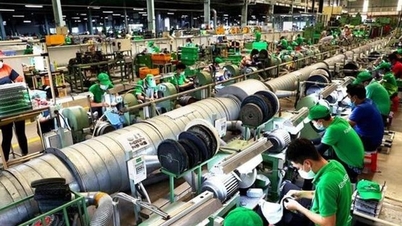
Workers at a factory in the US. Photo: THX/VNA
Labor costs in the US rose less than expected in the third quarter of 2025, as the job market cooled, slowing wage growth – a positive sign for the country's inflation outlook.
According to data from the Bureau of Labor Statistics, part of the U.S. Department of Labor, the Labor Cost Index (ECI) – the broadest measure of labor costs – rose 0.8% in the third quarter of 2025, following a 0.9% increase in the previous quarter. Economists surveyed by Reuters had forecast a 0.9% increase. The report came just one day after data showed the jobless claims rate in October 2025 fell to its lowest level in five years. This development reinforces the view of Federal Reserve officials that the labor market is not the source of inflation. The U.S. job market is slowing down as both labor supply and demand are low, a factor economists attribute to reduced immigration and import tariffs, which have driven up prices for many goods.
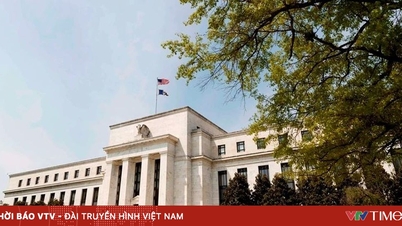
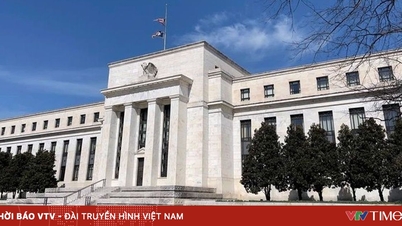
Also on December 10th, the Fed decided to lower interest rates by 0.25 percentage points, marking the third rate cut since the beginning of the year, bringing rates down to 3.50%-3.75%. However, officials said the central bank may pause further rate cuts to await clearer signals regarding the direction of the labor market and inflation, which is still considered "relatively high."
Ben Ayers, chief economist at Nationwide, predicts that with declining job turnover and weakening hiring demand in the second half of 2025, wage growth will slow further in 2026. He emphasizes that reduced labor cost pressure will ease the pressure on businesses and could boost investment in the new year.
In the 12 months to September 2025, U.S. labor costs rose 3.5% – the lowest annual increase since the second quarter of 2021 – following a 3.6% increase up to June 2025. The report was released late due to the 43-day U.S. government shutdown. The statistics agency also noted that “survey response rates were lower in September,” and data collection could not be completed before the longest shutdown in U.S. history began.
The Federal Reserve considers the ECI (Extracorporeal Pressure Index) to be an important measure of labor market tension and an early indicator of core inflation, as it adjusts for changes in the structure and quality of jobs.
Although the slower pace of wage growth suggests that wages are not putting inflationary pressure on the economy, prices are still rising partly due to import taxes, weakening consumer purchasing power. Slower wage growth could also impact household spending.
Wages and benefits – which account for a large portion of labor costs – rose 0.8% in the third quarter of 2025, lower than the 1% increase in the second quarter. Annually, this group saw a 3.5% increase. Adjusted for inflation, real wages rose 0.6% in the 12 months to September 2025, following a 0.9% increase in the second quarter. Union wages increased at a significantly slower pace in the past quarter. Private sector wages rose 0.8% in the third quarter and 3.6% in the 12 months to September 2025, higher than the 3.5% increase in the second quarter. Meanwhile, quarterly wage growth slowed most sharply in the services sector, with wages increasing only 0.7% after a 1% increase in the previous quarter.
Source: https://vtv.vn/tin-hieu-tich-cuc-cho-lam-phat-my-tu-thi-truong-lao-dong-100251212064550219.htm


![[Photo] Closing Ceremony of the 10th Session of the 15th National Assembly](/_next/image?url=https%3A%2F%2Fvphoto.vietnam.vn%2Fthumb%2F1200x675%2Fvietnam%2Fresource%2FIMAGE%2F2025%2F12%2F11%2F1765448959967_image-1437-jpg.webp&w=3840&q=75)
![[Photo] Prime Minister Pham Minh Chinh holds a phone call with the CEO of Russia's Rosatom Corporation.](/_next/image?url=https%3A%2F%2Fvphoto.vietnam.vn%2Fthumb%2F1200x675%2Fvietnam%2Fresource%2FIMAGE%2F2025%2F12%2F11%2F1765464552365_dsc-5295-jpg.webp&w=3840&q=75)



































![[OFFICIAL] MISA GROUP ANNOUNCES ITS PIONEERING BRAND POSITIONING IN BUILDING AGENTIC AI FOR BUSINESSES, HOUSEHOLDS, AND THE GOVERNMENT](https://vphoto.vietnam.vn/thumb/402x226/vietnam/resource/IMAGE/2025/12/11/1765444754256_agentic-ai_postfb-scaled.png)
















































Comment (0)