

Speaking with a reporter from Dan Tri newspaper, National Assembly representative Nguyen Quang Huan, a member of the National Assembly's Committee on Science , Technology and Environment, stated that the "new era," the "era of national progress," has gradually taken root in all sectors and fields, including the environment.

Presiding over the 5th meeting of the National Steering Committee for the Implementation of Vietnam's Commitments at COP26 (COP26 Steering Committee), Prime Minister Pham Minh Chinh – Head of the Steering Committee – emphasized that climate change is becoming increasingly extreme, its developments are becoming more complex, its consequences are becoming greater, and overcoming them requires significant effort and resources. Responding to climate change is an urgent task that no country can undertake alone.
The Prime Minister emphasized that digital transformation, green transformation, energy transition, and greenhouse gas emission reduction are inevitable and irreversible trends. Therefore, greater efforts and stronger determination are needed to better address climate change, including green development, clean energy transition, and fulfilling COP26 commitments.
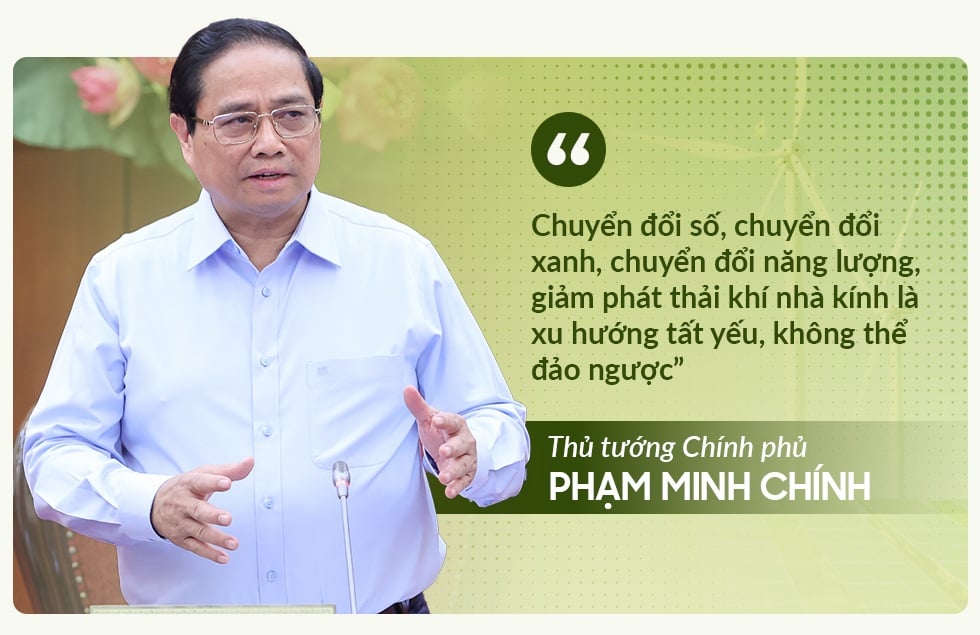
"National strategies and those of businesses and investors must align to create momentum for development," the Prime Minister said, emphasizing that mechanisms must be transparent, infrastructure must be seamless, and management must be smart.
The head of government called for the mobilization of all resources, the entire society, and all citizens, emphasizing the importance of connecting with and attracting resources from the international community, green finance flows, technology transfer, knowledge, and experience from other countries, international organizations, and investors.
Information from the Ministry of Natural Resources and Environment indicates that positive and strong movements to fulfill COP26 commitments are spreading from the central government to localities and the business community.
Recently, the Government has submitted to the National Assembly for approval the National Marine Spatial Planning. The Prime Minister has approved the Hydrogen Energy Development Strategy, the National Energy Development Strategy, the Vietnam Automotive Industry Development Strategy; the National Energy Master Plan; the National Action Plan to implement the Glasgow Declaration on Forests and Land Use; and the National Action Plan for transforming the food system to be transparent, accountable, and sustainable.
Projects such as the sustainable development plan for one million hectares of high-quality, low-emission rice cultivation linked to green growth in the Mekong Delta by 2030; the implementation plan for the Political Declaration establishing a partnership for a just energy transition (JETP) and the announcement of the plan to mobilize resources for JETP implementation at COP28; the project to improve forest quality to conserve forest ecosystems and prevent and mitigate natural disasters; and the project to develop the multi-purpose value of forest ecosystems, have also been issued.

Ministries and sectors have also actively participated, implementing many tasks and solutions, from improving institutions and policies to implementing specific schemes and projects, and have achieved many results.
For example, the Ministry of Industry and Trade has finalized many mechanisms for the electricity sector and renewable energy development, actively implementing the Power Development Plan VIII. The Ministry has directed coal-fired power plants to develop and implement plans to transition to clean fuels; and worked with international partners to promote a just energy transition.
The Ministry of Planning and Investment is actively implementing green growth initiatives, building a green economic sector system; removing difficulties and obstacles for businesses, and attracting investment for green transformation and renewable energy development.
The Ministry of Finance has finalized a plan for developing a carbon market, negotiating loans, and investing in programs and projects to address climate change and energy transition. The Ministry also signed a Memorandum of Understanding for a €500 million concessional loan with the European Investment Bank (EIB) for energy transition.
Meanwhile, the Ministry of Agriculture and Rural Development is leading the implementation of international declarations on agriculture; piloting the transfer of greenhouse gas emission reduction results in the North Central, South Central, and Central Highlands regions; and developing low-emission and forest carbon sequestration projects.
Meanwhile, the Ministry of Transport is implementing an action program on green energy transition and emission reduction in the transport sector for each area: road, rail, inland waterway, maritime, and aviation; and developing mechanisms and a roadmap for the development of electric vehicles.
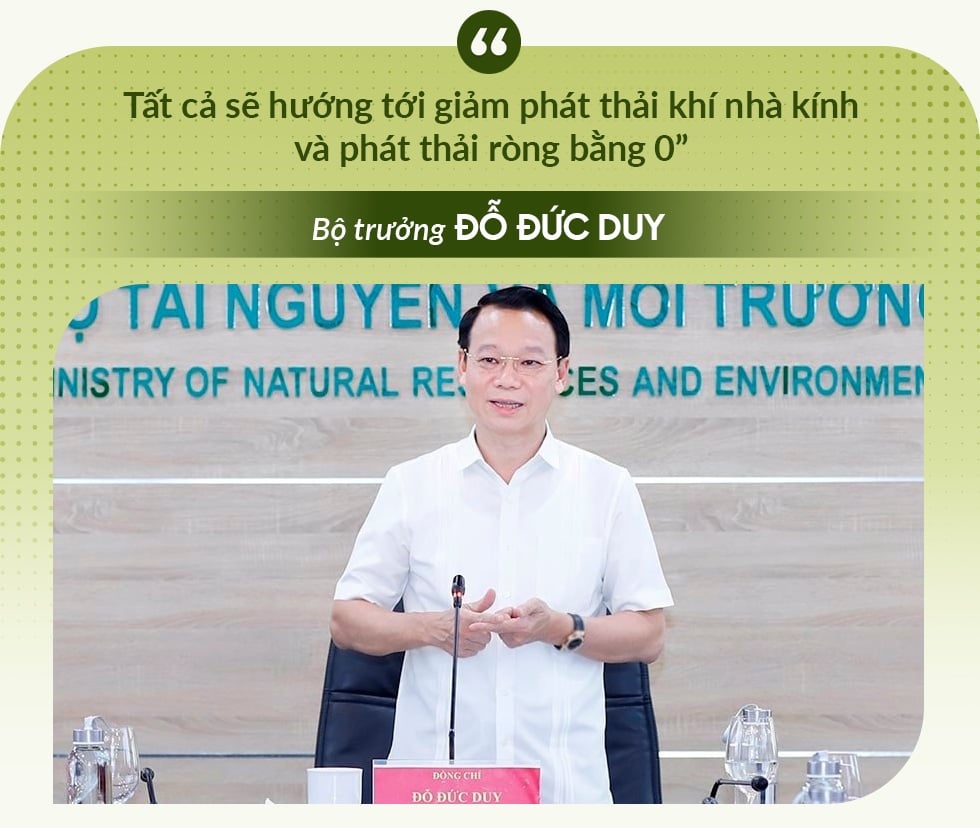
The Ministry of Natural Resources and Environment has developed and submitted for promulgation numerous legal documents implementing green transition and reducing greenhouse gas emissions; and advised the Prime Minister to issue a Directive on strengthening carbon credit management…
Numerous large corporations, businesses, and banks across the country are leading the way in researching and developing new energy sources, implementing green transformation and digital transformation in management and operations, saving energy, and reducing greenhouse gas emissions.
"Provinces and cities are continuing to organize and implement tasks and solutions to reduce greenhouse gas emissions, gradually fulfilling the commitment to net emissions of 'zero' by 2050."
Local authorities have urged businesses to conduct greenhouse gas inventories, reduce emissions, and develop waste-to-energy power plants (Hanoi, Bac Ninh, Ha Nam, Binh Thuan, Phu Tho); and develop energy-efficient public lighting systems (Hanoi, Thanh Hoa, Hue, Ho Chi Minh City, Quang Ninh, Ben Tre).
"Some major cities have widely developed electric bus systems and public bicycle networks," the Ministry of Natural Resources and Environment informed.
Minister of Natural Resources and Environment Do Duc Duy stated that mitigating greenhouse gas emissions and protecting the ozone layer, organizing carbon markets, and managing carbon credits are all issues of global concern. These are also new and challenging issues within the framework of building carbon markets and managing carbon credits.
Mr. Duy emphasized that the focus will be on developing new productive forces, including digital transformation and green transformation. "Everything will be geared towards reducing greenhouse gas emissions and achieving net emissions of zero," Minister Do Duc Duy said.

The Ministry of Natural Resources and Environment is finalizing draft comprehensive planning for the Ca, Tra Khuc, Vu Gia - Thu Bon, Kon - Ha Thanh, and Ba river basins. Pilot projects to restore "dead rivers" aimed at restoring water sources, creating flow, and improving the ecological landscape, as well as projects to investigate, assess, and propose pilot plans for restoring degraded, depleted, and polluted water sources in the Bac Hung Hai, Nhue - Day, and Ngu Huyen Khe rivers, are also being actively developed and implemented.
Currently, there are 117 industrial and hazardous waste treatment facilities nationwide. Reports from localities indicate that the rate of hazardous waste collection and treatment has reached approximately 90%. The Ministry of Natural Resources and Environment is submitting to the Prime Minister for approval a plan for the development of the biotechnology industry in the environmental sector until 2030. Industrial and hazardous waste management will be implemented through strict control of sources of generation, collection, storage, transportation, and treatment.
This will focus on monitoring facilities with a high risk of environmental pollution. For example, in the northern region, this includes facilities in the Nghi Son Economic Zone (Thanh Hoa province), Hung Nghiep Formos Ha Tinh Steel Company Limited, Nui Phao Mineral Exploitation and Processing Company Limited (Thai Nguyen), facilities in the Tang Loong Industrial Park (Lao Cai), Phu Lam Industrial Cluster, Bac Ninh province; and facilities in the Man Xa - Van Mon craft village industrial cluster, Bac Ninh province.
In the Central and Central Highlands regions, attention will be paid to Binh Son Refining and Petrochemical Joint Stock Company.

In addition, the Ministry of Natural Resources and Environment will conduct inspections of 86 establishments to ensure compliance with environmental protection laws; finalize national technical standards on the environment for imported scrap materials used as raw materials for production; and implement the development of national technical standards for municipal solid waste landfills and municipal solid waste incinerators.
The goal is to ensure that 95% of household waste is collected and processed in urban areas; and 40% of household waste is processed using incineration, electricity generation, and recycling models instead of landfilling.
Professor, Dr. Dang Thi Kim Chi, former Deputy Director of the Institute of Environmental Science and Technology, assessed that environmental protection activities in recent years have created very noticeable changes from rural and mountainous areas to large cities across the country.
"This shows that we have the right and appropriate policies and guidelines to better control sources of environmental pollution and have measures to reduce pollution," Ms. Chi said.
Dr. Hoang Duong Tung, Chairman of the Vietnam Clean Air Network (formerly Deputy Director General of the General Department of Environment), shared the same view, noting that "in recent years, everywhere you go, people are talking about digital transformation and green transformation."
"The Net Zero commitment by 2050 clearly demonstrates Vietnam's determination to transform itself; there is no other way. To survive and thrive in this era, we must transform, most notably through a green transition," Mr. Tung stated.
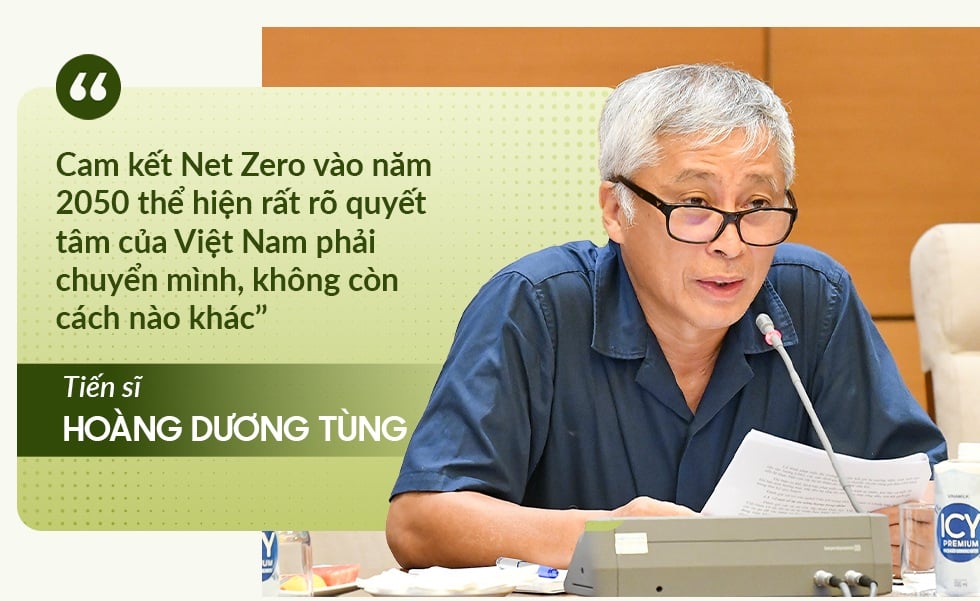
The 2020 Environmental Protection Law provides many guidelines to strengthen environmental protection and promote a circular and green economy. To ensure that macro-level policies are translated into practice with maximum effectiveness, Mr. Tung hopes for more detailed and specific guidelines to facilitate implementation at the local level.

Recognizing the upcoming challenges, the Ministry of Natural Resources and Environment believes that participation in new-generation free trade agreements requires the fulfillment of environmental commitments. Therefore, a roadmap is needed to improve environmental standards and regulations; and a roadmap for the technological transformation of outdated production facilities that pose a high risk of environmental pollution.
Not to mention the increase in waste, emissions, and wastewater, which creates significant pressure on the environment and will not decrease in the short term. “Vietnam’s strong commitments to responding to climate change are highly appreciated by the international community, but at the same time, they pose major challenges for the natural resources and environment sector in the coming time, requiring continued improvement of institutions and policies, and mobilization of international support in terms of financial resources, technology transfer, and management experience,” the Ministry of Natural Resources and Environment forecasts.
The Ministry will continue to monitor and control emissions from production, business, and service activities, as well as areas with high concentrations of emissions in industrial parks, clusters, craft villages, and river basins. Air quality, especially in large cities, will also be more strictly controlled.
Environmental expert Dang Thi Kim Chi stated that the policies and guidelines have been addressed and updated in a timely manner to meet the requirements of developing a green and circular economy. However, Ms. Chi suggested that more attention should be paid to the specific characteristics of each locality and region.
"In mountainous areas, waste is different from that in large cities. The waste treatment technologies we develop must be different, adapted to local customs and practices, to ensure effectiveness. Policies shouldn't be too general," Ms. Chi analyzed.
More importantly, according to Ms. Chi, the human factor remains crucial. Raising community awareness and fostering a sense of responsibility among citizens regarding environmental protection in urban areas will play a significant role in reducing pollution.
Sharing this view, Dr. Hoang Duong Tung emphasized the importance of improving the quality of human resources and management in the environmental field.
“Green transformation and Net Zero are very new concepts. Without a shift in the awareness and thinking of the implementing officials from the central to local levels, there will still be hesitation and a desire to cling to the old ways. We must strengthen training and improve the management skills of the officials directly involved. These are things that need to be done immediately in the coming years. Once awareness shifts, we will succeed,” Mr. Tung expressed.
He cited the example of Beijing (China), which was once a hotspot for air pollution, but thanks to the determination of leaders at all levels with correct policies and action programs, and the enthusiastic participation of businesses and the community, air quality has gradually improved.

"Is it possible to have clean air when many production facilities disregard the law and continuously emit smoke and dust?", he questioned, and assessed that Hanoi and Ho Chi Minh City's determination to implement green transportation, transition to green energy, and reduce carbon and methane emissions in the transportation sector is a correct policy.
Hanoi currently has 17 industrial zones, over 1,300 craft villages, and more than 8 million vehicles. Every day, Hanoi consumes 8 million kWh of electricity and millions of liters of gasoline and diesel fuel – becoming one of the many causes of air pollution.
To improve the environment in general and air quality in particular, the Director of the Hanoi Department of Natural Resources and Environment, Le Thanh Nam, said the city is implementing many solutions to rehabilitate and treat pollution in lakes and rivers; transition to clean energy; and develop smart cities.
Hanoi is also developing green and smart transportation, investing in modern transportation infrastructure; developing public spaces and green spaces according to the satellite city model; and developing transportation infrastructure and solid waste treatment.
Hanoi will implement incentive mechanisms to encourage investment in the construction of high-tech waste treatment plants, reducing landfill space and environmental pollution.
"Essentially, by 2025, 100% of household waste in the city will be incinerated for electricity generation using new technology. Developing dedicated lanes for electric buses and low-emission vehicles, combined with the public transportation system, is the key factor in regulating traffic flow and reducing emissions," Mr. Nam expected.
National Assembly representative Nguyen Quang Huan emphasized that rapid and sustainable economic development must be closely linked to environmental protection.
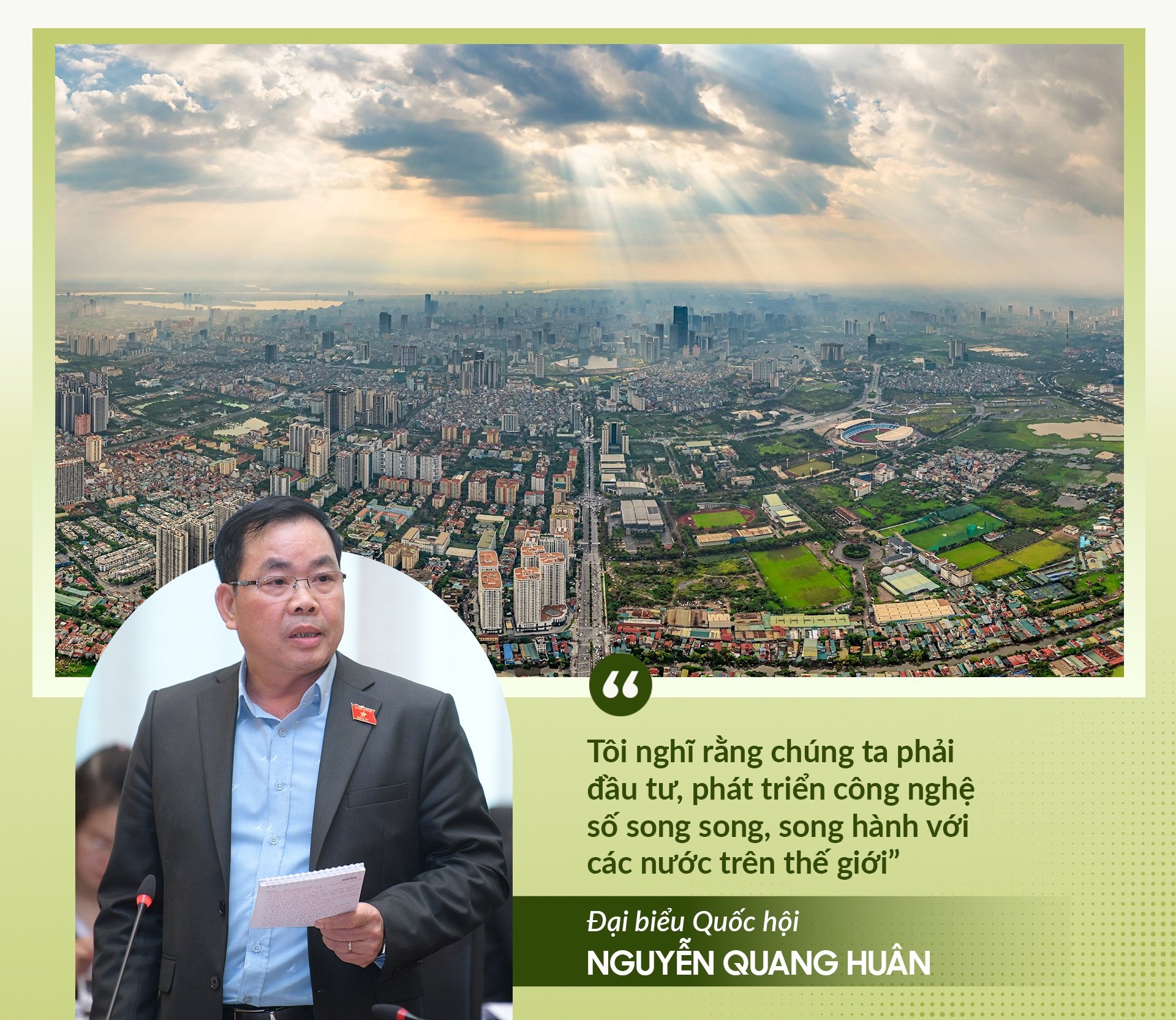
"I think we must invest in and develop digital technology in parallel with other countries around the world. Now, new opportunities are opening up for the development of artificial intelligence, big data, and the Internet of Things – things that will change the way we produce."
"We need to integrate digital technology into all aspects of social life, including the environment, to dramatically improve labor productivity. Only by relying on a digital technology platform can we make leaps forward, 'reach' faster, and catch up with the world," Mr. Huan predicted.
Content: The Kha
Design: Tuan Huy
Photos: Nhat Bac – Khuong Trung – Huu Nghi – Trinh Nguyen.
Dantri.com.vn
Source: https://dantri.com.vn/xa-hoi/tu-dong-song-chet-den-thanh-pho-xanh-chuyen-doi-so-dang-lam-thay-doi-viet-nam-20241024113005759.htm













![[Photo] Prime Minister Pham Minh Chinh holds a phone call with the CEO of Russia's Rosatom Corporation.](/_next/image?url=https%3A%2F%2Fvphoto.vietnam.vn%2Fthumb%2F1200x675%2Fvietnam%2Fresource%2FIMAGE%2F2025%2F12%2F11%2F1765464552365_dsc-5295-jpg.webp&w=3840&q=75)














































Comment (0)