

Vietnam contributed five solutions to the Conference to help make international cooperation on preventing and combating extremism and extremist violence more effective, in-depth, and practical.
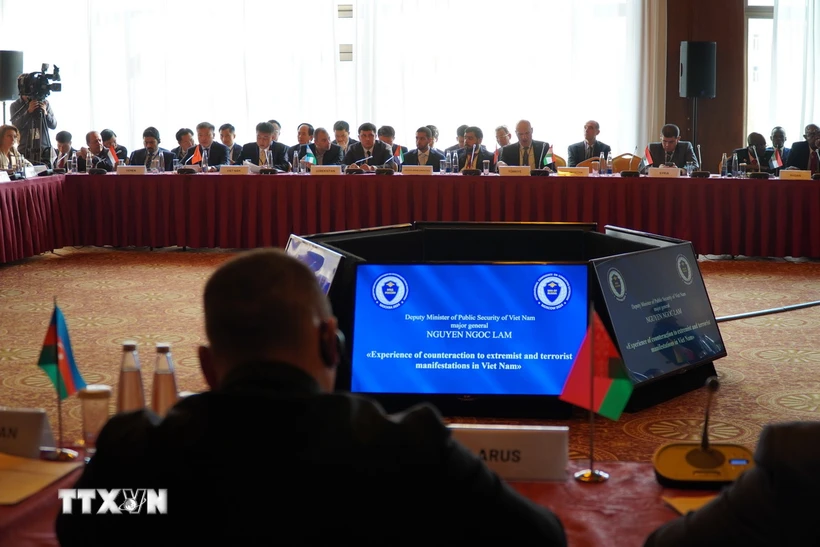
According to the Vietnam News Agency correspondent in the Russian Federation, the 4th International Conference on Combating Violent Extremism opened in Moscow on September 25.
More than 40 delegations from countries and organizations attended the event, including the President of the International Criminal Police Organization (Interpol), Ahmed Nasser Al-Raisi, and representatives from the Collective Security Treaty Organization (CSTO) and the Shanghai Cooperation Organization (SCO).
Deputy Minister of Public Security , Major General Nguyen Ngoc Lam, led the Vietnamese delegation to attend and deliver a presentation.
In his welcoming remarks at the conference, Deputy Minister of Internal Affairs of the Russian Federation Igor Zubov emphasized that the issue of the spread of extremist ideology and its influence is more relevant than ever.
Cyberattack technology targeting countries has become widespread, not only destabilizing the political , economic, and social situation of nations but also potentially altering constitutions by force.
Interpol President Ahmed Naser Al-Raisi pointed out that technology now allows information, including extremist, terrorist, and violent information, to spread very quickly, thus requiring counter-terrorism and anti-extremism forces to also develop advanced technologies in counter-terrorism investigations.
Mr. Al-Raisi emphasized that the Moscow conference was a good forum for countries and organizations to share experiences and propose initiatives in the field.
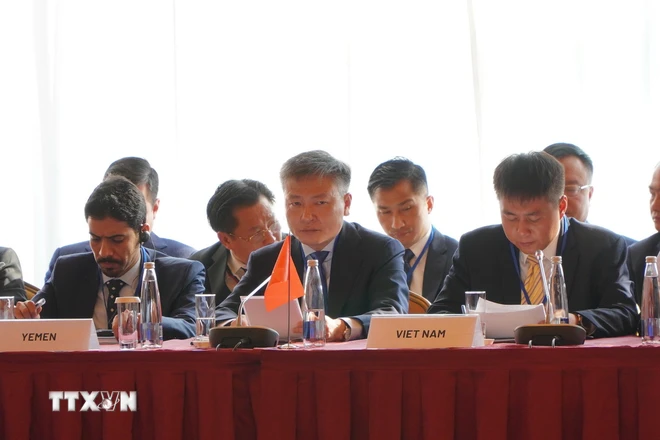
On behalf of the Vietnamese Ministry of Public Security delegation, Deputy Minister Nguyen Ngoc Lam shared at the conference about the current social situation in Vietnam, which is internationally recognized as peaceful, stable, reliable, safe, orderly, civilized, and progressive.
Despite the strong solidarity displayed by society, several complex underlying factors related to extremist violence and terrorism still exist. These include exploiting the "right to national self-determination" to incite demands for the establishment of a "separate state," falsely accusing Vietnam of discrimination and oppression against ethnic minorities, instigating riots, disrupting public order and security, and plotting to overthrow the government; engaging in activities of a "heretical" or "heretical" nature; and using civil society organizations, democratic forums, and social media to recruit, influence, train, and instruct individuals on methods of carrying out terrorist and sabotage activities.
To ensure that people can live happily and securely in a safe and prosperous environment, the Vietnamese Party and State have implemented a comprehensive set of solutions:
First, pay special attention to economic development, ensure social security, and continuously improve the happiness index, considering this the most fundamental solution to minimize the complex underlying factors of terrorism and extreme violence.
Secondly, to promulgate policies, regulations, and laws on ethnic groups and religions based on respect for and guarantee of freedom of belief, creating conditions for all ethnic minorities to narrow the development gap with the motto "no one is left behind"; these issues are enshrined in the Constitution and stipulated in the Law on Belief and Religion 2016 and other relevant legal documents.
Thirdly, improve the effectiveness of state management of activities in cyberspace through the enactment of laws in this field.
Fourth, we must prioritize strengthening national unity through economic and social development to gradually eliminate disparities in development levels among communities in different regions. The National Program for Poverty Eradication has achieved sustainable successes that have been recognized and highly appreciated by the international community.
Fifth, strengthen international cooperation at both bilateral and multilateral levels in the fight against radicalization, extremist violence, and terrorism.
To date, Vietnam is a member of 13 out of 19 international treaties on counter-terrorism of the United Nations, and participates in many international treaties on human rights and the rights of ethnic minorities.
Within the ASEAN region, Vietnam is a member of the ASEAN Convention on Counter-Terrorism and participates in the "Network of Experts on Preventing Violence and Extremism in Southeast Asia" project of the United Nations Office on Drugs and Crime.
Confident in its experience, Vietnam contributed five solutions to the Conference to help make international cooperation on preventing and combating extremism and extremist violence more effective, in-depth, and practical, including:
Firstly, based on the fundamental principles of the United Nations Charter and international law, respecting the independence, sovereignty, territorial integrity, and non-interference in the internal affairs of each country is crucial in combating terrorism, radicalization, and extremist violence.
Secondly, strengthen cooperation among countries, primarily among law enforcement agencies, in the timely sharing of information; coordinate efforts to combat and prevent activities with signs of violent extremism, and block funding, especially in secret societies and online. Focus on prevention "early and proactively."
Thirdly, strengthen the management of exit and entry, the management of foreigners living, studying, and working in each country's territory, and apply science and technology such as Artificial Intelligence, Biometrics, and Big Data in the management of exit and entry and population.
Fourth, strengthen cooperation to address the root causes of radicalization, extremist violence, and terrorism.
Fifth, narrow the gap in capacity to combat extremism and violent extremism among countries; strengthen support in terms of equipment, resources, and technology transfer to serve the work of combating extremism and violent extremism.
Vietnam's proposals were well received by the delegates, with Russian Deputy Minister of Internal Affairs Igor Zubov urging the Conference to develop specific viewpoints and guidelines based on these proposals to put them into practice.
At the Conference, delegates expressed concern about the increasing use of modern information and communication technologies to instill extremist ideologies into the public consciousness, while emphasizing the need to further improve bilateral and multilateral international agreements and treaties, creating a legal framework for combating radicalization and extremist violence, primarily by effectively implementing the United Nations Global Counterterrorism Strategy, the United Nations Action Plan on Combating Extremist Violence, and other legal documents.























































































Comment (0)