

Over the years, Quang Tri province's socio -economic situation has continuously developed and achieved significant accomplishments. This has helped stabilize the local economy, contributing to improving and enhancing the lives of the people. However, along with this development, Quang Tri province is facing many challenges and difficulties in environmental protection.

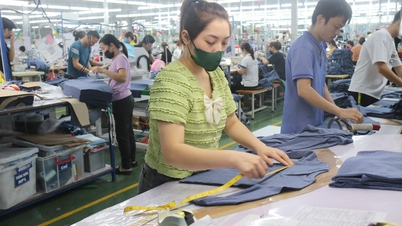
Illustrative image - Photo: ST
To achieve environmental protection and sustainable development goals, it is necessary to strengthen environmental protection solutions to balance and harmonize development activities and the natural environment. Especially during the process of industrialization and modernization, not only are environmental resources continuously exploited, but the environment itself has become a receptacle for all kinds of waste, leading to serious and irreversible damage.
Therefore, developing long-term environmental protection plans and strategies up to 2030, aimed at limiting resource degradation, fundamentally preventing the increase in pollution, remedying environmental degradation, ensuring a high level of ecological balance; meeting environmental requirements in international economic integration and mitigating the negative impacts of globalization, promoting economic growth, and improving the quality of life for the people, is extremely necessary and urgent.
Currently, all development activities generate waste and put pressure on the environment, leading to degradation. In particular, environmental pollution continues to increase, especially in environmental hotspots such as industrial zones, clusters, craft villages, and industrial activities like mining and mineral processing, agricultural and forestry processing, farming, aquaculture, and fishing. These unresolved issues pose a significant challenge to environmental protection efforts.
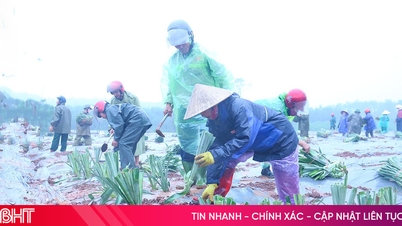
During agricultural production, pesticides, after being used, partially seep into and accumulate in the soil along with other minerals, negatively affecting the microbial ecosystem, causing soil degradation, nutrient loss, and reduced productivity. In addition, salinization and acidification of soils are concentrated in coastal areas; lateritization of laterite rock occurs commonly in hilly areas bordering plains, due to the characteristics of soil formation, resulting in weak soil structure and nutrient depletion.
Industrial production activities generate large amounts of wastewater and solid waste that are not collected and treated properly, and are discharged directly into the land, causing soil pollution in surrounding areas. This is a cause for concern because many industrial zones and clusters in the province currently lack wastewater collection and treatment systems that meet regulations.
On the other hand, industrial production facilities are often dispersed according to raw material sources, with many located amidst residential areas that have not yet been relocated, thus posing a risk of environmental pollution (including soil pollution) and harm to human health.
In particular, the discharge of untreated wastewater into the environment has significantly impacted receiving water sources, causing mass fish deaths in several rivers and lakes. Specifically, the Sa Lung River (Vinh Linh district) receives domestic wastewater from residential areas, livestock farming, aquaculture, and businesses such as Tran Duong Private Enterprise, Duc Hien One-Member Limited Liability Company, and Ben Hai Rubber Factory; Khe Che Lake (Hai Lang district) receives urban wastewater and wastewater from industrial production activities (factories generating wastewater in the Dien Sanh Industrial Cluster); Dai An Lake (Dong Ha district) receives a portion of urban wastewater; and the Bau Bang area and Ha Thanh canals (Gio Linh district)... have caused water pollution in the area.
To enhance environmental protection efforts in the future, it is necessary to have a provincial environmental zoning plan that divides the province into strictly protected zones, zones with restricted emissions, and other zones. Specifically, the strictly protected zones include rivers and lakes supplying drinking water such as the Dakrong River, Xaranh Stream and Tan Do Lake, the Se Pon River, Rao Quan Hydropower Reservoir, Lia Lake, Vinh Phuoc River and Ai Tu Lake, Tich Tuong Lake, Thach Han River and Tram Lake, Nhung River, O Lau River, Sa Lung River and La Nga Lake, Hieu River, and Thac Ma River.
Besides planning and zoning to develop protection plans, production activities need to promote the application of technology, prioritizing high technology and advanced environmental protection models to protect the environment and ensure sustainable development. Activities to raise environmental awareness should be intensified to translate this into action in environmental protection. Measures to harmonize environmental protection and sustainable economic development should be promoted in key industrial areas such as economic zones, industrial parks, urban development zones, and tourist areas.
Over the past years and in the coming period, the province has identified socio-economic development as going hand in hand with sustainable environmental protection. This is a correct direction and will have a positive impact on the local development process.
Tan Nguyen
Source
![[Photo] Closing Ceremony of the 10th Session of the 15th National Assembly](/_next/image?url=https%3A%2F%2Fvphoto.vietnam.vn%2Fthumb%2F1200x675%2Fvietnam%2Fresource%2FIMAGE%2F2025%2F12%2F11%2F1765448959967_image-1437-jpg.webp&w=3840&q=75)
![[Photo] Prime Minister Pham Minh Chinh holds a phone call with the CEO of Russia's Rosatom Corporation.](/_next/image?url=https%3A%2F%2Fvphoto.vietnam.vn%2Fthumb%2F1200x675%2Fvietnam%2Fresource%2FIMAGE%2F2025%2F12%2F11%2F1765464552365_dsc-5295-jpg.webp&w=3840&q=75)









































![[OFFICIAL] MISA GROUP ANNOUNCES ITS PIONEERING BRAND POSITIONING IN BUILDING AGENTIC AI FOR BUSINESSES, HOUSEHOLDS, AND THE GOVERNMENT](https://vphoto.vietnam.vn/thumb/402x226/vietnam/resource/IMAGE/2025/12/11/1765444754256_agentic-ai_postfb-scaled.png)








































Comment (0)