

According to the Department of HIV/AIDS Prevention and Control ( Ministry of Health ), domestic funding for HIV/AIDS prevention and control has reached approximately 45% to date.
Continue to mobilize local budget resources.
In the context of dwindling international funding, what measures has the Ministry of Health implemented recently to ensure resources for HIV/AIDS prevention and control activities?
According to the Ministry of Health, in addition to continuing to solicit and mobilize international financial resources, the Ministry of Health continues to mobilize important domestic financial resources including local budgets, health insurance funds, central government budget, service fees, and private sector and socialized funding. To date, domestic financial resources have reached approximately 45%.
To further increase the proportion of domestic funding sources, the Ministry of Health continues to focus on mobilizing local budgets. The Ministry of Health is urgently finalizing guiding documents on the development of economic and technical norms and service prices for HIV/AIDS prevention and control, creating a legal framework for the preparation of budget estimates from local budgets. It will continue to urge and support localities that have not yet approved their financial plans to end the AIDS epidemic by 2030 to submit them for finalization and approval.
In recent years, Vietnam has been very successful in transferring its ARV treatment program to the Health Insurance Fund. To date, the Health Insurance Fund covers up to 90% of negotiated drug prices. The percentage of ARV patients with health insurance cards has reached 96%; however, 5-7% of patients are still receiving treatment through the private sector due to a desire to remain anonymous.
The Ministry of Health will continue to coordinate with the Vietnam Social Security to finalize the legal framework for increasing health insurance coverage and ensuring that the health insurance fund fully covers the benefits of people living with HIV according to the entitlements of those with health insurance cards.
The Ministry of Health continues to refine the legal framework and incentive mechanisms to strengthen private sector participation in investing in HIV/AIDS prevention and control services, aiming to increase the proportion of private sector investment to 10% by 2025 and 15% by 2030.
In addition, the Ministry continues to refine the pricing framework for HIV/AIDS prevention and control services based on updated economic and technical standards to collect fees for certain HIV/AIDS prevention and control services.
UNAIDS supports Vietnam in its response to HIV/AIDS.
According to Raman Hailevich, UNAIDS Country Director for Vietnam, UNAIDS will focus on providing policy and technical support in HIV prevention and control. UNAIDS supports the provision of evidence-based information to help develop effective HIV prevention and control policies and intervention programs.
UNAIDS' priorities in supporting the HIV response in Vietnam focus primarily on three areas.
Firstly, it involves strengthening partnerships, introducing new initiatives in HIV/AIDS prevention and control to Vietnam, and enhancing the meaningful participation of communities living with HIV and those at high risk of HIV infection in the national response to HIV.
Supporting the building and strengthening of partnerships in HIV prevention and control is a global mission of UNAIDS, aiming to ensure that stakeholders in HIV/AIDS prevention and control work together seamlessly, because HIV is not just a health issue but requires a multi-sectoral and interdisciplinary approach to be effectively addressed.
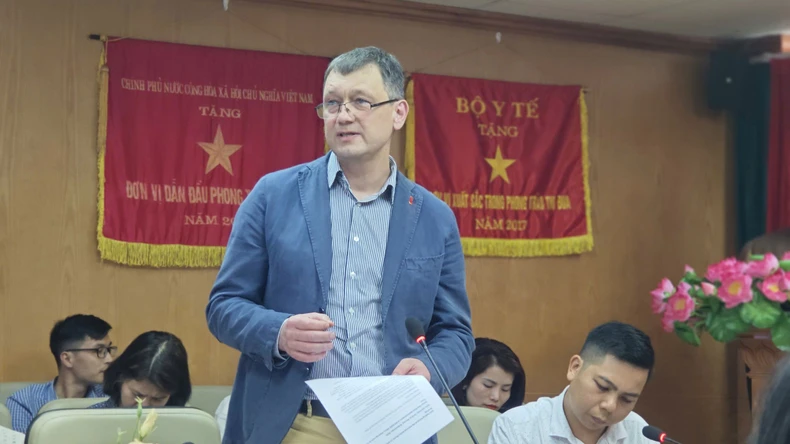 |
Mr. Raman Hailevich, UNAIDS Country Director for Vietnam. |
Secondly, regarding new initiatives in HIV/AIDS prevention and control: The HIV epidemic is constantly evolving, including the HIV epidemic in Vietnam. Therefore, quickly updating new initiatives and approaches in epidemic prevention and control can help Vietnam save resources and respond more effectively to HIV.
Over the years, UNAIDS has supported Vietnam in piloting and implementing important initiatives such as opioid addiction treatment with methadone replacement therapy, and most recently, a pilot program for multi-day methadone dispensing, Treatment 2.0 – bringing ARV drugs closer to patients in the community, community-based HIV screening, and a pilot program for procuring HIV prevention and control services provided by community organizations to enhance the sustainability of HIV prevention services.
The third and equally crucial priority area in the HIV response is capacity building and enhanced meaningful participation of communities living with HIV and those at high risk of HIV infection in the national HIV response.
In the context of the HIV epidemic in Vietnam, which is concentrated among high-risk groups, including vulnerable populations and those still facing significant social stigma, the community is the one that can help identify those most in need of HIV services and connect them to those services to protect their health and reduce the spread of HIV.
"The community helps us implement a people-centered approach to HIV/AIDS prevention and control, and is an effective extension of the health system in achieving the goal of ending the AIDS epidemic by 2030," emphasized Raman Hailevich, UNAIDS Country Director for Vietnam.
Source: https://nhandan.vn/bao-dam-cac-nguon-luc-cho-cong-tac-phong-chong-hivaids-post846746.html




















































































Comment (0)