

When social media becomes a "guide" for young people.
In mid-2025, the story of the wife of a famous Vietnamese football player being subjected to constant and offensive comments about her appearance on social media became a hot topic. It is known that since her marriage in 2020 and becoming a mother of two, her appearance has been frequently scrutinized, especially in photos posted after giving birth. She rarely responded to these comments about her appearance.
Besides making harsh comments about her appearance, many social media users also criticized the girl's fashion sense. Although she frequently wears clothes from high-end brands like Dior, Louis Vuitton, Chanel, and Hermès, she has often been criticized for choosing mismatched outfits, pairing accessories that detract from her figure, or creating an overall look that is not harmonious.
Several other young female artists in Vietnam, such as actress TA or singer SHL, after undergoing changes in appearance that deviated from the "standard," received insulting and critical comments from a segment of social media users. These negative comments affected the careers, morale, and lives of these artists.
Notably, the majority of insensitive comments come from young social media users. They may be students, teenagers, or young adults from the 90s and 2000s generations. This reality shows that education on gender equality in online spaces in schools is extremely necessary.
A 2022 UNICEF survey showed that 82% of Vietnamese children aged 12-13 use the internet daily, a figure that rises to 93% for those aged 14-15. According to national statistics, by early 2024, Vietnam will have approximately 72.7 million social media users, equivalent to about 73.3%. For students and teenagers aged 12-15, a survey by a major organization revealed that up to 82% of 12-13 year olds use the internet daily; this number increases to 93% for those aged 14-15. Many spend 5-7 hours a day accessing social media. This indicates that social media is no longer the "privilege" of adults but has spread very early to students, a group whose awareness of gender, behavior, thoughts, and psychology is still being nurtured and formed.

In that environment, videos, images, and articles related to gender, including norms about "males," "females," appearance, behavior, and social responsibility, are easily accessible to students. If such content contains gender stereotypes, promotes incorrect standards, discriminates, or is mixed with violent or harassing language and images, the risk of affecting students' perceptions, behaviors, and psychology is very high.
In Vietnam, many cases have been recorded of students using social media to bully, post negative comments, and engage in violence against teenagers who do not conform to "traditional" gender norms regarding gender and appearance. Several studies worldwide have also shown that the use of social media platforms like Facebook, Instagram, and TikTok is associated with an increased risk of anxiety, depression, and stress among students. Thus, social media not only affects gender perceptions but also continuously impacts mental health, easily increasing feelings of isolation and low self-esteem due to the pressure to "conform" to the standards set by the online community.
Given that social media has become a "second living space" for students, where opinions, prejudices, and behaviors are formed, it's clear that gender equality education cannot stand outside this environment. Gender equality is no longer just a concept to be taught once in the classroom, but needs to be protected, strengthened, and actively disseminated every day, in every status update, video, and shared post online.
A plan is needed to develop gender equality education on digital platforms in schools.
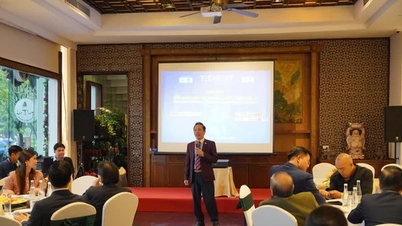
In a seminar held on November 14th in Ho Chi Minh City, Dr. Nguyen Thi Thu Thuy, Deputy Director of the Higher Education Department (Ministry of Education and Training), stated that gender equality is one of the core values of a civilized society and also an important goal in the national sustainable development strategy, consistent with the United Nations' sustainable development goals. Over the years, Vietnam has achieved many remarkable accomplishments in this field. However, according to Dr. Nguyen Thi Thu Thuy, gender stereotypes still exist in many aspects of life, such as career choices, educational and employment opportunities, and the participation of children and young people in social activities – especially in schools.
Given the strong influence of social media on students, schools in Vietnam need to proactively implement appropriate strategies to educate on gender equality not only in the classroom but also in the digital environment. Currently, the Ministry of Education and Training has issued Plan No. 1586/KH-BGDĐT dated September 18, 2025, on the implementation of the Project "Integrating the teaching of gender and gender equality content into the teacher training programs at the college level in early childhood education and university level in the period 2024-2030". The goal of the Project is that by the 2025-2026 academic year, all teacher training institutions nationwide will incorporate gender and gender equality content into their official training programs, ensuring that the teaching staff, materials, methods, and mechanisms are standardized, modern, and aligned with the requirements of social development.

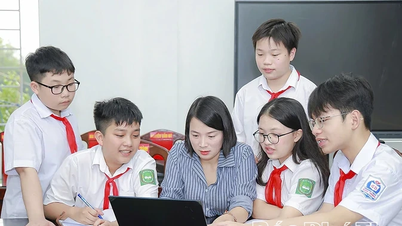
To achieve this, it is essential to first integrate gender equality education and digital citizenship skills into the curriculum. For example, students need to be equipped with the skills to analyze and evaluate information, distinguishing positive and humane content from information that is prejudiced, violent, or discriminatory.
Specifically, schools can incorporate into subjects or extracurricular activities content on: gender equality, gender diversity, respect for differences, critical thinking skills against prejudice and cyberbullying, and appropriate behavior on social media. In addition, teachers need to be trained to be competent in identifying harmful content such as harassment, sexist speech, body shaming, and online bullying, and to know how to support and intervene when students encounter such issues.
Beyond formal classroom settings, schools should create positive online spaces by establishing fan pages, student groups, clubs, and online campaigns on gender equality, respect for diversity, and combating cyberbullying. Students can participate in creating video content, articles, and infographics about gender equality, children's rights, and respect for diversity. This not only helps raise awareness among participants but also spreads the message widely within the online community.
In reality, educating "responsible digital citizens" is a goal many schools in Vietnam are aiming for, helping users, including students, not only to consume content but also to produce, critique, and protect themselves and others from falsehoods or harmful statements.
Furthermore, schools need to work closely with parents and the community to manage and guide students' social media use, provide digital skills training, and protect individual rights and equality. Parents, if they know how to support and communicate with their children, can minimize the pressure of gender stereotypes from social media, helping their children develop self-confidence and respect for themselves and others.
Finally, it is necessary to build a psychological support system to promptly help children overcome pressure, depression, etc., if they are affected by negative or discriminatory content. This is especially important in the context of many studies that have shown a link between social media use and psychological stress, anxiety, and depression.
Only with a comprehensive plan that integrates education, digital skills, positive digital spaces, psychological support, and coordination among schools, families, and the community can gender equality education in schools become most effective.
In summary, social media, with its increasingly significant role in students' lives, can become a positive tool for promoting gender equality if properly managed and guided. Conversely, without proper guidance for students, social media can easily become a breeding ground for prejudice, gender discrimination, and cyberbullying. Therefore, gender equality education cannot be a one-time lesson but needs to be continuously developed and adapted to the digital age, so that Vietnamese students can grow up with an equal mindset, respect, and the ability to protect themselves and others, both in real life and online.
Source: https://baophapluat.vn/binh-dang-so-trong-hoc-duong-can-chien-luoc-phu-hop.html



















































































Comment (0)