

On November 3rd, the National Assembly discussed in the plenary session some differing opinions on the draft Law on Land (amended).
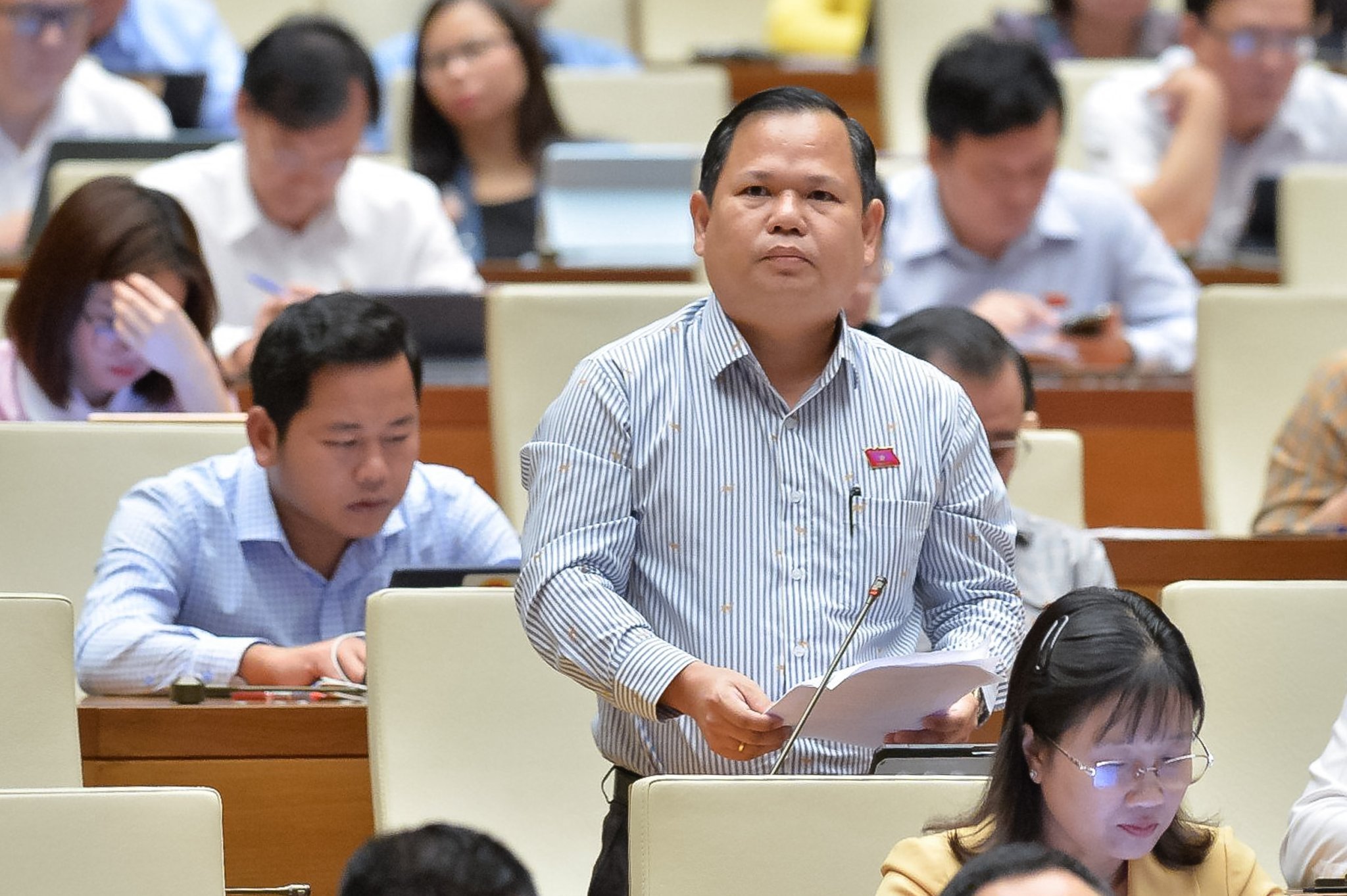
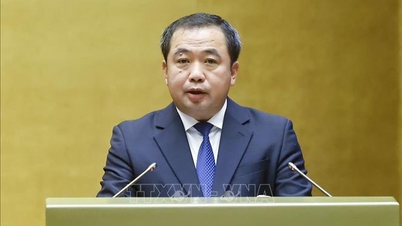
Speaking at the event, delegate Nguyen Duy Thanh (from Ca Mau province) highly appreciated the spirit of amendment in this draft law.
Mr. Thanh emphasized that land has truly been given due importance through specific regulations that orient land towards not only being an asset but also a resource and capital source with a more market-oriented nature, serving production and business for both individuals and businesses.
This involves developing land reserves with more open and transparent mechanisms so that the State can create land reserves, proactively regulate market supply and demand, and auction land use rights. It creates a diverse land use rights market that can easily be converted into cash flow.
The delegate stated that the draft amended Land Law has added provisions allowing the right to mortgage or sublease land lease rights in cases where annual land rent is paid, and to sell assets owned and attached to the land.
Even in the field of agricultural land, with this new draft, Mr. Thanh said that people using agricultural land will also be able to change the structure of crops and livestock to improve land use efficiency.
The draft has expanded the limit on receiving agricultural land use rights for households and individuals to no more than 15 times the agricultural land allocation limit; and expanded the scope of those eligible to receive transfers of rice cultivation land to include economic organizations, households, and individuals who do not directly engage in agricultural production.
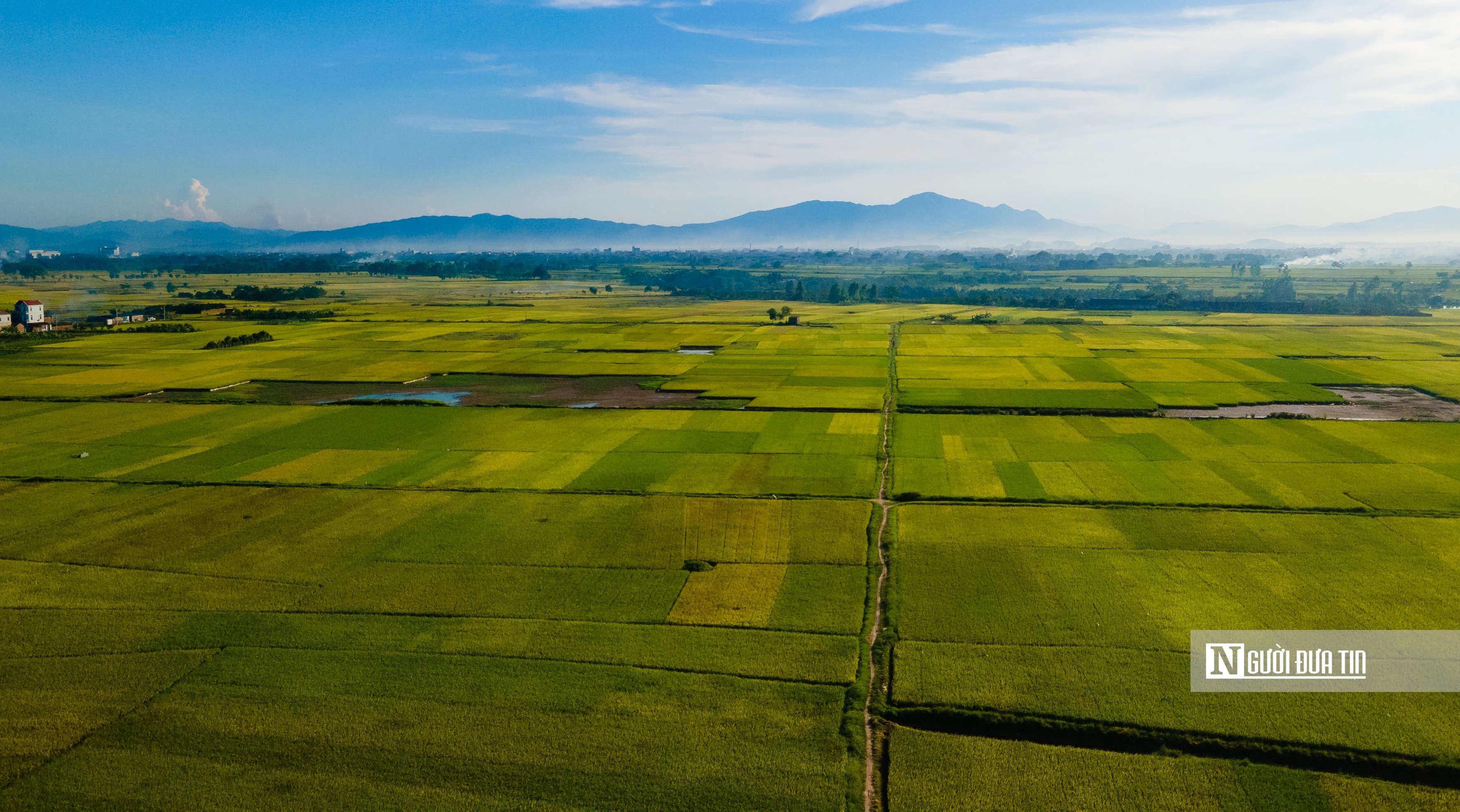
The draft has addressed many of the existing issues regarding agricultural land.
The draft also empowers district-level People's Committees to determine specific land prices in accordance with their authority in land allocation, land leasing, and land use conversion. The rights of land users in planned areas are also stipulated directly in this draft land law...
"For a country that rose from agriculture, accumulating capital for development, expanding businesses, and improving living standards closely tied to the land like ours, these changes are truly meaningful and practical," said delegate Nguyen Duy Thanh.
Given the immense significance and importance of land resources to the people and businesses, delegates suggested that this revision should further specify Resolution 18.
"We need to introduce fundamental and long-term solutions and regulations to avoid significant impacts and fluctuations, even chaos, in the real estate market as seen recently, which have had serious consequences, affecting the survival of businesses and the lives of the people," Mr. Thanh stated.
Specifically, the delegate stated that the government has recently implemented continuous measures to address difficulties in the real estate market. In particular, Resolution No. 33 was issued with the goal of promoting sustainable real estate market development, gradually resolving issues related to the legal aspects of projects, bonds, and capital flows. However, from a certain perspective, according to Mr. Thanh, this is still a temporary measure to intervene in the market.
Mr. Thanh argued that for the real estate market to develop stably and healthily, we need a synchronized, stable, consistent Land Law, Real Estate Business Law, Housing Law, etc., that are in line with market principles.
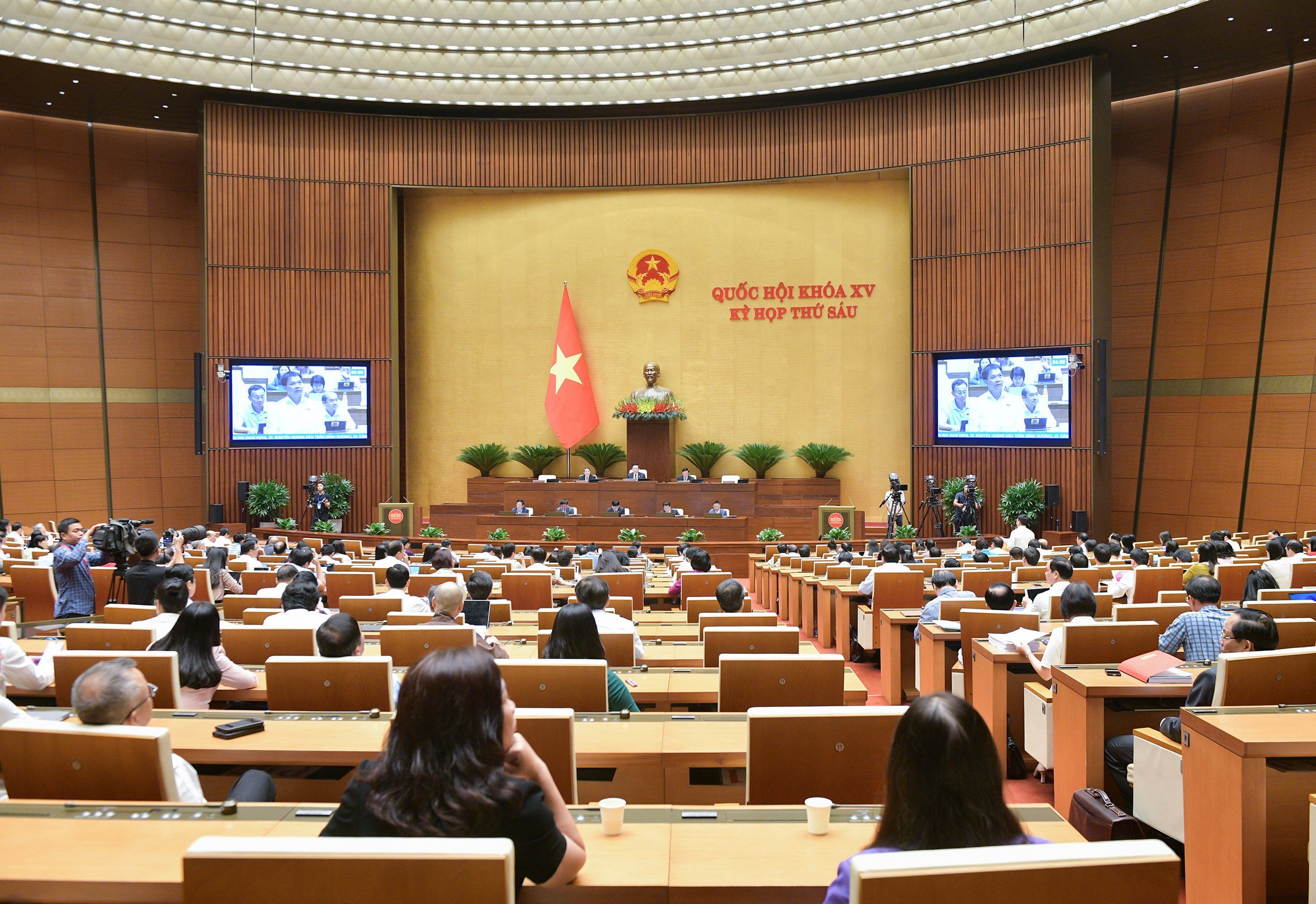
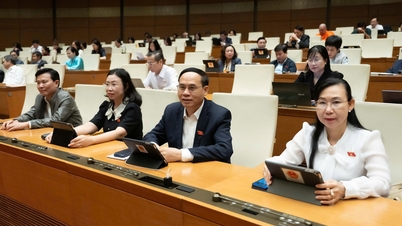
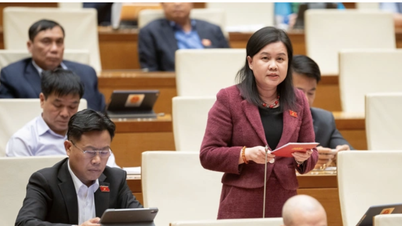
Members of the National Assembly participating in the plenary session on the afternoon of November 3rd.
Secondly, Mr. Thanh stated that, in section 2.5 of Resolution 18, there is a requirement for this amendment to the Land Law to include preferential policies on land use fees and land lease fees, in line with investment incentive areas. This is also a requirement of Resolution 19 on agriculture, rural areas, and farmers, but it is not included in this draft law.
Thirdly, regarding land use planning, Articles 64 and 67, which are currently in draft, also include targets for the area of land allocated to localities.
According to the delegates, this creates difficulties for provincial and district-level localities, requiring multiple adjustments to land use planning during implementation because investors have not yet appeared when the planning is done, and according to Resolution 18, the planning is only spatial zoning. Therefore, planning that specifies concrete targets for different land types is uncertain, inconsistent, and unreliable.
"Therefore, I propose separating the planning and the plan into two distinct components, with the targets included in the plan," Mr. Thanh suggested.
Fourth, regarding land use classification (Article 9), the representative noted that classifying agricultural land into many types would create difficulties for people in implementation. For example, the draft law divides land for perennial crops, annual crops, and aquaculture, but in Ca Mau, land for growing mangrove trees for shrimp, crab, and fish farming, and land for growing lotus for fish farming are all classified as the same type of land.
"I propose classifying land according to the State's management purposes, not according to the people's usage. This will ensure strict management of State land without creating difficulties for the people," said representative Nguyen Duy Thanh.
Avoid exploiting policies to speculate on agricultural land.
Commenting on the content regarding land concentration for large-scale agricultural production and commodity production, National Assembly Deputy Nguyen Van Huy (Thai Binh delegation) stated that the regulation on individuals not directly engaged in agricultural production receiving the transfer of rice cultivation land, as stipulated in Clause 7, Article 45 of the draft law, currently has three proposed options. Deputy Nguyen Van Huy chose option 3, which stipulates that individuals not directly engaged in agricultural production who receive the transfer of rice cultivation land must establish an economic organization and have a plan for using the rice cultivation land when the individual receiving the transfer of land exceeds the limit as stipulated in Clause 1, Article 177.
Because this approach reconciles both factors, ensuring control to prevent the exploitation of agricultural land speculation policies, while simultaneously encouraging and facilitating agricultural production, creating a foundation for large-scale agricultural production in accordance with the policy outlined in Resolution 18 of the Central Committee .
Source












































































Comment (0)