

Red skin patches can be caused by many things, such as sunburn, allergies, hives, or psoriasis. Therefore, if this sign is related to cancer, it is easily overlooked because many people don't think it's a big problem, according to the health website Healthline (USA).
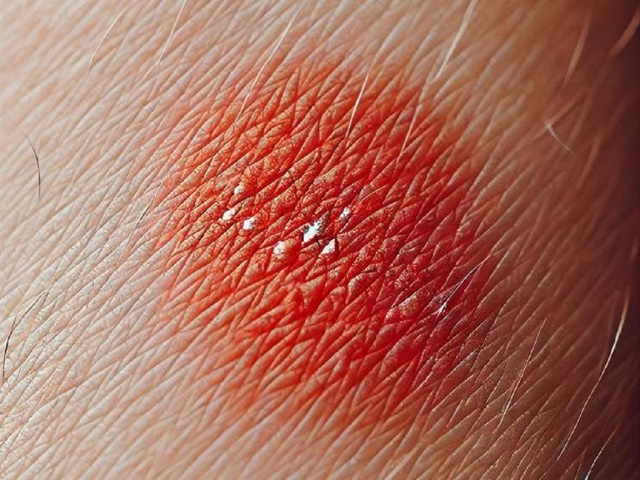
Red skin can stem from many causes, including cancer.
PHOTO: AI
If all common causes have been ruled out, and the redness persists despite all efforts, the patient should seek medical attention promptly. The Skin Cancer Foundation (USA) states that skin cancer is one of the most common types of cancer worldwide .
There are many different types of skin cancer. However, if the visible manifestation is a red patch of skin, it is likely squamous cell carcinoma. With this type of cancer, the skin is not only red but also feels rough to the touch and sometimes scaly. This type of cancer is often caused by prolonged exposure to sunlight.
Additionally, inflammatory responses caused by cancer cells can also lead to skin redness. For example, bone cancer can cause pain in the area of the tumor, along with inflammation and redness of the skin in that area. If bone pain and redness are ignored, the bone tumor will continue to grow larger. Of all types of bone cancer, osteosarcoma is the most common in children and adolescents.
The secret of egg whites: Helps with weight loss, lowers blood pressure, and builds muscle.
Experts warn that changes in skin color—whether red, purple, brown, or any other color—should not be ignored. Even if these signs aren't cancer or serious illnesses, they can still be warnings of underlying health problems.
In cases where a discoloration of the skin occurs without a clear cause and has never happened before, immediate medical attention is necessary. Those affected should not reassure themselves that the unusual discoloration will disappear on its own. In some cases, delaying treatment can worsen the condition, according to Healthline (USA).





























































































Comment (0)