

However, there is a paradoxical reality going on: While ESG commitments are growing, the ability to execute based on real data is extremely limited.
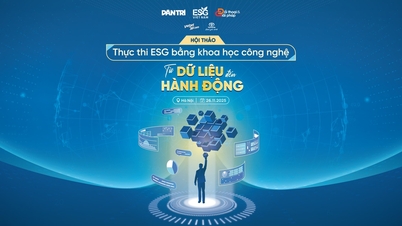
How to turn the numbers in the report into practical actions? Part of the answer was provided by experts at the workshop “Implementing ESG with science and technology - From data to action” on the afternoon of November 26.
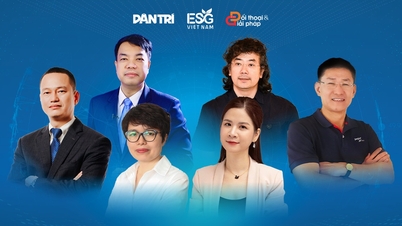
The workshop is part of a series of events of the Vietnam ESG Forum 2025 with the theme "Science and technology and driving force for sustainable development" organized by Dan Tri newspaper.
Want to go green but don't know where to start?
Globally , more than 60% of global businesses have integrated ESG criteria into their operational strategies, but only about a quarter of them have a strong enough data system to make the results transparent.
In Vietnam, the number is similar when 86% of large enterprises have commitments, but only more than 22% actually know how to implement and measure.
This creates a huge implementation gap. Many organizations are ready to be “green” in reporting but not ready to be “green” in operations.
Analyzing further the causes of this situation from the perspective of macro and local management, Dr. Ha Huy Ngoc, Director of the Center for Research on Local and Territorial Economic Policy and Strategy (Vietnam and World Economic Institute), pointed out a worrying fact about the lack of data.
Taking Quang Ninh as an example, Mr. Ngoc shared a real story when consulting on building a science and technology program framework.
"When we asked about the current state of the water environment, seafood or the current state of more than 3,000 islands, the answer we received was that the data was "very fragmented" or was past data that did not reflect real-time.

Dr. Ha Huy Ngoc, Director of the Center for Research on Local and Territorial Economic Policy and Strategy, Vietnam and World Economic Institute (Photo: Manh Quan).
"Data must reflect current real-time data, not past data. Only real-time data can make correct management decisions," Dr. Ha Huy Ngoc emphasized.
He said that data gaps exist not only in businesses but also in management agencies, making it difficult to make decisions to support green transformation.
If lack of data is an internal barrier, pressure from the international market is the external force forcing businesses to turn to technology.
During the discussion session, Mr. Nguyen Duc Minh, Chairman of the Board of Directors of Nutricare Joint Stock Company, Vice Chairman of the Hanoi Association of Key Industrial Products, shared a practical perspective from the "trenches".
He said international customers, especially from the US or Northern Europe, were not only interested in products or prices. They were looking closely at “core competencies” and the sustainability of the system.
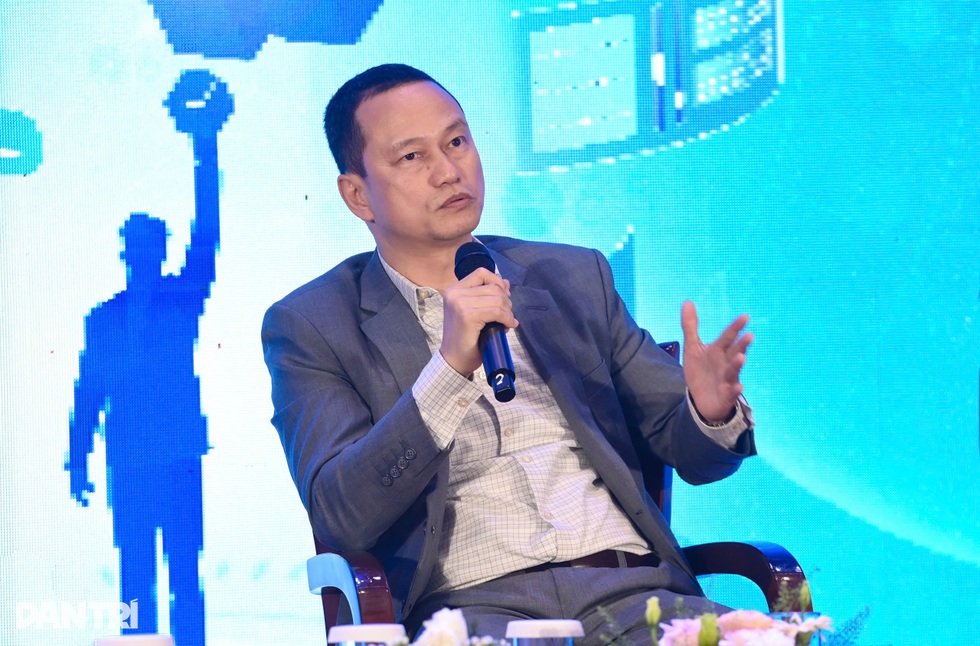
Mr. Nguyen Duc Minh, Chairman of the Board of Directors of Nutricare Joint Stock Company, Vice Chairman of the Hanoi Association of Key Industrial Products Production (Photo: Hai Long).
"They want to meet the leaders to see what their leadership is like, and what their views are on financial transparency and social responsibility," Mr. Minh shared.
For Mr. Minh, ESG is the factor that creates long-term stability and trust, which foreign partners are looking for, not just a short-term processing contract.
Agreeing with this view, Dr. Mac Quoc Anh, Director of the Institute of Economics and Enterprise Development, Vice President and General Secretary of the Hanoi Association of Small and Medium Enterprises, gave a typical example of Garment Company 10.
To export to Europe, the company is required to use 20% renewable energy, which has required the installation of rooftop solar panels on 13 factories.
He affirmed: "Without an early strategy, businesses will lose the opportunity to participate in the global supply chain."
In the field of trade and services, this pressure is even more intense. Mr. Ta Huu Thanh, Commercial Director of Vietjet Aviation Joint Stock Company, shared about the strict regulations of Europe (EU) related to CO2 emissions and sustainable fuel (SAF - Sustainable Aviation Fuel).
Mr. Thanh said Vietjet must comply with dual regulations from ICAO and the EU alone, with a mandatory roadmap to gradually increase the SAF fuel blend from 2% to 70% by 2050.

Mr. Ta Huu Thanh, Commercial Director of Vietjet Aviation Joint Stock Company (Photo: Manh Quan).
"Technology is not a pressure, but a must," Mr. Thanh affirmed. For the aviation industry, the application of digital technology (electronic tickets, online check-in) not only helps reduce paperwork and protect the environment, but is also the core to optimize operations, reduce costs and meet strict data security standards such as Europe's GDPR.
Lessons from a pioneer
While small and medium enterprises (SMEs) are still struggling, large corporations have been demonstrating the effectiveness of "digitalization for greening".
Ms. Do Thi Thu Phuong, Deputy Head of the Department of Environmental Safety and Sustainable Development, Vietnam National Energy Industry Group (PVN) provided a clear picture of the transformation process of a "giant".
With the characteristics of a high-emission industry and great risks to environmental safety, PVN started its ESG journey 15 years ago.
Ms. Phuong admitted that the biggest initial challenge was the dispersion of data between the parent company and hundreds of member units.
PVN's solution is to build an integrated ERP system, standardizing data from manual entry to "real-time".
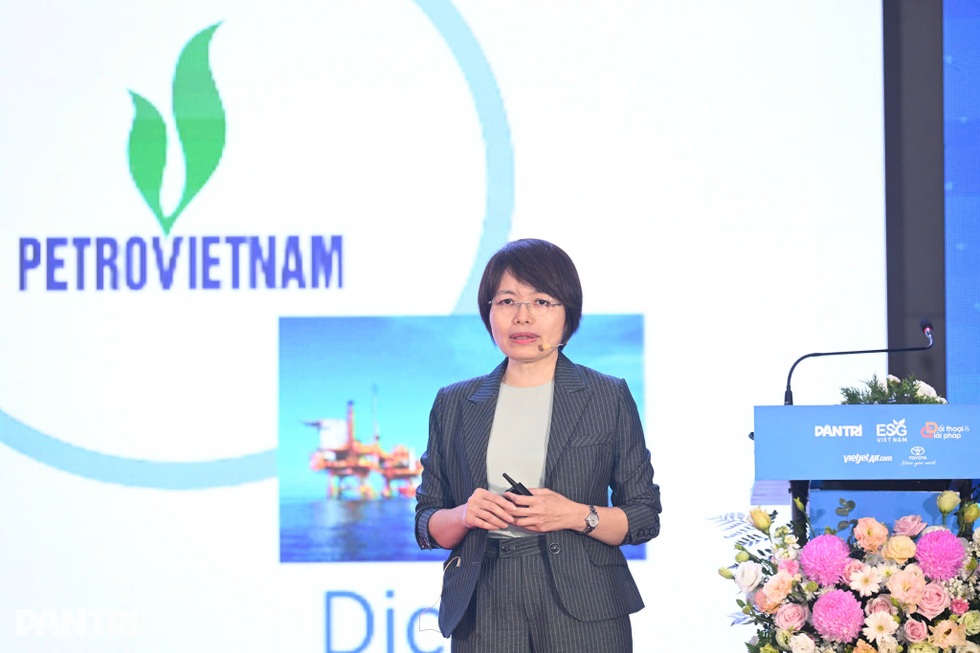
Ms. Do Thi Thu Phuong, Deputy Head of Environmental Safety and Sustainable Development Department, Vietnam National Energy Industry Group (Photo: Manh Quan).
"Previously, data was entered manually and each unit understood it differently. But now, we aim to control real-time environmental and safety monitoring data to forecast and make decisions," Ms. Phuong shared.
Taking the example of the smart factory model at Phu My Fertilizer Company, Ms. Phuong said the company uses technology to standardize ESG data and integrate it into production, helping the factory operate almost automatically, optimizing from raw materials to products.
"We operate based on data, not just reports," Ms. Phuong emphasized, affirming that transparent data is an invaluable asset that helps the group confidently publish sustainable development reports according to international standards.
Similarly, at Vietjet, Mr. Ta Huu Thanh said the airline has used the Corusion system to control flight safety and data from manufacturer Airbus to analyze fuel efficiency of each flight.
Using AI to analyze flight schedules and weather helps airlines optimize flight routes, reduce fuel consumption and substantially cut CO2 emissions.
The AI era creates breakthrough opportunities
When discussing ESG, we cannot fail to mention the role of artificial intelligence (AI). Dr. Dinh Viet Sang, Vice Principal of the School of Information Technology (Hanoi University of Science and Technology), commented that we are witnessing the convergence of digital transformation and green transformation - also known as dual transformation.
Dr. Dinh Viet Sang gives evidence that AI can solve complex ESG problems that are difficult for humans to handle manually.
For example, Unilever uses AI to analyze weather data to optimize its ice cream supply chain, or uses AI to listen to forest sounds to detect illegal loggers, and optimizes agricultural irrigation to reduce water use by 20%.
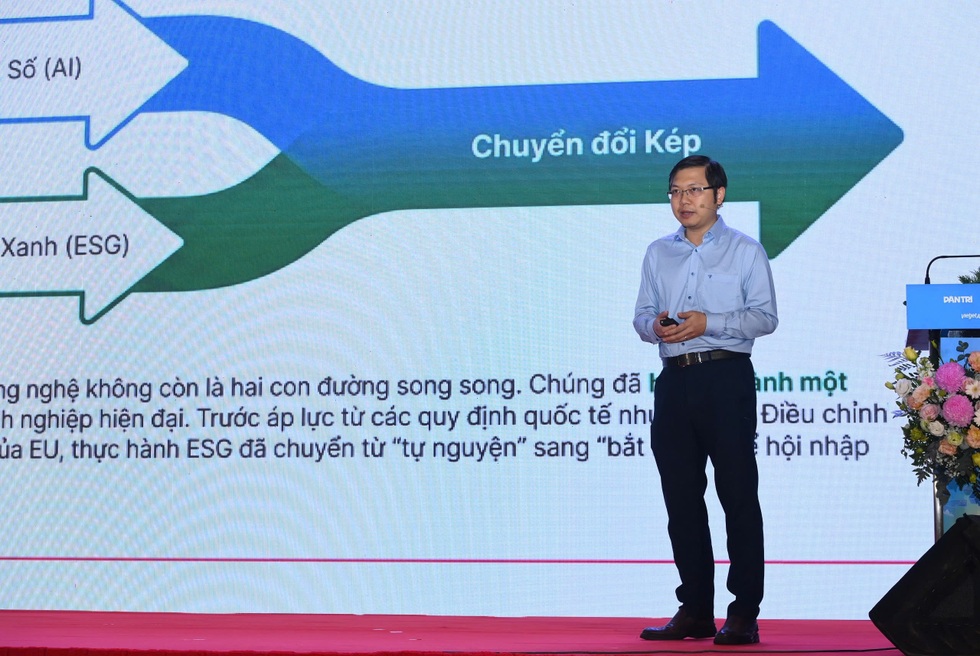
Dr. Dinh Viet Sang, Vice Principal of School of Information Technology, Hanoi University of Science and Technology (Photo: Hai Long).
“AI helps us amplify human capabilities and frees us from boring tasks to focus on creativity,” said Mr. Sang.
However, Dr. Sang also warned about the downside of technology. AI models themselves consume enormous resources.
"Training an AI model can generate five times more carbon than the lifetime of a car and consume hundreds of thousands of liters of clean water. Therefore, applying technology to ESG requires balance, avoiding solving one environmental problem but creating another," Mr. Sang stated.
"Cut your coat according to your cloth"
While the benefits of technology are clear, with more than 90% of Vietnamese enterprises being small and medium-sized (SMEs), the barriers of cost and human resources are not small.
Dr. Mac Quoc Anh frankly admitted: "Small businesses lack capital, human resources, data and information."
So what is the way for SMEs?
Dr. Mac Quoc Anh proposed the strategy of "small but sure steps".
First, start with governance (G) first, standardize internal processes, then move on to environmental (E) and social (S) factors.

Prof. Dr. Mac Quoc Anh, Director of the Institute of Economics and Enterprise Development, Vice President and General Secretary of the Hanoi Association of Small and Medium Enterprises (Photo: Manh Quan).
Second, collaborate instead of going it alone. He recommends that small businesses join together, take advantage of affordable shared technology platforms (SaaS), or join the value chain of large enterprises for support.
In particular, Dr. Mac Quoc Anh made a very noteworthy strategic proposal for the organizing unit, Dan Tri newspaper: Building an "ESG Data Warehouse" or a common platform (Hub).
"We must open a database of participating businesses, from which to build value chains and replicate standard models," Dr. Anh said.
Sharing the same view on the need for policy support, Dr. Ha Huy Ngoc added that local authorities need to play a role in creating and investing in data infrastructure first for businesses to connect to.
He also proposed including the ESG index in the provincial competitiveness index (PCI) or PGI to create competition and real transformation in localities.
At the Workshop, the message throughout was: Science and technology are not a cost burden, but a long-term profitable investment for sustainable development.
Digital transformation without ESG is like "running fast without knowing the destination" (lack of strategic direction). Conversely, ESG without technology is like "having a map but no means" (lack of execution tools).
The journey from data to action requires a radical shift in thinking:
From passive to proactive: Don't wait for mandatory regulations to act, but consider ESG as a competitive advantage.
From Distributed to Centralized: Using Technology to Standardize Data in Real Time.
From isolation to integration: SMEs need to leverage common platforms and ecosystem support.
Applying science and technology to ESG implementation is no longer a matter of "should or should not", but how to "do it right and do it enough".
That is the ticket for Vietnamese enterprises not only to reach out to the open sea but also to stand firm against the fierce waves of new global standards.
Vietnam ESG Forum 2025: Science and technology and driving force for sustainable development
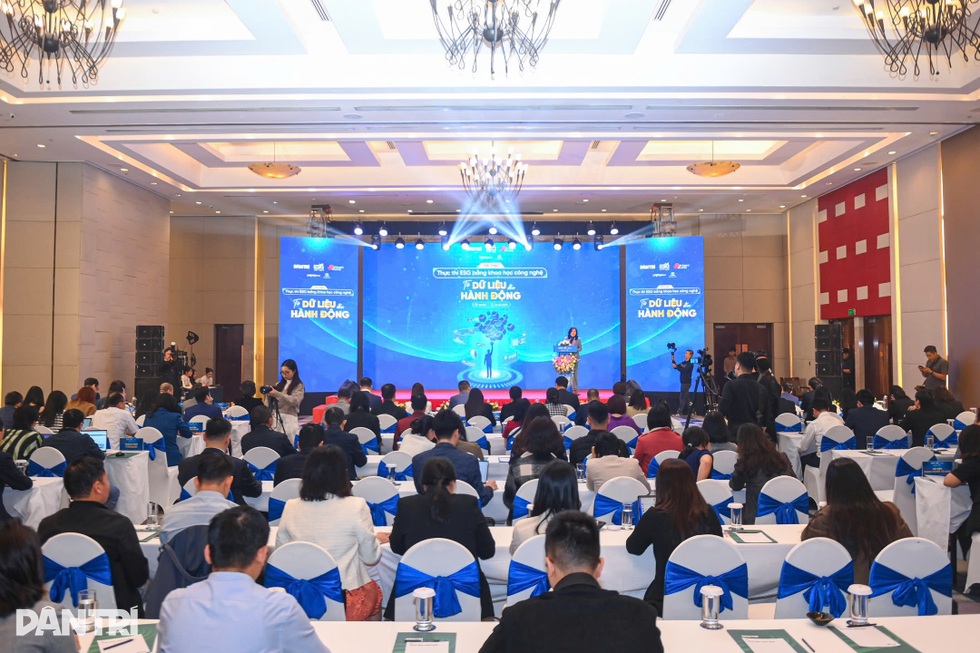
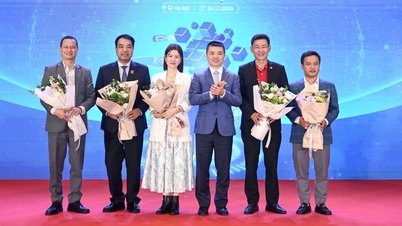
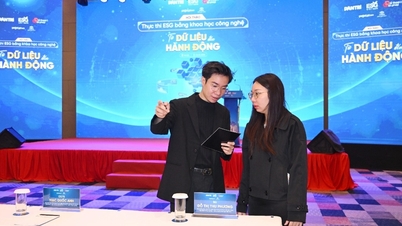
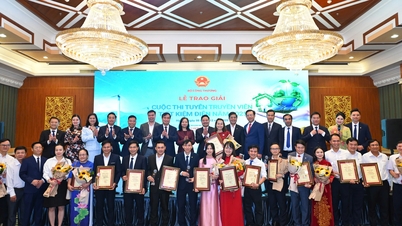
Overview of the workshop "Implementing ESG with science and technology - From data to action" on the afternoon of November 26 (Photo: Hai Long).
The year 2025 marks an important milestone for the Vietnam ESG Forum, recognizing its persistent efforts in promoting knowledge, connecting resources and spreading sustainable development values to the business community.
This is an opportunity to look back on a year of continuous operation, contributing to shaping an increasingly professional and effective ESG ecosystem in Vietnam.
In the context of science and technology becoming the central driving force for innovation in governance models and enhancing competitiveness, the Vietnam ESG Forum 2025, organized by Dan Tri Newspaper, provides in-depth analysis and a comprehensive perspective on the role of technology in ESG implementation.
Within the framework of the program, the Vietnam ESG Awards 2025 will be a highlight to honor pioneering and exemplary organizations and businesses in promoting sustainable development. With the theme “Science and technology and driving forces for sustainable development”, the event aims to contribute to creating a foundation for a sustainable and prosperous future for Vietnam.
The workshop will take place at 1:30 p.m. on December 22 at Pullman Hanoi Hotel, 61 Giang Vo, Giang Vo Ward, Hanoi. Interested readers and businesses can register here.
Source: https://dantri.com.vn/cong-nghe/doanh-nghiep-muon-xanh-hoa-du-lieu-la-tam-ve-thong-hanh-ra-bien-lon-20251126235001625.htm


![[Photo] General Secretary To Lam receives the Director of the Academy of Public Administration and National Economy under the President of the Russian Federation](/_next/image?url=https%3A%2F%2Fvphoto.vietnam.vn%2Fthumb%2F1200x675%2Fvietnam%2Fresource%2FIMAGE%2F2025%2F12%2F08%2F1765200203892_a1-bnd-0933-4198-jpg.webp&w=3840&q=75)

























































































Comment (0)