

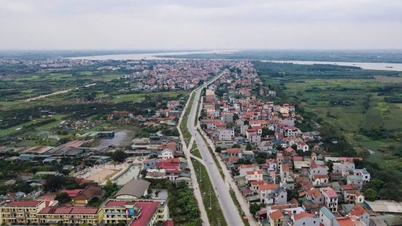
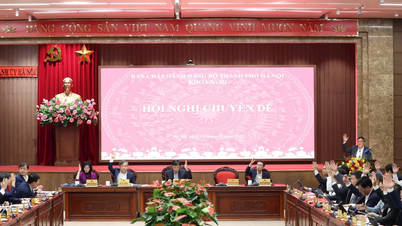
Presenting the report at the meeting, the Standing Vice Chairman of the Hanoi People's Committee, Duong Duc Tuan, emphasized that the Red River has long been identified as a vital and irreplaceable artery for the development of Hanoi. However, due to the need for flood control, the dike system along both banks of the river, while necessary, has inadvertently created a separation between the Red River and the city's development space. Therefore, the transportation infrastructure along both banks of the river remains inadequate and not yet synchronized. In this context, the Landscape Boulevard Project is a strategic solution to overcome this separation, transforming the Red River not only into a flood control route but also into a harmonious, synchronized, and sustainable urban development axis, in accordance with the Politburo 's directives.
According to the Standing Vice Chairman of the Hanoi People's Committee, the project, once completed, will comprehensively and dramatically transform the urban landscape on both banks of the Red River; becoming a cultural, economic , and ecological space, a symbol of Hanoi as it joins the ranks of global capitals; and implementing a strong, comprehensive, and thorough urban reconstruction. The project will be implemented along the Red River from Hong Ha Bridge to Me So Bridge, within the administrative boundaries of 19 communes and wards of Hanoi. The project covers an area of approximately 11,000 hectares; including an 80km main traffic artery; approximately 3,300 hectares of landscaped parks and recreational areas; and approximately 2,100 hectares of land cleared for urban reconstruction.
The project is expected to consist of four independent sub-projects with a preliminary total investment of approximately 855,000 billion VND. Notably, sub-project 3 involves the investment in an underground metro line along the right bank of the Red River, approximately 45km long, aiming for seamless connection with the city's future urban railway system, which will also be implemented as an underground metro. Preliminary estimates indicate the project will affect approximately 200,000 people, with partial on-site resettlement planned. The selection of investors will be carried out according to a special mechanism stipulated by the National Assembly and the City People's Council.
Also at the session, the Hanoi City People's Council approved a Resolution on the investment policy for the construction of the Olympic Sports Urban Area Project in the South of Hanoi. The project is located within the administrative boundaries of 11 communes: Dai Thanh, Ngoc Hoi, Nam Phu, Thuong Tin, Hong Van, Chuong Duong, Thuong Phuc, Binh Minh, Tam Hung, Thanh Oai, and Dan Hoa in Hanoi. The project covers an area of approximately 9,171 hectares and is expected to be divided into 4 sub-projects with a preliminary total investment capital of approximately 925,651 billion VND.
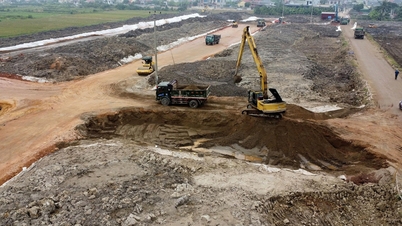
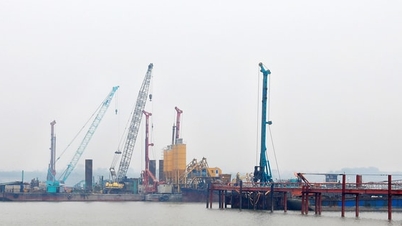
The aforementioned projects are considered to represent a new vision and a century-long perspective, promising to create a green, beautiful, and modern landscape for the capital city. In his speech at the 3rd Conference of the Hanoi City Party Committee, 18th term, held on the morning of December 13th, Politburo member and Hanoi City Party Secretary Nguyen Duy Ngoc emphasized that the Olympic Sports Urban Area project in the South of Hanoi and the Red River Landscape Boulevard project are two projects of special importance contributing to the development of the capital city, the Red River Delta region, and the entire country, aiming to create a "Red River Miracle." These projects serve the goal of achieving a GRDP growth rate of 11% or higher in 2026 and throughout the 2026-2030 term of Hanoi City; creating a new image for the capital city as a "Cultural - Identity - Creative" metropolis, transforming it into a creative, green, smart, and globally connected metropolis. The two projects are expected to commence construction on December 19, 2025, and aim for completion on the occasion of the 100th anniversary of the founding of the Party (February 3, 2030).
Source: https://baophapluat.vn/du-an-dau-tu-truc-dai-lo-canh-quan-song-hong-buoc-ngoat-chien-luoc-hien-thuc-ky-tich-song-hong.html

































































Comment (0)