

Ensuring harmony of interests of all parties
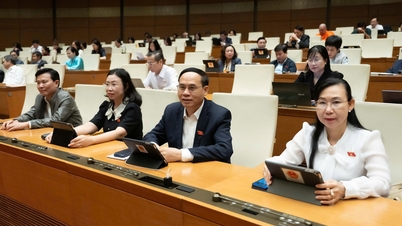
Continuing the agenda of the 5th Session, on the afternoon of June 21, the National Assembly discussed the draft Law on Land (amended) in the plenary hall.
Commenting on Clause 3 of Article 28, delegate Pham Van Hoa (Dong Thap delegation) suggested that individuals receiving agricultural land transfers must establish an economic organization. Regarding inheritance cases and those with blood relations, gifting, giving, or transferring land is considered normal.
Public institutions that need to use the allocated land for production and business purposes may choose the option of leasing the land from the State on an annual payment basis, with exemption from land rent. However, they are not allowed to sell the owned assets, mortgage the land, or mortgage any assets attached to the land.
Regarding Article 79, which stipulates land acquisition for traffic connection points and transportation projects with development potential, Mr. Hoa suggested that careful consideration should be given when enacting the Law, as resolving complaints from the public after implementation would be very difficult.
For land acquisition for commercial housing projects, where 100% of the land is agricultural land, the investor may negotiate to acquire the land through transfer to implement the project.
Individuals and households owning land may participate with the investor in the form of land transfer, lease, or capital contribution using land use rights. If an agreement cannot be reached, the State will reclaim the land and hand it over to the investor for implementation. The land reclamation must include compensation, support, and resettlement in accordance with the law, ensuring a balance of interests between the State, the people whose land is reclaimed, and the investor.
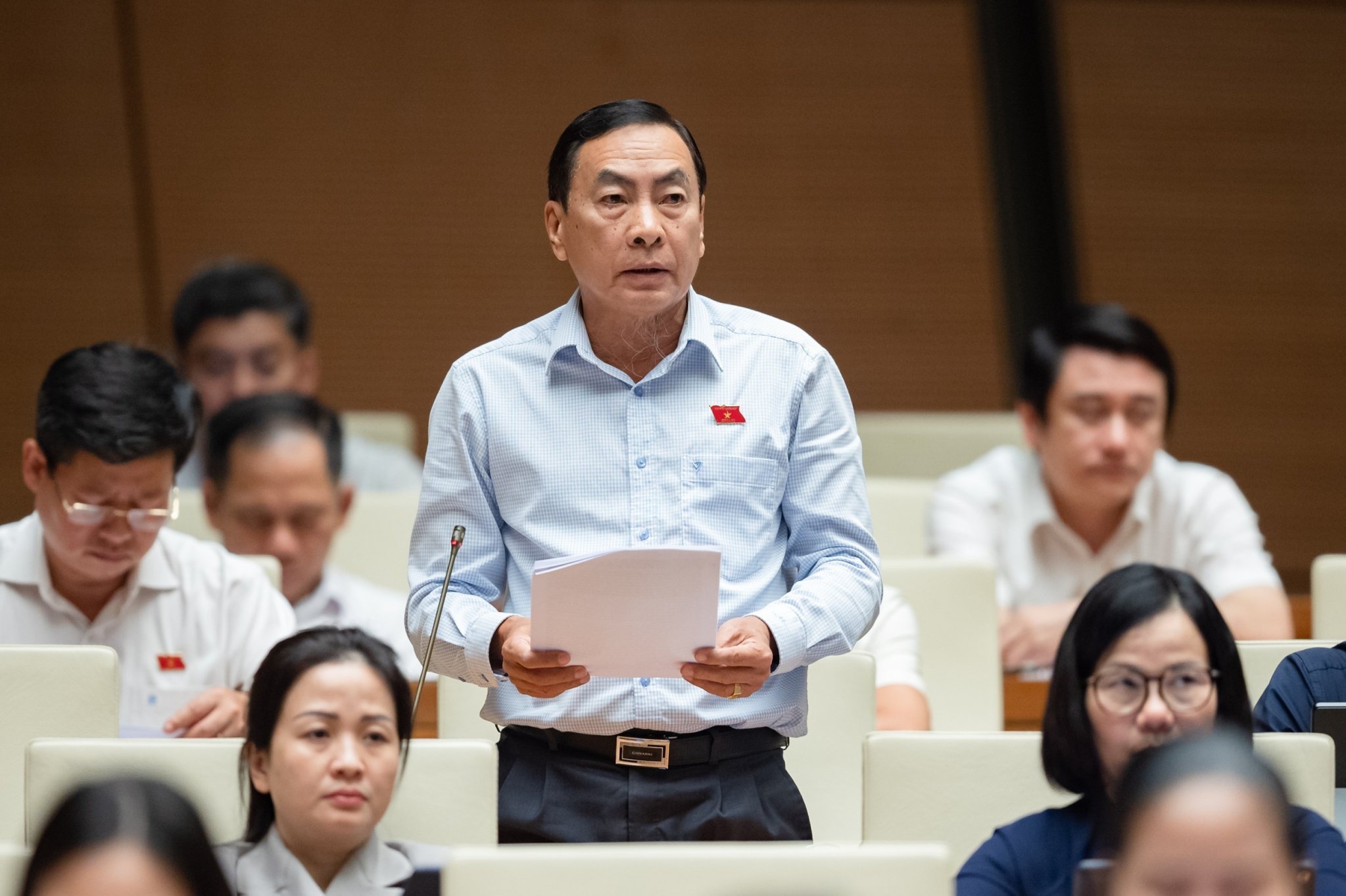
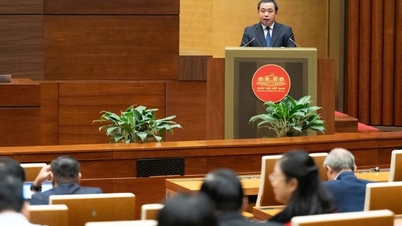
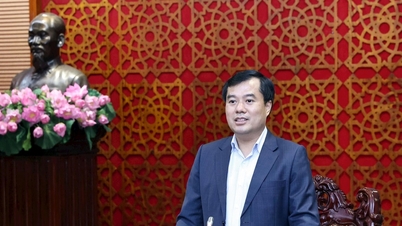
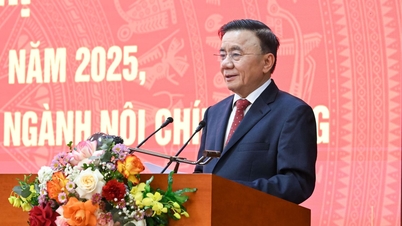
National Assembly Deputy Pham Van Hoa speaks.
Mr. Hoa argued that the important question is how much better the new housing is compared to the old housing (in terms of living space, infrastructure, livelihoods, resettlement land area, employment, etc.).
Regarding land development, he suggested that the land development model and the organization responsible for land development should be combined into one to avoid overlapping responsibilities and ensure a streamlined structure. The requirement to allocate annual land use fees to the Land Development Fund also needs reconsideration, as it does not comply with the regulations of the State Budget Law.
Regarding the method of land valuation based on market principles, Mr. Hoa agreed but suggested that policies need to be clarified to suit each target group, ensuring a balance of interests between the State, the people, and investors. He emphasized that if investors and the people do not reach a consensus, the project will be difficult to implement.
Land prices must be appropriate at each stage of land acquisition, benefiting both the people and investors to attract projects and generate resources for socio-economic development.
To ensure unified implementation by localities
Speaking during the discussion, delegate Nguyen Dai Thang (from Hung Yen province) suggested that the drafting committee continue to research and develop more open regulations regarding the transfer of agricultural land use rights to organizations and individuals wishing to invest in large-scale agricultural production.
Regarding the principles of compensation and resettlement assistance when the State reclaims land, Mr. Thang suggested that the Law should clearly state that the principle of the State reclaiming land must ensure that people whose land is reclaimed have a place to live, ensuring a life equal to or better than their previous living situation.
Regarding cases of land allocation without auctioning land use rights, the delegate proposed adding a case where the State leases land and collects a lump sum payment for the entire lease period to ensure fairness and equality in land leasing cases.
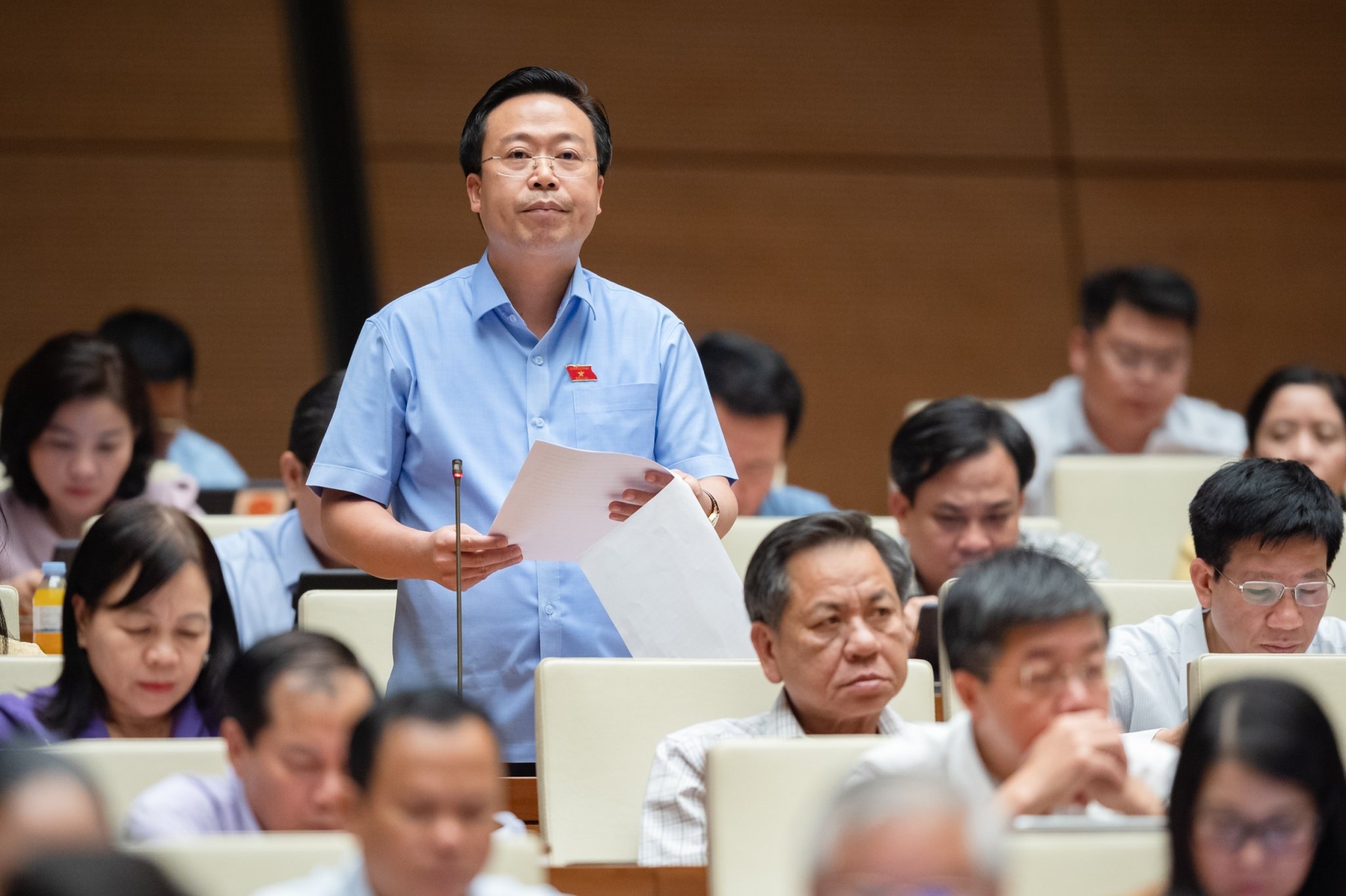
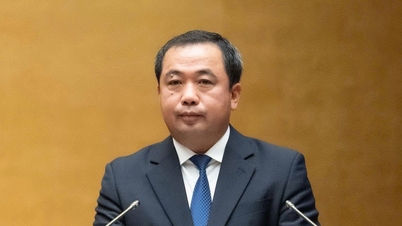
Delegate Nguyen Dai Thang.
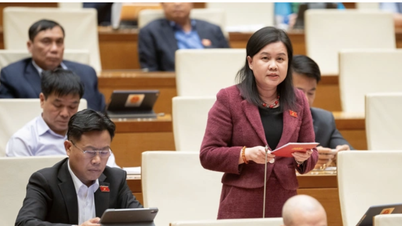
Regarding the regulations on converting land use from rice cultivation and forest land, delegate Nguyen Thi Kim Anh (Bac Ninh delegation) stated that rice is a basic grain, the main food crop, and the dominant crop in Vietnamese agriculture. Rice-growing land has a high structure and nutritional value, and takes hundreds of years to form.
The goal for 2030 is for Vietnam to continue improving the efficiency of agricultural land use and maintaining a stable area of rice cultivation to ensure national food security.
To achieve the goal of preserving rice paddy land and forest land, delegates argued that strict management of rice paddy and forest land planning is necessary, with specific areas defined at the local and commune levels. Given the country's development needs, the conversion of rice paddy and forest land to non-agricultural purposes is inevitable.
With the goal of ensuring food security and adapting to climate change, she suggested that regulations are needed to fully investigate, assess, statistically record, quantify, and account for the efficiency of agricultural land use in the economy.
Ms. Anh also suggested that the law should immediately stipulate the criteria and conditions for converting rice-growing land and forest land to other uses, which would be an important basis for localities to implement uniformly nationwide.
Specifically, it is proposed to add several criteria such as: agricultural land, once consolidated and concentrated, must not be converted to non-agricultural use; there must be an impact assessment report and feasibility study for the project; and the project owner must be held accountable to the community .
Source







































































Comment (0)