


These days, farmers in Dien Hoang commune are urgently harvesting their winter peanut crop to prevent the tubers from sprouting and being damaged by rats. The good news is that this year's peanut harvest is bountiful, with an average yield of 110 kg of dried peanuts per sao (approximately 1000 square meters), higher than last year's winter crop.
Ms. Le Thi Hao, who is harvesting 2 sao (approximately 2,000 square meters) of winter peanuts, shared: “We started planting in August, and thanks to favorable weather and careful cultivation, our peanut crop has grown well, uniformly, and yielded a concentrated harvest. For the past few days, my whole family has been working hard to harvest, and we are delighted because the peanut crop is bountiful. Each sao brings in 4-4.5 million VND, much higher than growing corn .”
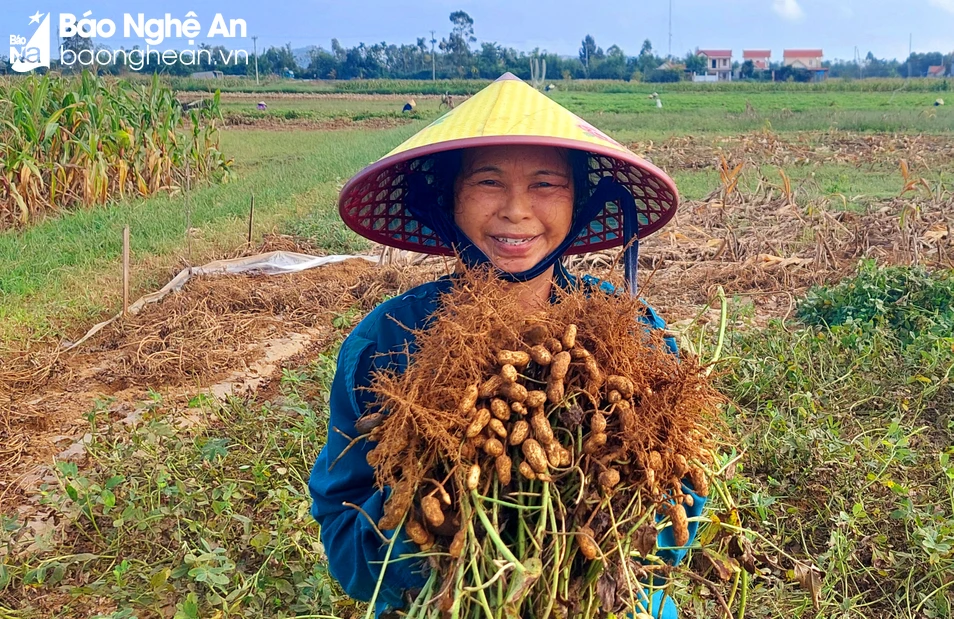
Dien Hoang commune is one of the concentrated peanut-producing areas in Dien Chau district. During the winter season, farmers mainly produce peanut seeds to ensure a steady supply for the spring peanut crop – the main crop of the year – and to provide seeds for the market within the province. This year, the entire commune is cultivating 78 hectares of peanuts, primarily the L14 and red peanut varieties.
Mr. Nguyen Tan, Chairman of the People's Committee of Dien Hoang commune, said: "By this time, the entire commune has harvested about two-thirds of the winter peanut crop. From the beginning of the season, the commune directed farmers to adhere to the planting schedule, intensify care, and control pests and diseases, resulting in much higher yields compared to the previous season. This year, Dien Hoang harvested 160 tons of winter peanuts, a significant increase compared to previous years. The peanuts are mature, firm, and of good quality for seed production in the spring of 2023."
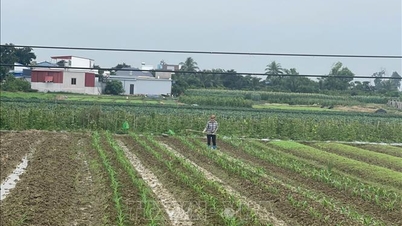
In the fields of Dien Hung commune, farmers are busy harvesting their winter peanut crops. As a safe crop during the winter season, peanuts occupy one-third of the commune's total area, with 70 hectares. Like the farmers in Dien Hoang commune, the people of Dien Hung commune are delighted because their winter peanut harvest is bountiful.
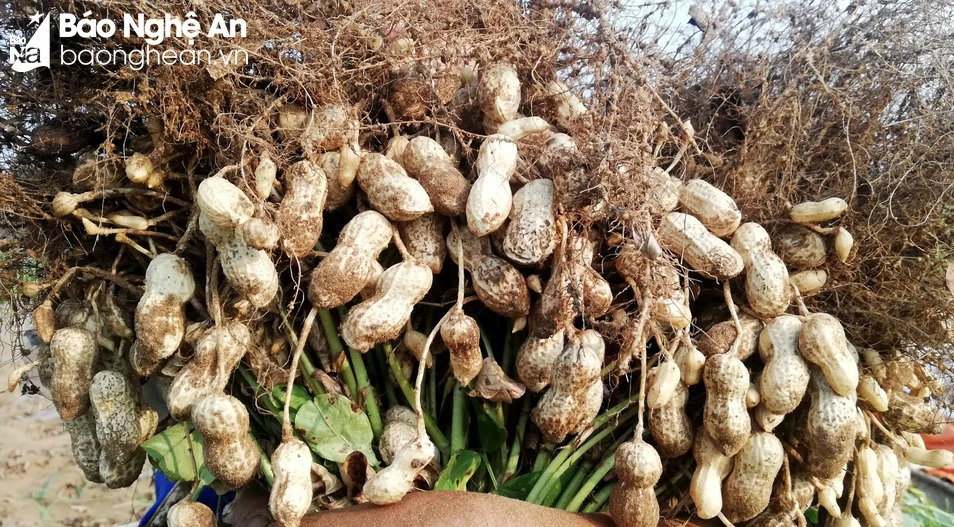
Ms. Nguyen Thi Thuy from Ngoc My village said: “This season, my family cultivated 1.5 sao (approximately 1500 square meters) of peanuts. During the production process, I and other villagers applied the technique of covering the plants with plastic sheeting, which not only prevents weeds from growing but also prevents soil erosion during heavy rains, ensuring good plant growth. This year, the peanut harvest was good, so my family harvested nearly 2 quintals of dried peanuts. We only kept a few tens of kilograms for seeds and sold the rest to traders.”
In the 2023 winter crop season, Dien Chau district continued to orient its production towards commercial, high-quality, and efficient farming, enhancing the value chain and promoting sustainable development. Accordingly, the entire district maintained a stable planted area of nearly 4,200 hectares, including 850 hectares of peanuts. Winter peanuts were planted early and mainly in coastal sandy soil areas using L14 and red peanut varieties. To date, Dien Chau farmers have harvested two-thirds of the planted area, with an average yield of approximately 1 quintal of dried peanuts per sao (1 sao = 360 square meters). Thus, this winter crop season, Dien Chau farmers supplied approximately 1,700 tons of peanut seeds to the market.
Mr. Le The Hieu, Head of the Agriculture and Rural Development Department of Dien Chau district, said: "The agricultural sector always encourages farmers to grow peanuts in the autumn-winter season. Growing peanuts in the autumn-winter season is not difficult and does not require too much technical expertise; it only requires preventing rodent damage and having a proper care and fertilization regime. For this production season, from planting to harvesting is about 100 days, which is suitable for the natural conditions, climate, and seasonal planting schedule of crops in the locality. Proactively producing peanut seeds will contribute to reducing the use of seeds purchased from unreliable sources on the market."
Source

















![[Photo] Prime Minister Pham Minh Chinh holds a phone call with the CEO of Russia's Rosatom Corporation.](/_next/image?url=https%3A%2F%2Fvphoto.vietnam.vn%2Fthumb%2F1200x675%2Fvietnam%2Fresource%2FIMAGE%2F2025%2F12%2F11%2F1765464552365_dsc-5295-jpg.webp&w=3840&q=75)









































Comment (0)