

Juvenile Justice Law is tasked with protecting the best interests and rights of minors; ensuring that the handling of juvenile cases is appropriate to their age and cognitive abilities...

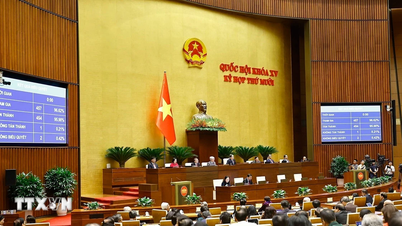
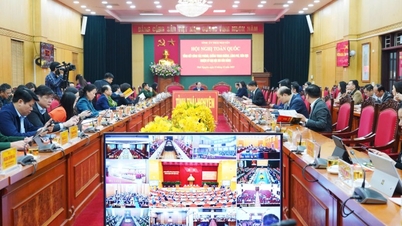
On the morning of November 30th, with 461 out of 463 (96.24%) delegates in attendance voting in favor, the National Assembly passed the Law on Juvenile Justice.
Juvenile Justice Law is tasked with protecting the best interests and rights of minors; ensuring that the handling of juvenile cases is appropriate to their age, cognitive abilities, personal characteristics, and the socially dangerous nature of their offenses; and educating and assisting minors to correct their mistakes, improve their behavior, and become useful citizens to society.
This law regulates the handling of diversion, penalties, and procedural matters concerning juvenile offenders; procedural matters concerning victims and witnesses; execution of sentences; reintegration into the community and support for victims; and the duties, powers, and responsibilities of agencies, organizations, and individuals in juvenile justice activities.
Notably, the Law stipulates diversionary measures including: reprimand; restrictions on hours of activity and travel; apology to the victim; compensation for damages; participation in educational and vocational training programs; mandatory psychological treatment and counseling; community service; prohibition of contact; prohibition from a specific location; education at the commune, ward, or town level; and education at a reformatory school.
Minors falling under one of the following categories may be considered for diversionary measures: persons aged 16 to under 18 who commit minor offenses or serious offenses as defined by the Penal Code; persons aged 14 to under 16 who commit very serious offenses, except as stipulated in Clauses 1 and 2 of Article 123 of the Penal Code; minors who are accomplices with an insignificant role in the case.
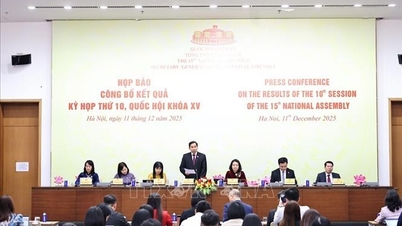
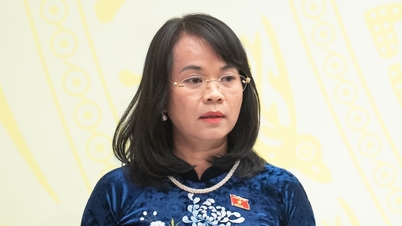
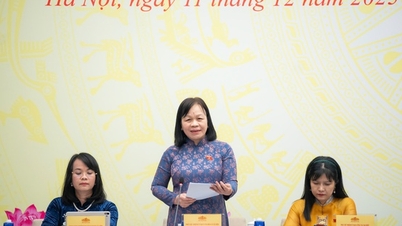
The summary report explaining, receiving feedback, and revising the draft Law on Juvenile Justice, presented by the Chair of the Judicial Committee, Le Thi Nga, shows that there were suggestions to expand the number of offenses and cases where minors are not allowed to be subject to diversionary measures.
The current Penal Code stipulates that 14 offenses are not subject to diversionary treatment for individuals aged 14 to under 16, and 8 offenses are not subject to diversionary treatment for individuals aged 16 to under 18.
When trying minors for these crimes, based on the nature and severity of the offense, the court has two options (either to impose a penalty or to apply judicial educational measures at a reformatory).
Institutionalizing the Politburo 's Directive No. 28-CT/TW on "developing a child-friendly and child-protecting judicial system," the draft Law has transformed the judicial measure of education at reform schools into a diversionary measure. Accordingly, when committing the aforementioned crimes, minors can only be subject to either education at reform schools or punishment, and are not allowed to be subject to diversionary measures outside the community, thus not affecting social order and safety.

However, minors will be placed in reform schools earlier, starting from the investigation stage (instead of waiting until the end of the first-instance trial as is currently the case), thereby significantly shortening the period of detention and minimizing disruption to their right to education and vocational training.
The Standing Committee of the National Assembly believes that adding more cases where diversionary measures are not permitted, as suggested above, would significantly increase the criminal liability of minors compared to the current regulations. This would be inconsistent with the overarching guiding principle throughout the drafting, review, and revision of the draft law, which is to fundamentally avoid increasing the criminal liability of minors compared to current regulations.
Therefore, it is proposed that the National Assembly maintain this guiding principle and not add any cases where diversion measures are not permitted that would be detrimental and worsen the criminal liability of minors compared to current regulations. Regarding the authority to apply diversion measures (Article 52), some opinions suggest that in cases involving disputes over compensation for damages and property confiscation, the case file must be transferred to the Court for consideration and decision (both diversion measures and compensation for damages and property confiscation).
The Standing Committee of the National Assembly recognizes that, in cases involving compensation for damages and where the parties agree on a compensation settlement, entrusting the Investigating Agency, the Procuratorate, and the Court with the decision to apply diversionary measures (according to each corresponding procedural stage) will ensure the principle of speed and timeliness, helping minors who meet the legal requirements to have diversionary measures applied early.
However, separating the compensation claim into a separate civil case would be very complicated; moreover, according to Article 45 of the Criminal Code, the confiscation of property falls solely under the jurisdiction of the Court. Therefore, the Standing Committee of the National Assembly accepts the opinions of the National Assembly deputies and has revised the draft Law accordingly.
Source


![[Photo] Prime Minister Pham Minh Chinh holds a phone call with the CEO of Russia's Rosatom Corporation.](/_next/image?url=https%3A%2F%2Fvphoto.vietnam.vn%2Fthumb%2F1200x675%2Fvietnam%2Fresource%2FIMAGE%2F2025%2F12%2F11%2F1765464552365_dsc-5295-jpg.webp&w=3840&q=75)
![[Photo] Closing Ceremony of the 10th Session of the 15th National Assembly](/_next/image?url=https%3A%2F%2Fvphoto.vietnam.vn%2Fthumb%2F1200x675%2Fvietnam%2Fresource%2FIMAGE%2F2025%2F12%2F11%2F1765448959967_image-1437-jpg.webp&w=3840&q=75)









































![[OFFICIAL] MISA GROUP ANNOUNCES ITS PIONEERING BRAND POSITIONING IN BUILDING AGENTIC AI FOR BUSINESSES, HOUSEHOLDS, AND THE GOVERNMENT](https://vphoto.vietnam.vn/thumb/402x226/vietnam/resource/IMAGE/2025/12/11/1765444754256_agentic-ai_postfb-scaled.png)







































Comment (0)