

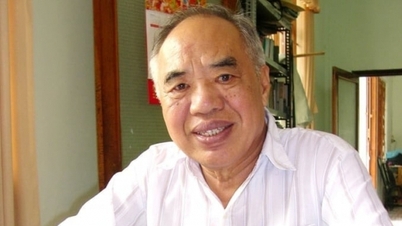
Mr. Le Hoang The is nearing the threshold of "ancient and rare" but when meeting him in real life, few people would think that he is over sixty. Because he is a gentleman with neatly trimmed silver hair, rosy complexion, and quick walking. In his youth, Le Hoang The was a windsurfing athlete. It is not that time has forgotten Le Hoang The, but his active lifestyle has the ability to fight aging.
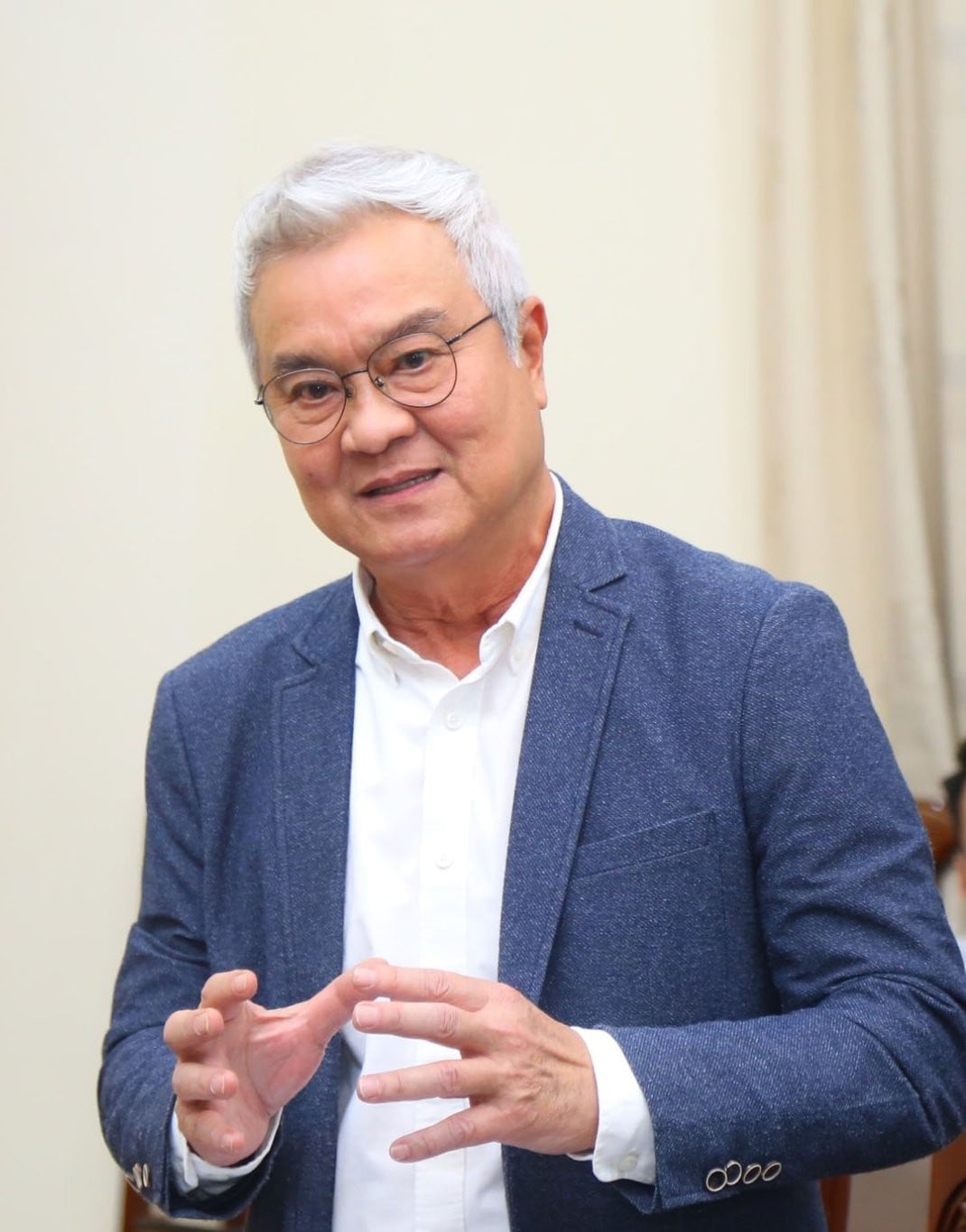
Dr. of Environmental Science Le Hoang The.
More than a decade ago, Mr. Le Hoang The surprised and worried many people when he mentioned the concept of “green economy ” on forums. It was easy to understand the skepticism of the crowd because at that time, society was looking for benefits from experimental deals and digital finance. However, Mr. Le Hoang The was never discouraged, he continued to be enthusiastic about exciting plans from “regenerative agriculture” to “carbon market”.
Why does Mr. The's appearance hide such a strange character? Many people are curious about Le Hoang The, and the more they understand him, the more they respect him. In his youth, Le Hoang The studied abroad and had a stable job in Japan. In 1987, overseas Vietnamese Le Hoang The left the land of cherry blossoms to return to his homeland, working as a representative for a Japanese corporation in Vietnam.
Originally from Dong Thap, Master of Business Administration Le Hoang The understands the hardships of the villagers. Instead of sitting in the office, Le Hoang The and his colleagues travel across Vietnam to popularize weed control methods using biotechnology. “Not all types of weeds are harmful to rice. There are types of weeds that help to nourish the fields, so we have to keep them. If farmers used to have to pull weeds by hand, we will instruct them on how to use chemicals to kill the right type of weeds,” he said.
On his journey to promote the effectiveness of plant protection, Mr. The became more and more attached to nature. At the end of 1997, the appearance of the Kyoto Protocol on climate change urged Mr. The to change his actions. Temporarily putting aside some business activities, he went to Denmark to do research and obtained a doctorate in environmental science at the University of Copenhagen. Calling for support from non-governmental projects, Dr. Le Hoang The launched the first project to plant 1,000 hectares of forest in U Minh Ha in 2011.
At that time, Ca Mau had just experienced several forest fires caused by peat deposits. In U Minh Ha, Mr. The brought hybrid acacia trees to each household to combine forest regeneration and green economic development. With a 5-year cycle, hybrid acacia trees not only yielded 300 tons of wood/ha but also contributed to soil improvement. In other words, each year, farmers earned 30 million VND per hectare.
Taking advantage of the momentum, Mr. The expanded the forest planting area with the criteria of ensuring a ratio of 70% hybrid acacia trees and 30% native trees such as cajuput, mangrove, and mangrove. Why is that? Dr. Le Hoang The expressed: “Biodiversity is the foundation for sustainable forest development. At the same time, we encourage farmers to extend the cycle of hybrid acacia trees from 5 years to 8 years. Although the yield per hectare does not increase much, the value is three times higher. If 5-year hybrid acacia trees only produce fuel wood for fuel, 8-year hybrid acacia trees become packaging wood, with many more uses.”
Mr. The always worries, our country has gold forests and silver seas, why are the people still not prosperous? With the dual role of both businessman and scientist, he is concerned about how to increase the value of land. Sustainable forest development is a green economy, we cannot ignore the benefits of every square meter.
Expert Le Hoang The's solution is very clear: "We exploit the forest in many layers. When the trees grow about 20 meters, they reach the high layer to harvest wood, the middle layer grows medicinal herbs such as ginseng, the lower layer grows lingzhi mushrooms. That means farmers have three sources of income: lingzhi mushrooms are harvested every four months, ginseng is harvested every two years, and wood is harvested every eight years."
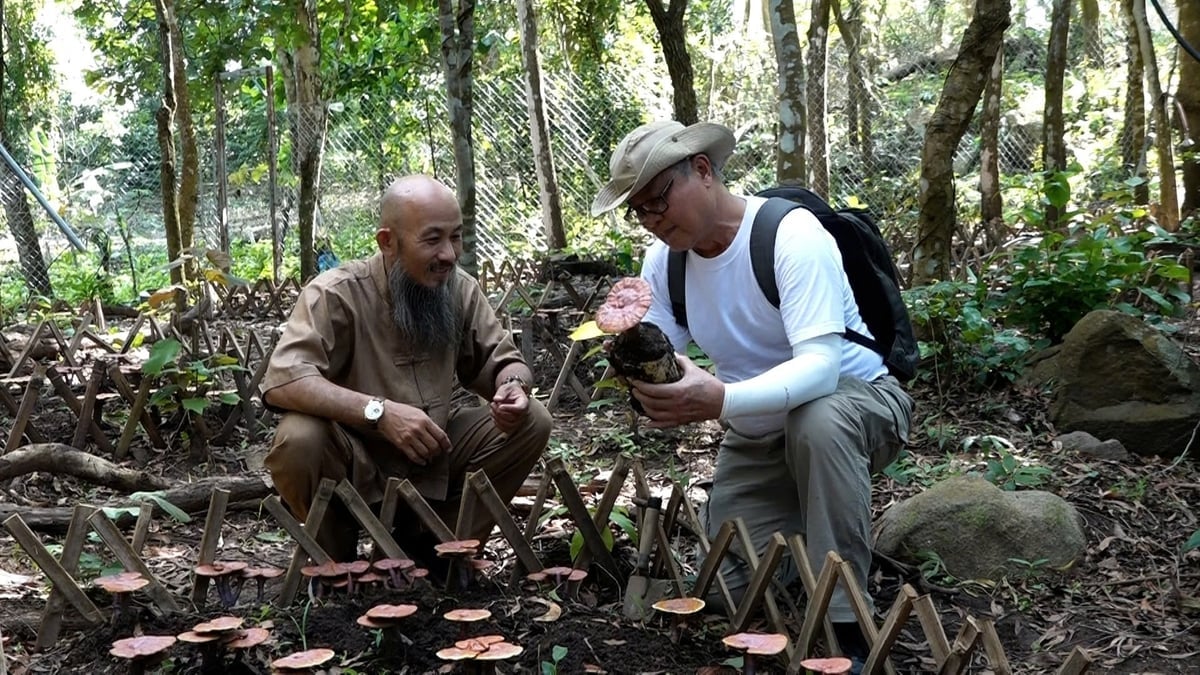
Dr. Le Hoang The guides Ganoderma mushroom growing techniques to farmers in Nui Cam, An Giang.
Of course, Mr. The is not only good at theory. He built The Vos ecosystem with both a production department and a research center. He adheres to the strategy of “must produce to feed science, then do science to serve production”.
Ganoderma lucidum is processed into health protection products in many different forms such as Ganoderma lucidum tablets, Ganoderma lucidum tea, Ganoderma lucidum coffee... under the brand name VOS Ganolucidum. Not only are they inspected and licensed to enter the US market, The Vos products are also sold on Amazon with the label Climate Pledge Friendly (environmentally friendly products).
In addition to the factory in Tay Ninh with a capacity of 500,000 tons of Ganoderma Lucidum mushroom wood blanks per year, businessman Le Hoang The also operates a 70-hectare farm in Mang Den (Quang Ngai) and a 20-hectare farm in Xuyen Moc (formerly Ba Ria - Vung Tau). However, Mr. The always seems to be leisurely. "I rarely lock myself in urban high-rise buildings. I only find true joy when walking under the forest canopy," he confided.
He advocates regenerative agriculture combined with investment in FSC-FM international forest certification. He is currently devoted to carbon credits. He can talk passionately for a whole session about calculating how much carbon a hectare of forest absorbs and how much carbon it stores.
According to Dr. Le Hoang The, Vietnam's carbon credit market has very positive prospects. The Mekong Delta region alone is a "gold mine" of carbon credits. He emphasized: "Vietnam's forestry sector alone has 57 million carbon credits, equivalent to 52 million tons of CO2, which can be provided to international organizations. Furthermore, Vietnam can also develop a super-class carbon credit, called organic carbon. However, the immediate challenge is human resources."
"To operate a carbon trading floor by 2027 according to the Government's emission reduction commitment roadmap, about 150,000 workers are required to be equipped with in-depth knowledge of preparing related documents, declaring and evaluating carbon credits. I do not hide my profession, I am willing to participate in training carbon appraisers, as I have been sharing forest planting and medicinal plant growing technology with farmers."
(Dr. Le Hoang The).
Source: https://nongnghiepmoitruong.vn/quy-ong-tim-thay-niem-vui-duoi-moi-tan-rung-d783777.html
![[Photo] General Secretary To Lam receives the Director of the Academy of Public Administration and National Economy under the President of the Russian Federation](/_next/image?url=https%3A%2F%2Fvphoto.vietnam.vn%2Fthumb%2F1200x675%2Fvietnam%2Fresource%2FIMAGE%2F2025%2F12%2F08%2F1765200203892_a1-bnd-0933-4198-jpg.webp&w=3840&q=75)










![Varieties Revolution: [Lesson 3] Tissue-cultured bananas aim for billion-dollar trees](https://vphoto.vietnam.vn/thumb/402x226/vietnam/resource/IMAGE/2025/12/07/1765099407833_488761353918024933-114743_324-162058.jpeg)























































Comment (0)