

At the 8th National Farmers Forum on the morning of October 12th, Deputy Prime Minister Le Minh Khai assessed that the collective economy is an important economic component that must be strengthened and developed, becoming a solid foundation of the national economy together with the state economy. Developing the collective economy is an inevitable and objective trend, and a task for the entire political system.
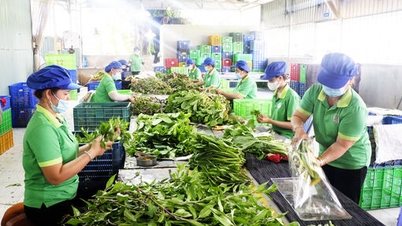
According to the Deputy Prime Minister , many cooperatives and cooperative groups, after being established with the support of the Farmers' Association, have become profitable, created more jobs, and produced high-quality, safe agricultural products, building OCOP product brands.
In addition, agricultural cooperative models that organize production and business linked to value chains are increasing. Many cooperatives register to produce according to food safety standards and VietGAP standards.
However, cooperatives still face many difficulties and challenges, ranging from capital, land, and agricultural product consumption to management capacity, mechanisms, and policies for operating in the agricultural sector.
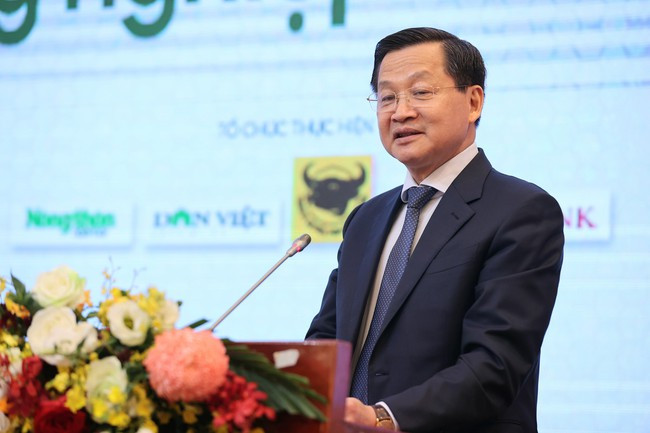
In that spirit, the Deputy Prime Minister requested leaders of ministries, sectors, localities, and the Vietnam Farmers' Association to urgently focus on implementing a number of key solutions and tasks.
Firstly, it is necessary to have a correct and comprehensive understanding of the nature, position, role, and importance of the collective economy in the market economy. To fulfill this requirement, Deputy Prime Minister Le Minh Khai proposed that the Ministry of Planning and Investment, in coordination with relevant agencies, urgently consolidate the National Steering Committee on Collective Economy as directed by the Central Committee of the Communist Party of Vietnam in Resolution No. 20-NQ/TW.
Secondly, we propose that the Farmers' Association at all levels continue to promote, encourage, and guide the establishment of more new cooperatives and cooperative groups based on existing professional branches and groups. By 2030, the whole country will have 140,000 cooperative groups and 45,000 cooperatives with 2 million members.
Thirdly, it is proposed that the Government Office, in coordination with the Central Committee of the Vietnam Farmers' Association, take the lead, and the Ministry of Agriculture and Rural Development and other relevant ministries and agencies, urgently submit to the Prime Minister for approval the Project "Vietnam Farmers' Association's participation in the development of collective economic activities in agriculture".
Accordingly, the project proposals must ensure feasibility and mobilize social resources. At the same time, they should further enhance the role of Farmers' Associations at all levels in participating in the development of the collective economy, encouraging new approaches, and forming sustainable supply chains.
Fourth, ministries, departments, and localities need to focus on researching and resolving the difficulties and obstacles raised by cooperative representatives at the forum; they should not shirk responsibility for issues related to mechanisms and policies concerning cooperatives.
Fifth, it is necessary to improve the effectiveness and efficiency of state management in the collective economic sector. Prioritize resources, allocate funds, and assign personnel to monitor the contents of collective economic reform and cooperatives at agencies and units from the central to local levels.
Sixth, it is necessary to strengthen international cooperation to attract resources to support the development of collective economic organizations and cooperatives in agriculture, and to expand markets and promote the consumption of products from cooperatives; to train and improve the skills of human resources in collective economic organizations established through the promotion, mobilization, and guidance of the Farmers' Association.
Develop mechanisms and policies to train, nurture, and attract young intellectuals to work in cooperatives, meeting the increasingly high demands of building value chains and international integration.
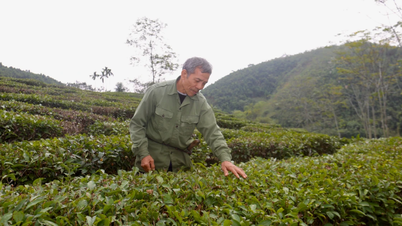
Seventh, cooperatives must be proactive, creative, and innovative in their thinking and methods, shifting from an agricultural production mindset to an integrated agricultural economy with multiple values; the products they produce must have brands, high quality, and meet the demands of domestic and international markets, especially those associated with the One Commune One Product (OCOP) program.
The Deputy Prime Minister also noted that the Vietnam Farmers' Association needs to maintain its forum activities, creating a useful platform for farmers to share and propose experiences in production and business; and at the same time, present proposals and recommendations so that the Government, the Prime Minister, ministries, sectors, and localities can promptly have solutions and policies to address the issues.

Source




































































Comment (0)