

With its diverse topography including rivers, mountains, bays, and rocky islands, Quang Ninh has a great potential for developing geotourism .
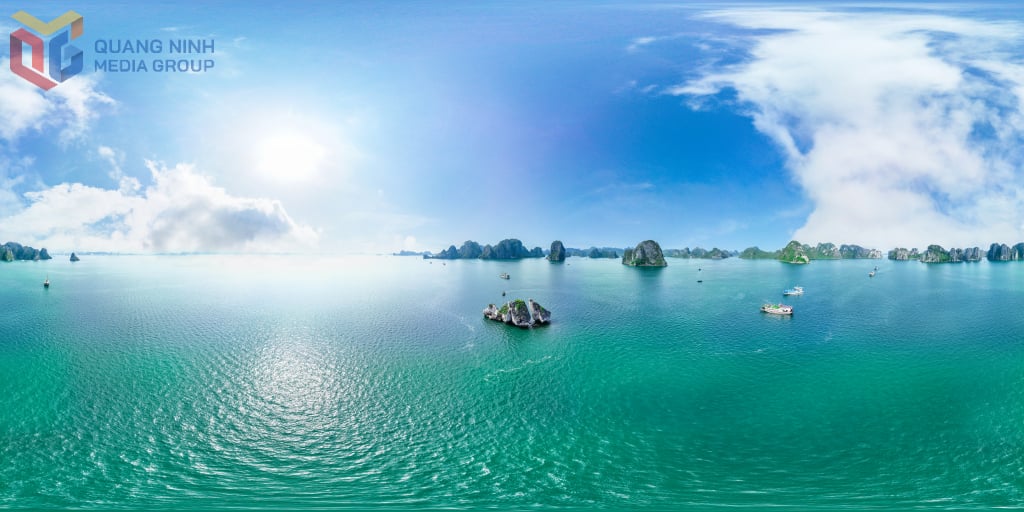
Geotourism is understood as a type of tourism that provides visitors with information, knowledge, and understanding of the unique geological, geomorphological, and geographical values of a location, linked to the protection and sustainable development of the environment, heritage, aesthetics, culture, and the well-being of the community. The purpose of geotourism is to help visitors enjoy and experience the beauty and grandeur of the geology, topography, and geomorphology associated with the local culture, history, and religion of scenic spots. Through this, visitors gain an understanding of both tangible and intangible values, thereby appreciating and contributing to the protection and preservation of these scenic spots.
Professor Tran Thanh Hai, Rector of the University of Mining and Geology, stated that: Geotourism is a branch of the tourism industry, a new and alternative form of tourism that emerged at the beginning of the 21st century, especially with the establishment and legalization of geoparks. In these parks, important geological heritage sites with rich natural and cultural environments are protected and promoted, leading to the development of responsible tourism, local economic development, and sustainable development. Geotourism focuses on elements of geological diversity, exploring or admiring geological and geomorphological/landscape features with the goal of promoting increased understanding of earth science, raising awareness of the importance of conserving geological diversity and protecting the environment through education and appreciation of these resources.

Furthermore, geotourism promotes other natural values, along with the historical, cultural, and social values of the heritage area. Thus, geotourism creates opportunities for tourists to enhance their in-depth understanding of geology, geological heritage sites, and the geological diversity of the region, going beyond the boundaries of ordinary landscape viewing. It is important to emphasize that geotourism is a new direction, combining applied geology with tourism, and is a form of geological conservation. In other words, geotourism involves applying geological knowledge to integrate and promote forms of ecotourism.
Quang Ninh possesses many strengths for developing geotourism, covering an area of over 12,000 km2, including 6,206.9 km2 of land and a sea area with an outer boundary located 6 nautical miles from the average low sea level over many years, as determined and published by the Ministry of Natural Resources and Environment . 80% of the province's land area is mountainous, with a width of 195 km from East to West and a length of 102 km from North to South. Quang Ninh has diverse topography ranging from mountainous to midland and coastal plains, coastal areas, and islands, creating a diverse climate, ecosystem, and geological system. The complex mountainous terrain divides the province into two regions: the East and the West.
Quang Ninh boasts a unique coastal archipelago landscape comprising numerous islands of varying sizes. Among them, Ha Long Bay and Bai Tu Long Bay are natural treasures of exceptional value, featuring thousands of limestone islands and white sandy beaches that serve tourism and provide raw materials for the glass industry. The seabed features reefs that support the growth of diverse coral reefs, creating favorable conditions for tourism development. According to research, Quang Ninh has 21 geological subdivisions and 2 magmatic complexes. Some subdivisions have been found to contain minerals relevant to the development of mining, mineral processing, and construction material production industries. Ha Long Bay is an excellent example of mature limestone karst in humid tropical conditions, exhibiting the most complete karst evolution process spanning 20 million years from the Miocene epoch.
The aesthetic value of heritage sites includes attractive landscapes resulting from geological features or processes. Many heritage sites can be tourist destinations and provide significant economic benefits. The value of geological heritage, along with geological diversity, can be effectively leveraged for economic development by efficiently and sustainably exploiting them for scientific, educational, and tourism purposes, especially those recognized as heritage sites.
This includes Ha Long Bay, which was recognized for the second time by UNESCO as a World Heritage Site for its outstanding global value in terms of geological history and karst geomorphology in 2000. In 2024, Ha Long Bay (Quang Ninh) and Cat Ba Archipelago (Hai Phong) were recognized as an International Geological Heritage Site by the International Union of Geological Sciences (IUGS) at the 37th International Congress of Geologists (IGC) held in Busan (South Korea).
Professor Tran Thanh Hai argues that the current natural form of Ha Long Bay and the adjacent mainland area, as well as the Cat Ba Archipelago, is the result of long-term geological tectonic activity in the region, occurring continuously over 500 million years on a diverse geological foundation and in unique geological environments. This process has resulted in a combination of geological processes creating diverse and unique geological, geomorphological, and landscape features, forming geological heritage sites of outstanding global value. These are unique geological characteristics that need to be promoted and effectively exploited to serve socio-economic development, while also being strictly preserved and protected to serve the goal of sustainable development.

According to Professor Tran Thanh Hai, developing geotourism requires building appropriate plans, scenarios, and tourism formats based on the integration of the detailed survey parameters mentioned above in a scientific, synchronized manner, with the participation of all relevant parties. Simultaneously, it is necessary to develop training programs and raise community awareness in understanding the value of geological heritage and its protection; build a system of educational and promotional materials about geological heritage; and organize information and communication activities to promote geological heritage, explain its importance, and the urgent need to protect it.
Quang Ninh should also implement policies, regulations, and sanctions to effectively exploit, manage, conserve, and protect its geological heritage. Identifying the interests of stakeholders regarding educational, scientific research, economic, environmental, and community values is crucial for establishing heritage sites, areas, and geoparks. Simultaneously, it is necessary to promote geotourism through the cooperation of stakeholders in developing economic activities that harmonize with heritage protection.
Huynh Dang
Source

























































Comment (0)