

On the afternoon of May 30th, the National Assembly held working sessions in groups to discuss the draft Resolution of the National Assembly on piloting a number of special mechanisms and policies for the development of Ho Chi Minh City.
New political opportunities for Ho Chi Minh City's development.
During the group discussion, delegate Nguyen Thien Nhan, former member of the Politburo and former Secretary of the Ho Chi Minh City Party Committee, assessed that these new mechanisms and policies will remove difficulties and bottlenecks and create a very important foundation for the city's development.
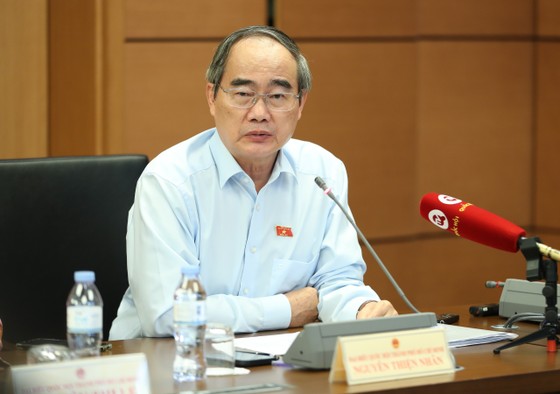 |
National Assembly representative Nguyen Thien Nhan. Photo: QUANG PHUC |
According to National Assembly Deputy Nguyen Thien Nhan, if the National Assembly passes the new resolution, it will be a new political opportunity for Ho Chi Minh City to develop. Therefore, the Deputy proposed that the entire political system of the city must get involved and organize its vigorous implementation immediately.
In addition, each agency, district, and Thu Duc City registered specific tasks to be implemented immediately. Among these, Representative Nguyen Thien Nhan suggested focusing on disbursing public investment funds; creating a strong transformation in the work attitude of officials and civil servants; and improving citizen satisfaction.
Representative Nguyen Thi Le, Deputy Secretary of the City Party Committee and Chairwoman of the Ho Chi Minh City People's Council, agreed that the city needs specific mechanisms and policies to suit its position and role as the largest city in the country in terms of population and economic scale.
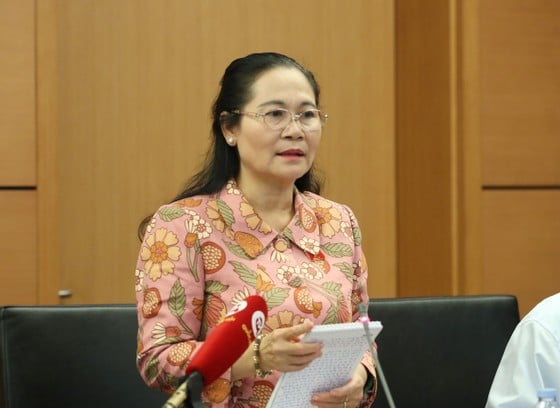 |
National Assembly representative Nguyen Thi Le. Photo: QUANG PHUC |
According to the delegate, with these new mechanisms and policies, Ho Chi Minh City will take the lead in piloting them to gain experience in order to prepare for amending legal regulations in the future.
If the new draft resolution is passed by the National Assembly, it will help the city effectively mobilize resources and develop its existing potential; at the same time, it will remove institutional bottlenecks that are hindering development.
In particular, outstanding mechanisms and policies have enabled Ho Chi Minh City to mobilize diverse social resources, focusing on the rapid development of socio-economic infrastructure.
Through this, Ho Chi Minh City is gradually addressing the challenges in the city's new development phase. At the same time, it contributes to achieving the goals set out in Resolution 31 of the Politburo by 2030.
According to delegate Nguyen Thi Le, the Ring Road 3 project is also a pilot project aimed at removing bottlenecks related to land compensation and resettlement, and investing in key projects. With this mechanism and policy to remove obstacles, Ho Chi Minh City will have the necessary conditions to make breakthroughs and thrive in the future.
Issue a plan for preparation and implementation.
In further discussion, Deputy Phan Van Mai, Permanent Deputy Secretary of the City Party Committee, Chairman of the People's Committee of Ho Chi Minh City, and Head of the Ho Chi Minh City National Assembly Delegation, emphasized that the system of mechanisms and policies outlined in the draft helps the city overcome difficulties and obstacles, thereby maximizing the city's potential and advantages.
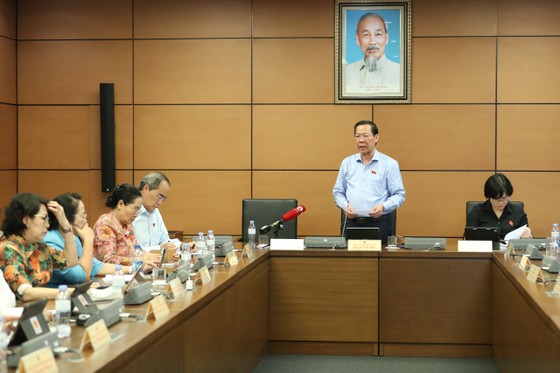 |
National Assembly representative Phan Van Mai. Photo: QUANG PHUC |
From then on, the city developed in accordance with its position and role, contributing to the overall development of the country, in the context of positioning Ho Chi Minh City as a leading engine, hub, and representative of Vietnam in international integration and competition.
The Chairman of the Ho Chi Minh City People's Committee also emphasized that Ho Chi Minh City's successful implementation of various mechanisms and policies, yielding positive results, will serve as a practical lesson and experience in the process of developing and implementing laws.
Furthermore, the mechanisms and policies outlined in this draft will help Ho Chi Minh City focus on unlocking and mobilizing investment resources. If implemented effectively, Ho Chi Minh City could mobilize hundreds of thousands of billions of VND for development investment over the next five years.
Regarding policy mechanisms for the development of science, technology, and innovation, delegates assessed this as a tremendous potential and a new driving force for the development of the city and the country.
Regarding decentralization, delegation of authority, organizational structure, and personnel for Ho Chi Minh City and Thu Duc City, delegate Phan Van Mai stated that these mechanisms and policies help the city be more proactive and resolve issues more quickly and effectively.
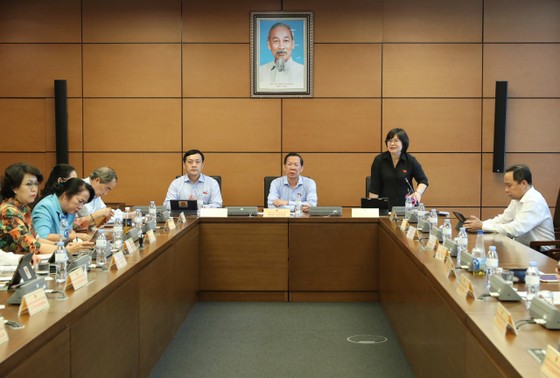 |
National Assembly delegates from Ho Chi Minh City discuss in their group. Photo: QUANG PHÚC |
According to delegate Phan Van Mai, the most important thing is how Ho Chi Minh City will implement the resolution once it is passed by the National Assembly. Drawing on lessons learned from the implementation of Resolution 54, the Chairman of the People's Committee of Ho Chi Minh City emphasized the importance of early, proactive, and rapid implementation to achieve the best results.
In particular, Ho Chi Minh City is focusing on advising and finalizing the draft government decree on implementation guidelines; and coordinating with relevant ministries and agencies to issue circulars or guidelines for implementing the new resolution once it is passed by the National Assembly.
The Chairman of the Ho Chi Minh City People's Committee also signed a plan assigning tasks for preparing and implementing the new resolution once it is passed by the National Assembly. Regarding strengthening the personnel for implementation, the Chairman of the Ho Chi Minh City People's Committee affirmed that Ho Chi Minh City has prepared the mindset, spirit, conditions, tools, and means to organize implementation immediately upon the new resolution's approval.
In this regard, the Ho Chi Minh City People's Committee assigned the Department of Internal Affairs to develop a plan to improve the quality of public service. This plan includes six important contents related to recruitment policies, training, job placement, income, additional benefits, housing policies, and digital transformation of the administrative system.
In addition, Ho Chi Minh City is implementing Conclusion 14 of the Politburo on the policy of encouraging and protecting dynamic and creative officials for the common good. Currently, Ho Chi Minh City has selected 30 projects to focus on implementing in accordance with the spirit of this conclusion.
The Chairman of the Ho Chi Minh City People's Committee also stated that in the future, Ho Chi Minh City aims to have a special urban law for the city, not just a resolution, and is also researching whether Thu Duc City needs a law for a city within a city.
According to Chairman of the Ho Chi Minh City People's Committee Phan Van Mai, in the second quarter of 2023, Ho Chi Minh City's economic growth reached 5.87% (compared to only 0.7% in the first quarter). For the first six months of the year, Ho Chi Minh City's economic growth reached 3.55%. This is a tremendous effort by the entire political system, the business community, and the people of Ho Chi Minh City, under the leadership and guidance of the Government, the Prime Minister, and central ministries and agencies.
Source
































































Comment (0)