

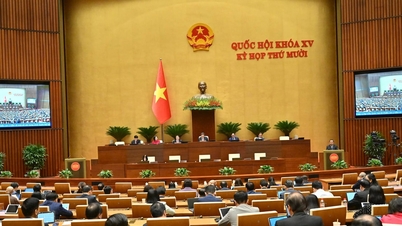
On the morning of December 11th, the National Assembly passed a Resolution amending and supplementing a number of articles of Resolution 98/2023/QH15 on piloting some specific mechanisms and policies for the development of Ho Chi Minh City.
Accordingly, the Resolution added an important chapter on the Ho Chi Minh City Free Trade Zone, with a series of new mechanisms regarding land, investment, administrative procedures, and decentralized management.
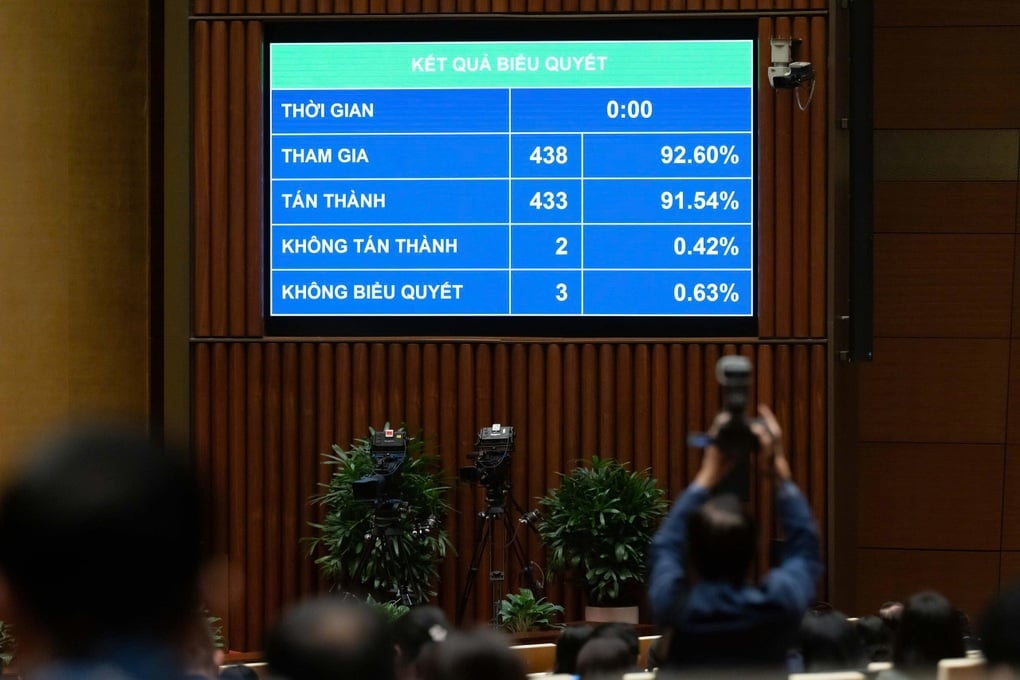
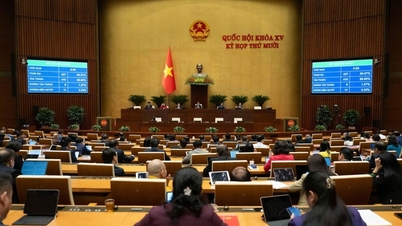
The resolution was passed with an approval rate of over 92% (Photo: National Assembly).
Free trade zone with superior mechanisms
A free trade zone is a geographically defined area established to pilot superior, specific mechanisms and policies aimed at attracting high-quality investment, finance, trade, and services; promoting exports, industry, research and development (R&D), and attracting high-quality human resources.
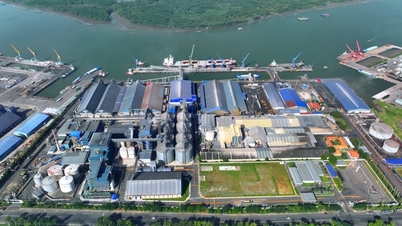
The City People's Council is tasked with issuing the procedures for establishment; the City People's Committee decides on the establishment, expansion, and adjustment of the boundaries of the free trade zone associated with the Cai Mep Ha seaport area. This decision is considered a local adjustment to the general and overall city planning, and is updated in the relevant plans.
The resolution also allows the City People's Committee to fully exercise state management powers over this area in accordance with regulations on industrial parks and economic zones. The Management Board of Export Processing Zones and Industrial Parks of Ho Chi Minh City is assigned to perform additional functions of direct management over the free trade zone; at the same time, the City People's Committee may transfer some functions, tasks, and powers from specialized agencies to the management board.
Decentralize power in land, investment, and administrative procedures.
One of the notable points is the land allocation mechanism specifically for the free trade zone. According to the Resolution, the Chairman of the People's Committee of Ho Chi Minh City has the right to allocate and lease land without auctioning land use rights and without bidding to select investors for investment projects in this zone (except for commercial housing projects).
Investors are granted land leases to construct and operate infrastructure in functional zones, with rights and obligations similar to those of industrial park infrastructure investors under land law. The City People's Committee has the authority to determine the price framework for infrastructure leases.
Regarding investment procedures, the Chairman of the City People's Committee is authorized to approve the investment policy for infrastructure projects in functional areas within the free trade zone, including projects requiring the conversion of forest land use (except for cases stipulated in Clause 6, Article 4 of the Resolution).
The procedures are the same as for projects under the authority of the Provincial People's Committee Chairman to approve investment policies. Foreign investors establishing economic organizations in free trade zones do not need to have an investment project beforehand, nor do they need to go through the procedure of obtaining an investment registration certificate before establishing the economic organization; investment registration procedures are only carried out when the investment project is implemented.
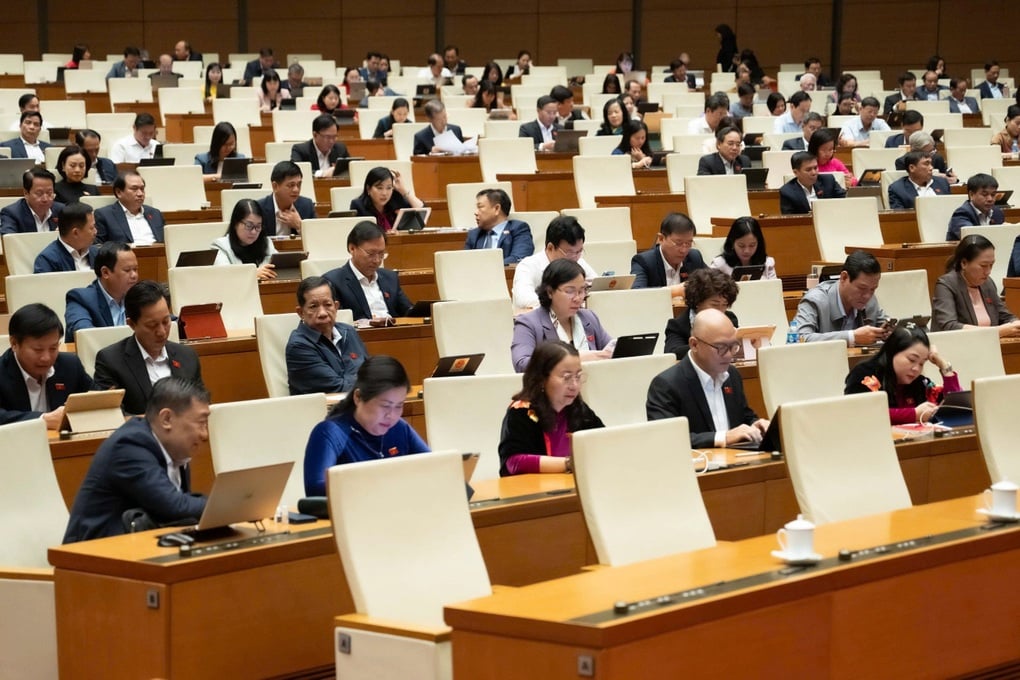
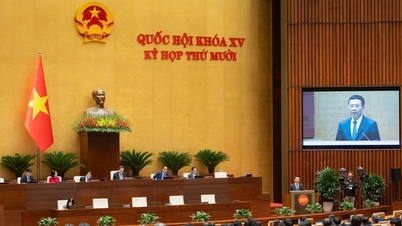
The National Assembly pressed the button to approve the Resolution (Photo: National Assembly).
The resolution also introduces a mechanism to significantly simplify specialized procedures. Imported and exported goods within the free trade zone are exempt from specialized inspections if they have been certified as conforming to standards or regulations, or have conformity assessment results recognized under international treaties. Businesses in functional zones that meet the conditions of a duty-free zone are allowed to buy and sell goods with the outside area through import and export transactions; and are permitted to list, price, and settle payments in foreign currency with each other.
In the customs field, the Head of the Customs Sub-Department in charge of the free trade zone is granted additional authority to recognize, temporarily suspend, or terminate the application of preferential treatment; and to decide on the establishment, extension, or termination of operations of bonded warehouses, collection points, and locations for inspecting and monitoring goods within the zone.
Great incentives to attract investors and professionals.
The resolution also adds tax incentives specifically for businesses in the Free Trade Zone. Income from new investment projects in semiconductor, artificial intelligence, R&D centers, new materials industries, high-tech supporting industries, energy infrastructure, digital infrastructure, etc., will be subject to a corporate income tax rate of 10% for 20 years, with a tax exemption for 4 years and a 50% reduction for the following 9 years.
Experts, scientists, talented individuals, managers, and highly skilled workers employed in free trade zones are entitled to a 50% reduction in personal income tax for 10 years. Foreign nationals classified as experts, along with their spouses and children under 18, are granted visas for up to 5 years and temporary residence permits for up to 10 years (codes UĐ1, UĐ2).
Source: https://dantri.com.vn/thoi-su/trao-quyen-lon-cho-tphcm-khi-thi-diem-khu-thuong-mai-tu-do-20251211115056343.htm













































































Comment (0)