

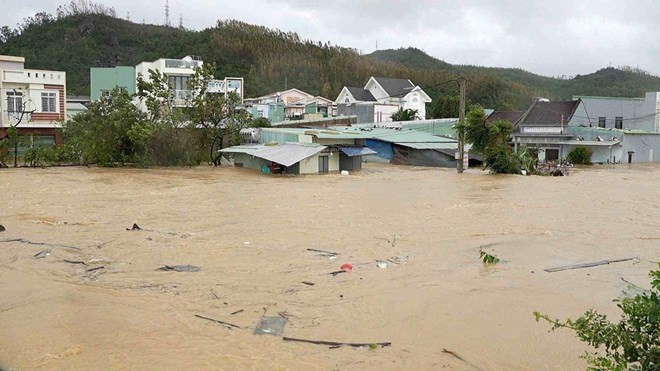
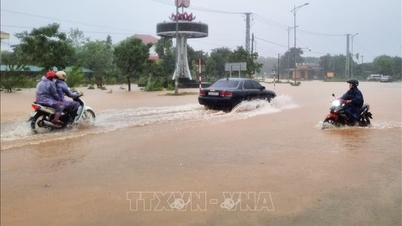
Heavy rain causes severe flooding in Gia Lai , November 19, 2025. Photo: Duc Dung
Indonesia, the Philippines, Sri Lanka, Thailand and Vietnam are among the countries hardest hit by the “combination of monsoon rains and tropical cyclone activity ,” the WMO said.
Speaking in Geneva (Switzerland) on December 2, WMO spokesperson Clare Nullis emphasized that Asia is extremely vulnerable to floods and according to the annual State Of The Climate reports, floods always top the list of climate hazards in the region.
Nullis added that storms that form near the equator—like Typhoon Senyar , which brought torrential rains, flash floods and landslides to North Sumatra, Malaysia and southern Thailand last week—are rare. This unusualness makes the devastation all the more severe, as local communities have little experience dealing with it.
Figures released by the Indonesian National Disaster Management Agency (BNPB) on December 2 show the catastrophic extent of the recent natural disaster: 712 dead, 507 missing, and about 2,600 injured. A total of 1.1 million people were affected and more than 570,000 people had to be evacuated in 50 districts on Sumatra island.
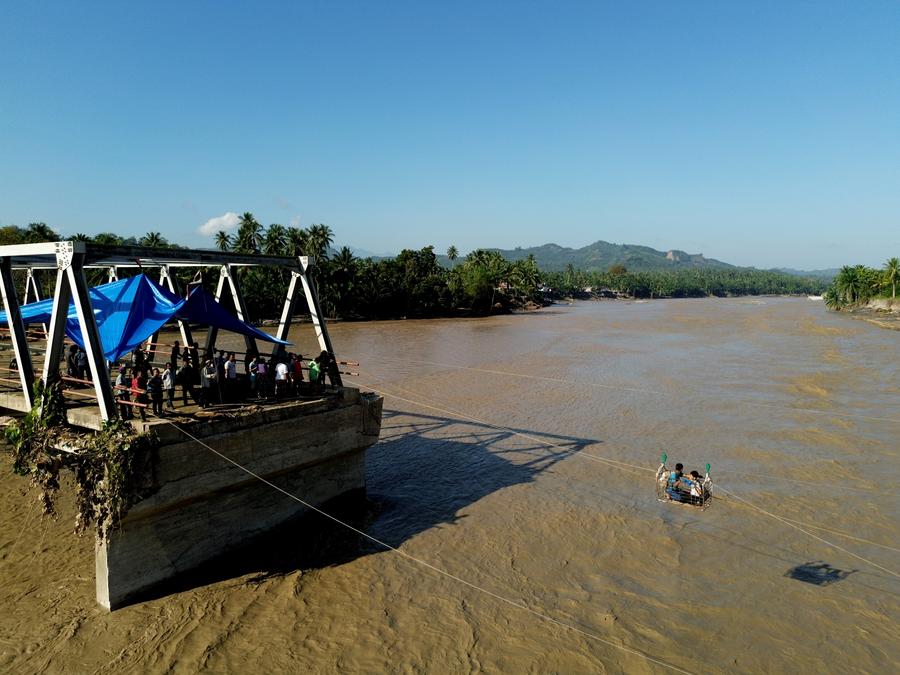
People cross a river using ropes after a bridge was damaged by floods in Bireuen Regency, Aceh province, Indonesia, December 1, 2025. Photo: Xinhua
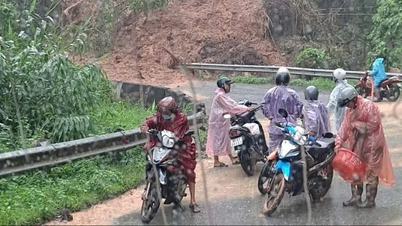
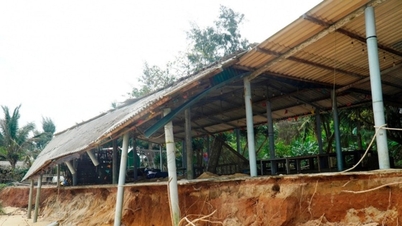
According to WMO, Vietnam has been battered by heavy rains for weeks and now faces the risk of further extreme rains.
The prolonged rains have caused many relics and tourist attractions to be deeply submerged, causing economic losses of up to tens of millions of USD, especially in agriculture. More than 100 people died in the floods from November 16-20 alone.
Under the combined impact of storm No. 15 Koto , which has weakened into a tropical depression, and cold air, the South Central Coast and Central Highlands of Vietnam are forecast to experience heavy to very heavy rain on December 3-4.
During the period of November 16-20 alone, easterly wind disturbances combined with increased cold air caused widespread heavy rain, with rainfall ranging from 400-700mm, in many places exceeding 1,000mm. Particularly in the east of Dak Lak, rainfall was recorded at 700-900mm, with some places exceeding 1,200mm, according to the Vietnam National Center for Hydro-Meteorological Forecasting. Many rivers such as Ky Lo, Ba River (Dak Lak) and Dinh River (Khanh Hoa) exceeded historical flood levels.
In late October, a weather station in Hue recorded 1,739.6mm of rain in 24 hours - an unprecedented level in Vietnam. WMO said the above value is being reviewed by the Extremes Evaluation Committee and if confirmed, this would be a record for the Northern Hemisphere and Asia, close to the world's highest level (1,825mm).
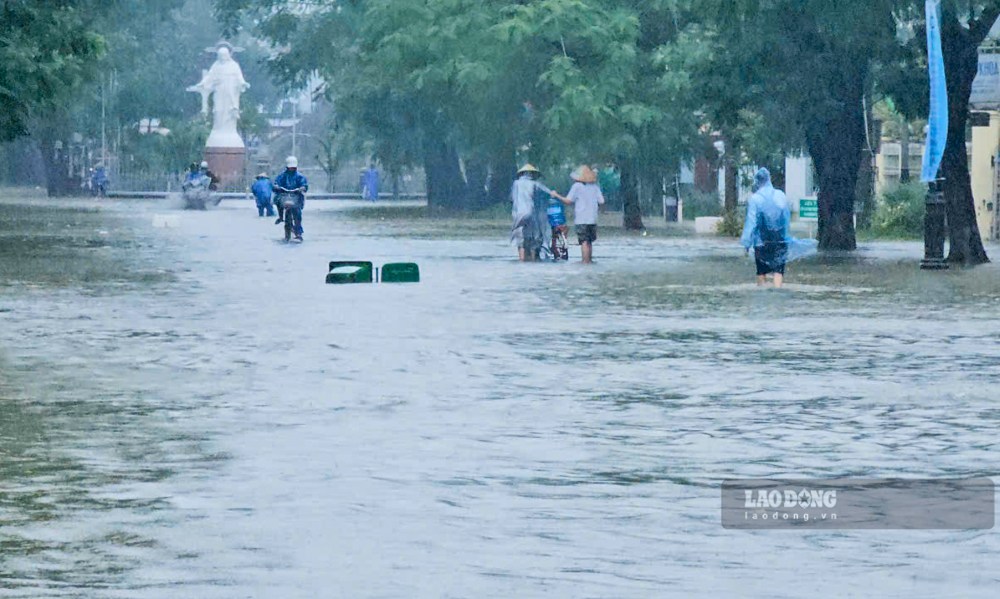
Hue City was deeply flooded on the morning of October 27. Photo: Phuc Dat
Not only Vietnam and Indonesia, Sri Lanka is also in the midst of a humanitarian crisis after Cyclone Ditwah made landfall last week, affecting 1.4 million people, including 275,000 children.
Explaining the sharp increase in extreme weather events , Ms. Nullis asserted: “Rising temperatures increase the risk of extreme rainfall, because the warmer atmosphere can hold more moisture. That is the law of physics.”
She warned that the world will continue to see unusually heavy rains in the future - a particularly worrying risk for countries like Vietnam, where the impacts of climate change are increasingly evident.
KHANH MINH
Source: https://laodong.vn/the-gioi/wmo-canh-bao-viet-nam-co-nguy-co-tiep-tuc-hung-chiu-mua-lon-1619410.ldo





















![[Photo] Parade to celebrate the 50th anniversary of Laos' National Day](/_next/image?url=https%3A%2F%2Fvphoto.vietnam.vn%2Fthumb%2F1200x675%2Fvietnam%2Fresource%2FIMAGE%2F2025%2F12%2F02%2F1764691918289_ndo_br_0-jpg.webp&w=3840&q=75)
![[Photo] Worshiping the Tuyet Son statue - a nearly 400-year-old treasure at Keo Pagoda](/_next/image?url=https%3A%2F%2Fvphoto.vietnam.vn%2Fthumb%2F1200x675%2Fvietnam%2Fresource%2FIMAGE%2F2025%2F12%2F02%2F1764679323086_ndo_br_tempimageomw0hi-4884-jpg.webp&w=3840&q=75)






























































Comment (0)