


A means of objectively, openly, and transparently evaluating the performance of the locality.
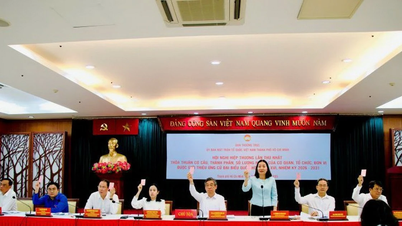
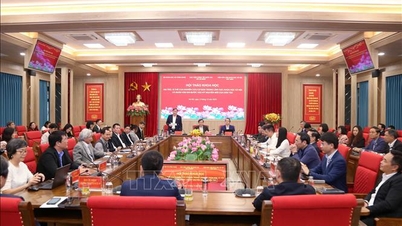
Speaking at the workshop, Vice Chairwoman of the Central Committee of the Vietnam Fatherland Front, Ha Thi Nga, stated: The workshop aims to implement the directive of General Secretary To Lam at the First Congress of the Party Committee of the Vietnam Fatherland Front and Central Mass Organizations, term 2025-2030, which assigned the Vietnam Fatherland Front to preside over the development and independent assessment of the Provincial-level Social Trust Index. This is a new, unprecedented task, requiring the Front to urgently finalize and put it into practice to assess the level of people's satisfaction in the implementation of policies and guidelines, and the deployment of socio -economic development programs in localities.
The workshop serves as a foundation for promoting the strength of national unity and demonstrating the position and role of the Vietnam Fatherland Front in the current period. The Standing Committee of the Central Committee of the Vietnam Fatherland Front wishes to hear opinions, exchanges, and proposals on how to coordinate the independent evaluation of the set of indicators – which is a means of objectively, publicly, and transparently assessing the activities of localities, so that each locality can listen to and serve the people better, affirmed Ms. Ha Thi Nga.
According to the proposal of the Vietnam Fatherland Front, the provincial-level social trust index is built on a multi-dimensional approach to social trust in accordance with international practices, referencing the OECD (Organisation for Economic Co-operation and Development) Trust Measurement Framework, UNDP (United Nations Development Programme) governance indicators, and WVS ( World Values Survey) social trust scales.
The structure comprises five main groups, fully reflecting the following dimensions: belief in the state and law; belief in social relations and the community; belief in the socio-economic environment; belief in the future; and belief in justice and law enforcement.
The indicator groups adhere to three principles: inclusiveness (reflecting the entire structure of beliefs that people perceive in real life); measurability (factors can be measured using simple, consistent, and easy-to-understand questionnaires); and feasibility (suitable for the sociological research capacity in the provinces, without creating a burden of data collection).
Indicator groups: Group 1 focuses on trust in government and public institutions, comprising five indicators: government transparency; governance and administrative efficiency; accountability; integrity and anti-corruption; and capacity to serve the people.
Group 2, focusing on trust in social relationships (Social Capital), comprises five indicators: the level of trust between individuals; community cohesion and mutual support; trust in grassroots community institutions; the level of social conflict; and the perception of safety in life.
Group 3, focusing on belief in law and justice, comprises five indicators: fairness in law enforcement; belief in law enforcement; effectiveness in resolving complaints and denunciations; belief in the judicial system (courts); and legal security in business and life.
Group 4 focuses on beliefs about the socio-economic environment, comprising four indicators: business environment and economic opportunities; income and living standards; social stability; and access to social and public services.
The group of 5 future-oriented beliefs includes 4 indicators: the province's development prospects; opportunities for personal development; opportunities for the younger generation; and the stability and predictability of policies.
Ensuring the principles of independence and objectivity in the development of the Index Set.
Based on the experience of developing the Provincial Competitiveness Index (PCI), Mr. Dau Anh Tuan, Standing Committee Member and Deputy Secretary General of the Vietnam Chamber of Commerce and Industry (VCCI), stated that the PCI is a tool to measure and evaluate the quality of economic governance, the level of business environment convenience, and the administrative reform efforts of provincial and city governments in Vietnam. The introduction of the PCI has met urgent needs from many sides: central agencies need a monitoring tool; local governments need to identify bottlenecks; investors need comparative information to make decisions; and local businesses need an official channel to voice their opinions. Since the first research and publication of the PCI in 2005, at least five major impacts have been achieved: changing mindsets about governance; creating effective monitoring tools; acting as a driving force for change; promoting cooperation and sharing; This contributes to building the image and reputation of localities as well as Vietnam in creating a favorable investment and business environment.
Based on technical experience and practical implementation of the PCI, VCCI proposes the core principles for building a set of indicators of social trust in the Central Committee of the Vietnam Fatherland Front as follows: ensuring absolute independence and objectivity; establishing a strict identity security process; combining survey data and statistical data; and linking measurement results with accountability.
According to Dr. Ngo Sach Thuc, former Vice Chairman of the Central Committee of the Vietnam Fatherland Front, the development of a provincial-level social trust index is essential and aligns with the requirements of decentralization and delegation of power in the current two-tiered local government system. To effectively implement this index, the method of deployment and coordination in assessing independence is crucial. First and foremost, the Vietnam Fatherland Front needs to thoroughly understand and correctly interpret the index when developing it, drawing on the experiences of previously implemented methods.
The guidelines for implementing and coordinating the assessment of the independence of the provincial-level Social Trust Index should ensure the following general principles: Independence - objectivity - transparency; scientific - international standards; and multi-stakeholder participation (government agencies, independent research institutes/centers, experts, and representatives of the people).
The process can be carried out in six steps: Step 1: Standardize criteria and subjects for measuring satisfaction. Step 2: Select independent surveyors and organizations. Step 3: Collect data ensuring independence. Step 4: Process and analyze data. Step 5: Conduct independent review and peer review. Step 6: Publication and social monitoring.
To ensure the highest level of independence, it is necessary to clearly stipulate that interference in the survey and data processing stages is prohibited; contracts, funding sources, and survey units must be made public; cross-evaluation among survey organizations is mandatory; a mechanism for complaints and denunciations of violations of independence in implementation must be established; methodologies must be published in an "open methodology" format; and analyses must be publicly disclosed.
To achieve the goal, the effectiveness of building and implementing the provincial-level social trust index, which measures satisfaction in a truly objective manner, depends on many factors, including developing appropriate criteria, applying digital technology to conduct assessments, and minimizing subjective influences - Dr. Ngo Sach Thuc stated.
Source: https://baotintuc.vn/thoi-su/xay-dung-bo-chi-so-niem-tin-xa-hoi-cap-tinh-de-lang-nghe-phuc-vu-nhan-dan-tot-hon-20251212112330981.htm






















![[Photo] Prime Minister Pham Minh Chinh holds a phone call with the CEO of Russia's Rosatom Corporation.](/_next/image?url=https%3A%2F%2Fvphoto.vietnam.vn%2Fthumb%2F1200x675%2Fvietnam%2Fresource%2FIMAGE%2F2025%2F12%2F11%2F1765464552365_dsc-5295-jpg.webp&w=3840&q=75)











































Comment (0)