

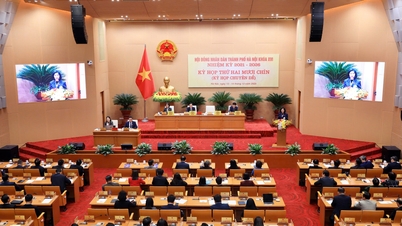
Continuing the agenda of the 7th Session of the 15th National Assembly, on the afternoon of May 29th, at the National Assembly building, under the chairmanship of National Assembly Chairman Tran Thanh Man, the National Assembly discussed in the plenary session the supplementary assessment of the results of implementing the socio- economic development plan and the state budget for 2023; the situation of implementing the socio-economic development plan and the state budget in the first months of 2024; and many other important issues. National Assembly Vice Chairman Nguyen Duc Hai presided over the session.
Gaps in food safety and hygiene management.
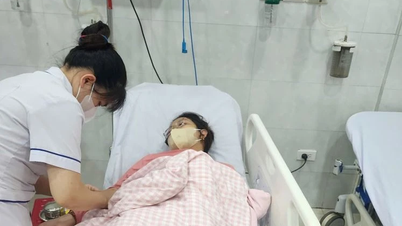
Concerned about food safety, delegate Nguyen Thi Minh Tam ( Quang Binh delegation) cited figures showing that in the first four months of 2024, there were 24 food poisoning incidents nationwide, affecting 835 people (3 deaths). "These figures do not include the two major food poisoning cases in May, which involved over 1000 people poisoned by Bang bread and the Shiwon collective canteen in Vinh Phuc," the delegate stated.

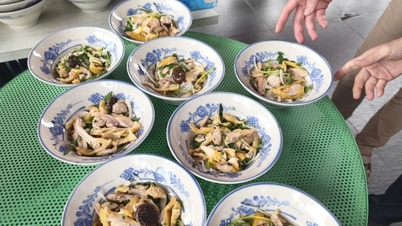
Given the current widespread and diverse food poisoning incidents, public opinion is questioning the management and supervision of food hygiene and safety. Emphasizing this point, the representative analyzed that street food in Vietnam offers convenience to Vietnamese people, is affordable for many, and many food stalls and carts possess recipes that create dishes even tastier than those in famous restaurants. Furthermore, five Vietnamese dishes have made it onto the list of the top 100 most attractive street foods in Asia.
However, in terms of food safety and hygiene procedures, most of these establishments are found to be in violation. For example, Tram Anh chicken rice ( Khanh Hoa ) and Phuong bread (Hoi An), despite having food safety certificates, still cannot guarantee the traceability of their ingredients from the suppliers, and these establishments themselves do not retain samples for testing when needed.
The delegates pointed out that, according to Government Decree 15/2018, the following entities are not eligible for a Food Safety Certificate: notably, food production and business establishments without a fixed location; collective kitchens not registered for food business activities; and street food vendors… which fall under the management of the Ministry of Industry and Trade.
From there, delegates questioned the effectiveness of the Ministry of Industry and Trade's management, given that millions of mobile food and beverage vendors and collective kitchens for workers and students are becoming increasingly common every day. Even with food safety and hygiene permits, when violations occur, besides suspending operations, will these establishments be able to implement more hygienic production processes after being allowed to resume business? Or will they even abandon their brand and establish a new establishment?
"It is easy to see the gaps in food safety and hygiene management, which directly affect the health and lives of citizens and tourists; as a country whose main export is food, Vietnam's reputation with business partners around the world will be affected to some extent when the level of food contamination increases," the delegate stated.
Therefore, delegates believe that reviewing the food safety and hygiene management process in the coming period is necessary. They also proposed further improvements to policies and laws to create a legal framework for state management of food safety, especially street food. Accordingly, they suggested reviewing and increasing penalties for violations in food safety and hygiene business operations to ensure sufficiently strong sanctions to deter offenders; and focusing investment on resources, including human resources, for this activity.
Continue directing relevant ministries and agencies to promptly develop software applications for managing product traceability and quality control at each mobile and street vendor establishment. This will facilitate both buyers in tracing and monitoring product origins and reporting to authorities, as well as enabling management agencies to handle violations.
Special attention should be paid to implementing solutions to stimulate consumer demand.

Speaking on the matter, delegate Tran Thi Hong Thanh (Ninh Binh delegation) suggested that the Government should pay special attention to implementing solutions to stimulate consumer demand, creating a clear shift in consumer demand, both in terms of reasonable public spending and private consumption. Accordingly, delegate Tran Thi Hong Thanh proposed three solutions that need to be focused on.
First, according to the delegates, the current public debt safety indicators are low and safe. They proposed that the National Assembly and the Government continue to promptly consider policies to exempt, defer, and reduce taxes and fees for businesses and individuals, similar to those in 2023. This includes reducing VAT by 2% until the end of 2024, and reducing registration fees for domestically produced automobiles to stimulate consumer demand and increase sales revenue, thereby increasing tax revenue. They also suggested strengthening support for businesses in green transformation, investing in science and technology, research, and training to serve semiconductor chip production and energy transition.
For components with low disbursement rates in the recovery program, specific plans should be promptly studied to reallocate these remaining components to support local businesses in green transformation, energy transition, chip manufacturing, carbon credit market development, social housing, and sustainable tourism development.
In addition, there should be policies and solutions to stimulate consumer credit in a reasonable way, both to boost personal consumption and reduce illegal lending.
The second issue raised by delegates was the need for a decisive improvement in the investment and business environment, stimulating private investment, and increasing the confidence of businesses and investors. They proposed that the Government provide more decisive direction to ministries, sectors, and localities in implementing Resolution No. 02 on improving the investment and business environment and enhancing Vietnam's competitiveness to achieve a breakthrough. Along with this, they suggested researching and proposing legislation to protect officials who dare to think, act, and innovate for the common good.
Furthermore, Representative Tran Thi Hong Thanh requested that the Government conduct a more specific assessment of the business situation, given that in the first four months of the year, the number of businesses withdrawing from the market exceeded the number of businesses entering the market, in order to develop appropriate solutions and substantially improve these figures; and to assess indicators such as innovation, infrastructure, including digital infrastructure, the precise scale of the digital economy, and the green economy, in order to make stronger, more appropriate, and better policy decisions.
The delegate also suggested promoting the role of economic powerhouses in consumer development. "This may not be a new issue, but it is becoming increasingly urgent in the context where some growth drivers or key economic regions are experiencing modest growth, reducing their role and contribution to the overall economic growth," the delegate emphasized.
Therefore, delegate Tran Thi Hong Thanh suggested that the Government pay more attention to the effective implementation of regional linkage mechanisms and policies, as well as specific mechanisms in accordance with the Politburo's resolutions. This would better leverage the role of economic powerhouses, key economic regions, and potential areas, increasing their ability to lead and spread to other regions and areas in pioneering the development of consumption and private investment.
Source





















































































Comment (0)