

 |
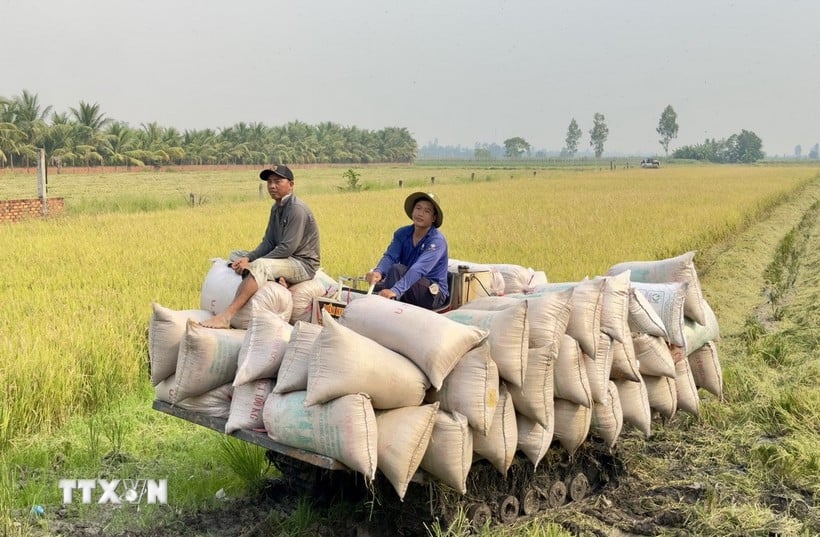
| Rice is a key agricultural product. Photo: Thanh Sang/TTXVN |
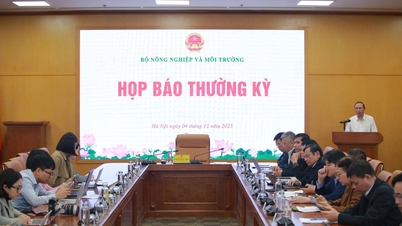
According to the Ministry of Agriculture and Environment , over the past five years, despite challenges from disease outbreaks, geopolitical fluctuations, and supply chain disruptions, Vietnamese agricultural products have maintained their position on the world map; expanding in scale and meeting global standards.
In the coming period, with a proactive, creative, and deeply integrated spirit, Vietnam will not only be a producer and exporter of agricultural products, but also a reliable and responsible partner, contributing to building a greener, cleaner, and more sustainable global agriculture; standing firm against challenges and achieving record growth milestones in the export of agricultural, forestry, and aquatic products.
Meeting high market standards.
Speaking to reporters, Mr. Vu Duc Dam Quang, Deputy Director of the International Cooperation Department (Ministry of Agriculture and Environment), said that from 2020 to the present, the import and export turnover of agricultural, forestry and aquatic products has continuously grown, placing Vietnam among the top 15 exporting countries in the world , with markets spanning over 200 countries and territories.
In 2024 alone, the export value of agricultural, forestry, and aquatic products reached US$62.6 billion - a record high in history, with a trade surplus of US$17.7 billion, including 7 product groups with exports exceeding US$3 billion and 11 product groups exceeding US$1 billion.
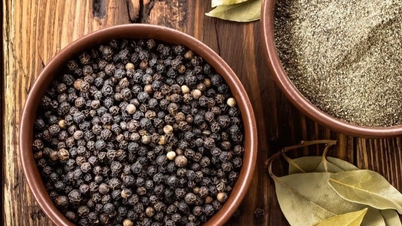
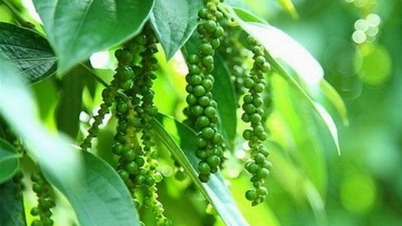
In particular, Vietnam has ranked among the world's top exporters of many agricultural, forestry, and aquatic products such as pepper, cashew nuts, coffee, and rice.
"Contributing to that achievement are the effectively implemented Free Trade Agreements (FTAs), which have opened up opportunities to access demanding markets such as the EU and the United States. More importantly, we are not only exporting more, but also exporting to higher standards of quality and sustainability," Mr. Quang said.
Alongside market opening, Vietnam is actively removing market barriers, effectively exploiting signed FTAs, and proactively meeting new requirements from partners such as: EU regulations on deforestation and forest degradation, and US measures controlling timber under Article 301 and seafood under the MMPA.
"We see this not just as a challenge or simply for exporting agricultural, forestry, and aquatic products, but also as an opportunity to develop Vietnamese agriculture in a transparent, responsible, and sustainable direction," Mr. Quang emphasized.
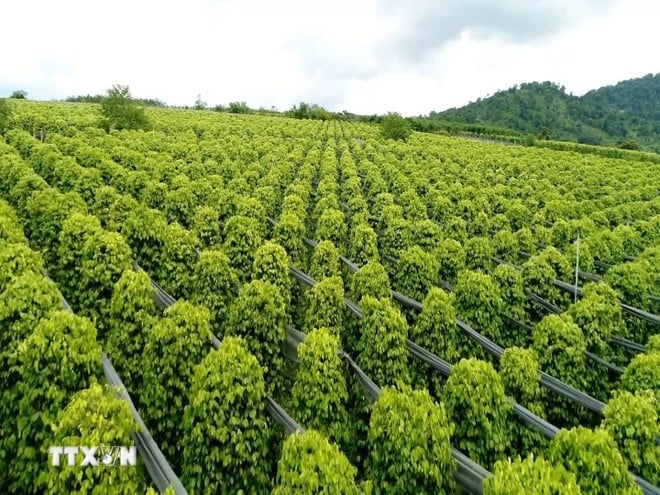 |
| The Nam Yang Agricultural and Service Cooperative (Kon Gang commune, Gia Lai province) has 30 hectares of pepper plantations that have received USDA (US) organic certification. Photo: Hong Diep/TTXVN |
Vietnam has also become an attractive destination for FDI in the agricultural sector, with over 500 direct projects totaling nearly $4 billion. Including processing and related service projects, the figure exceeds $20 billion, placing it among the world's leading countries in attracting agricultural FDI.
"Based on that foundation, the Ministry of Agriculture and Environment, together with partners, has built public-private partnership (PPP) groups in key sectors such as coffee, rice, pepper, and seafood to promote value chain linkages. This is the core element for Vietnam to move towards an agricultural sector that not only exports more, but also exports to higher standards, creating a brand of green, clean, and sustainable agricultural products on the world map," Mr. Quang shared.
Along with PPPs, initiatives such as Extended Producer Responsibility (EPR) are also gradually changing the way production and business are conducted, linking corporate responsibility to the entire product lifecycle, from design, production, consumption to recovery and recycling. Mr. Quang emphasized that this is not only a solution to reduce waste and pollution, but also a "green passport" that helps Vietnamese agricultural products conquer demanding markets around the world.
Furthermore, carbon credit exchange projects in agriculture are also opening up a new green economy market. Reducing emissions from rice production, livestock farming, and forestry not only helps Vietnam move closer to the Net Zero 2050 goal, but also generates revenue from carbon credits for reinvestment in farmers and local communities.
Aiming for record growth milestones.
According to representatives from the Ministry of Agriculture and Environment, these innovative and sustainable development initiatives are converging to transform Vietnamese agriculture into a sector that both produces food and provides "environmental services," taking Vietnamese agricultural brands further on the path to greening, modernization, and increased value.
In the coming period, Vietnam will remain committed to the principle of "selective FDI to serve green transformation" and mobilize additional resources for major programs ranging from restructuring crop and livestock production, managing land and water resources, to circular economy and green livelihoods for rural areas.
Mr. Vu Duc Dam Quang stated that over the years, Vietnamese agriculture has received invaluable support from development partners through ODA projects. These flows of capital, technology, and knowledge have not only built irrigation systems, restored mangrove forests, and improved management systems, but have also created sustainable livelihoods for millions of farmers.
In the coming period, the Ministry of Agriculture and Environment will continue to connect with international organizations, development banks, and climate funds to mobilize more resources for major programs (from restructuring crop and livestock production, managing land and water resources, to circular economy and green livelihoods for rural areas). According to Mr. Quang, this will be a solid foundation for Vietnam to move forward on the path to realizing its Net Zero 2050 commitments.
Another important driving force is cooperation on policy, science, and knowledge. Mr. Quang stated that in recent times, the Ministry of Agriculture and Environment has actively implemented Resolution 57-NQ/TW of the Politburo on breakthroughs in the development of science, technology, innovation, and national digital transformation; and Resolution 59-NQ/TW of the Politburo on international integration in the new situation.
Furthermore, with the support of international experts, Vietnam is becoming a role model in the world for sustainable development, through initiatives such as the Transparent, Responsible, and Sustainable Food System Transformation Initiative, the Emission Reduction Initiative through Reforestation and Efficient Land Use, and initiatives on climate change adaptation, nature conservation, and biodiversity preservation.
"In this new phase, we will continue to consider this as the 'key' to enhancing national governance capacity, enabling Vietnam not only to participate but also to actively contribute to shaping global rules of the game in the fields of agriculture and environment," Mr. Quang emphasized.
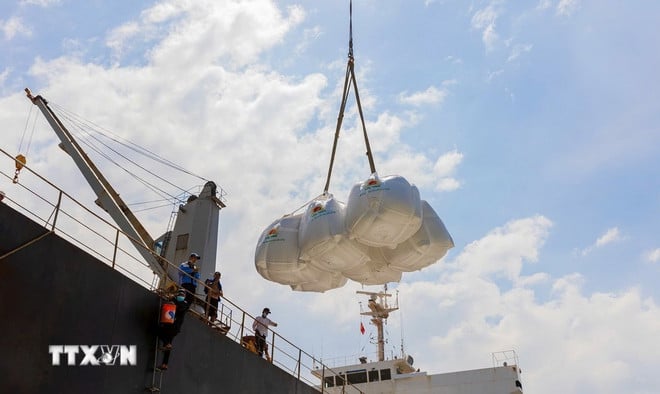 |
| Vietnam's export rice prices rose to near their highest level in three months due to strong demand. Photo: Cong Mao/TTXVN |
Optimistic about the growth momentum, Deputy Minister of Agriculture and Environment Phung Duc Tien said that exports of agricultural, forestry and aquatic products are currently achieving quite good results. Vietnam's trade balance in agricultural, forestry and aquatic products in the past nine months is estimated to have a surplus of 15.93 billion USD, an increase of 17.6% compared to the same period last year.
“In the remaining months of 2025, if each month's export level is maintained at $5 billion, this year's agricultural and forestry exports will reach $67 billion – a new record. If each month's exports reach $6 billion, the industry will significantly surpass the 2024 record and reach the $70 billion milestone,” Mr. Tien shared.
Mr. Tien also stated that the Ministry of Agriculture and Environment is working closely with the Ministry of Industry and Trade and local authorities to expand markets and promote official exports, especially to China, Europe, and countries in the Comprehensive and Progressive Trans-Pacific Partnership (CPTPP) agreement.
In addition, Vietnam will intensify trade promotion programs and negotiations to open new markets for fruits, seafood, and processed products in the fourth quarter of 2025. This is a prerequisite for the industry to achieve the goals set by the Party, State, and Government, and to aim for even higher growth milestones in the future.
Source: vietnamplus.vn
Source: https://baodongnai.com.vn/tin-moi/202510/xuat-khau-nong-san-khang-dinh-thuong-hieu-huong-den-nhung-ky-luc-moi-fe22890/

















![[Photo] Prime Minister Pham Minh Chinh holds a phone call with the CEO of Russia's Rosatom Corporation.](/_next/image?url=https%3A%2F%2Fvphoto.vietnam.vn%2Fthumb%2F1200x675%2Fvietnam%2Fresource%2FIMAGE%2F2025%2F12%2F11%2F1765464552365_dsc-5295-jpg.webp&w=3840&q=75)











































Comment (0)