

Dak Doa commune has 5 cooperatives operating in the agricultural sector, including: Glar Agricultural Cooperative, Lam Anh Agricultural and Service Cooperative, Hoang Gia Foods Passion Fruit Cooperative, Glar Agricultural and Brocade Weaving Cooperative, and Tan Binh Agricultural and Service Cooperative.
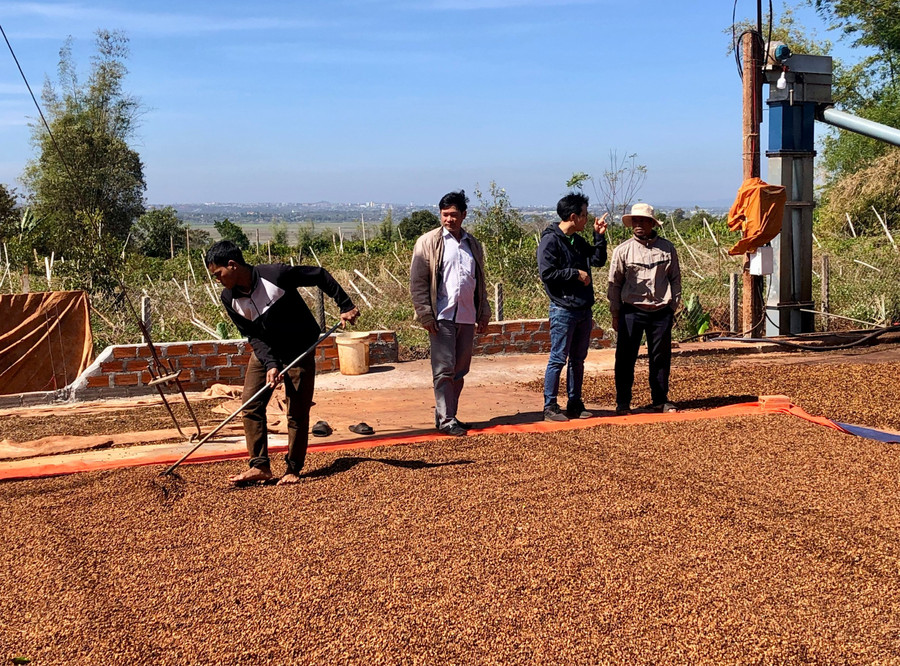
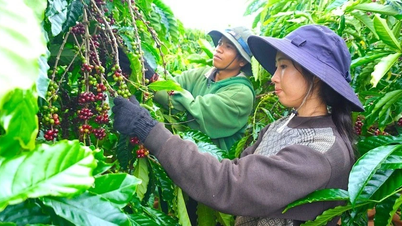
Among them, the Lam Anh Agricultural and Service Cooperative (Tuơh Ktu village) has made a significant mark by linking with nearly 500 households cultivating over 300 hectares of coffee according to 4C and UTZ standards. In addition, the cooperative also collaborates with 37 households cultivating 30 hectares of coffee to create a source of raw materials for processing paper filter coffee products that have achieved OCOP 4-star certification.
Mr. Le Huu Anh, Director of the Cooperative, said: “The Cooperative focuses on changing the production mindset of its members, especially ethnic minorities, towards clean and sustainable practices. We guide farmers to limit the use of inorganic fertilizers, absolutely avoid herbicides, and increase the use of organic fertilizers, microorganisms, and biological products. This approach both protects the environment and reduces investment costs by 10-15 million VND/hectare. In addition, the Cooperative also supplies materials, provides technical support, and aims towards an organic production model and high-quality coffee processing to enhance competitiveness in the market.”
Mr. Xuan (from Groi Wet village, a member of the cooperative) shared: "Previously, I used herbicides and applied a lot of inorganic fertilizers, which depleted the soil. With 1.5 hectares of coffee, I only harvested about 3-4 tons of beans per season. Since participating in the farming model following the Japanese EMI process and producing 4C coffee, I have received guidance on techniques to retain moisture, use coffee husks for compost, use Japanese organic chicken manure, and biological pesticides to control pests and diseases."
As a result, Mr. Xuan's family's investment costs decreased by about 30%, and productivity nearly doubled, reaching 6-7 tons of kernels. Notably, thanks to the cooperative's guaranteed purchase agreement, the product fetched an additional 200,000 VND per ton compared to the market price.
Another exemplary model is the Glar Agricultural Cooperative. Mr. Ue, Chairman of the Board of Directors and Director of the Cooperative, said: The cooperative is currently linking with 100 households cultivating 95 hectares of coffee according to 4C standards to supply raw materials to Vinh Hiep Co., Ltd. (An Phu ward). This linkage has yielded significantly higher efficiency compared to traditional methods. During the linkage process, farmers receive technical guidance and their products are guaranteed to be purchased at a price higher than the market price.
Each year, Glar Agricultural Cooperative supplies Vinh Hiep Co., Ltd. with over 1,000 tons of 4C-certified green coffee beans. Previously, farmers' production was fragmented, resulting in yields of only 2-3 tons of green coffee beans per hectare. Now, thanks to sustainable production processes, yields have increased to 4-5 tons per hectare. Notably, the company also provides a bonus of 100-300 thousand VND per ton compared to the market price, motivating farmers to remain committed to the cooperative.
Ms. Duong Thi Thu Thuy, Head of the Economic Department of Dak Doa commune, observed: “The movement of farmers participating in cooperatives and production groups in the commune is developing strongly. This is a suitable direction to improve production capacity, especially for ethnic minorities. When participating in cooperatives, farmers receive technical training, produce according to sustainable processes, and have stable output thanks to businesses guaranteeing purchase. In the future, the commune will continue to encourage farmers to cooperate, and at the same time support cooperatives in building brands and registering for quality certifications to expand markets.”
Source: https://baogialai.com.vn/dak-doa-day-manh-lien-ket-san-xuat-nang-cao-gia-tri-nong-san-post565688.html




































































Comment (0)