

- Bac Lieu province has proposed adding 1,000 MW of wind power and 500 MW of solar power to the Power Development Plan VIII.
- Bac Lieu - Ca Mau accounts for nearly 30% of the country's coastal wind power potential.
- Ca Mau is strong in green energy.
- Moving towards green energy
Ca Mau holds a unique position on the national energy map. With its long coastline, stable climate, consistent year-round winds, and high solar radiation, the province possesses ideal conditions for developing renewable energy . Instead of viewing this as merely a "gift from nature," the province has proactively planned, attracted investment, and is gradually forming a large-scale, well-structured clean energy ecosystem.
Don't waste potential...
From 2020 to the present, 16 wind power plants with a total capacity of over 870 MW have been put into operation in the province, contributing approximately 2.3 billion kWh of electricity to the national grid annually. In addition, nearly 300 MWp of rooftop solar power has been installed in more than 2,800 households and businesses, demonstrating that the "electricity from people's rooftops" model is truly spreading from rural to urban areas.
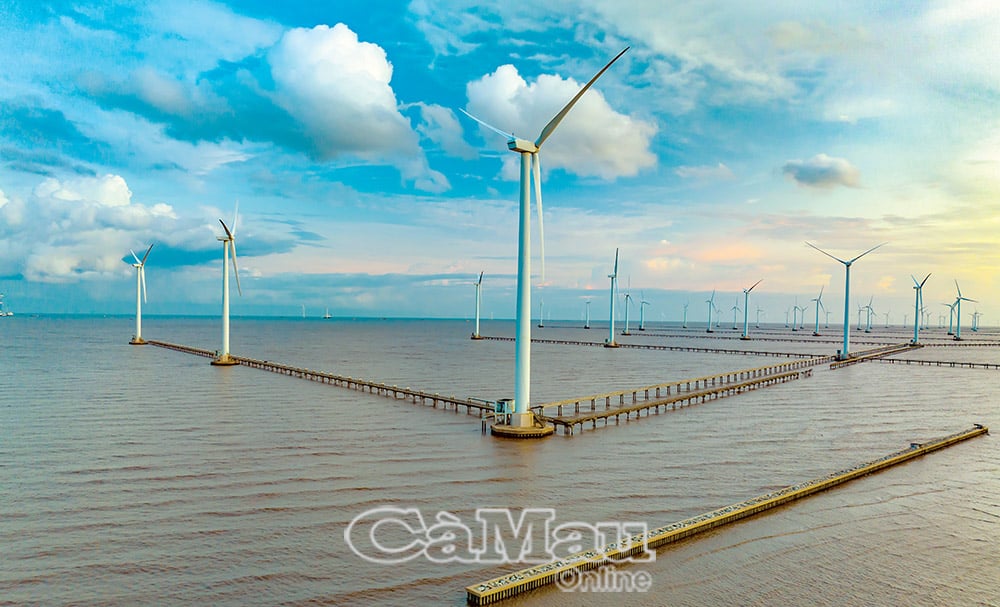 Ca Mau also utilizes wind power projects to develop tourism .
The figures above demonstrate Ca Mau's "not wasting potential" mindset. Mr. To Minh Duong, Deputy Director of the Department of Industry and Trade, said: "We clearly understand that clean energy is not only a solution for economic development, but also a long-term orientation to ensure the environment, social welfare, and international integration."
The achievements to date demonstrate Ca Mau's efforts in "painting a picture" of green energy in the southernmost tip of the country. Instead of issuing separate policies, the province has adopted a flexible and practical approach, through specific plans and action programs based on general guidelines. Projects are implemented in accordance with legal regulations on investment, land, and environment, with clear assignment of responsibilities to each unit and task at each stage.
The province has also promptly reviewed and added wind and solar power projects to national and provincial planning, while simultaneously completing land use and energy planning, supporting land clearance, and ensuring implementation progress. Investors are encouraged to use shared grid infrastructure, minimizing land impact and optimizing costs.
In particular, the province is developing energy in a way that connects with people and businesses. More than 190 organizations and individuals have proactively installed rooftop solar power systems for self-consumption – an encouraging trend in the context of fluctuating electricity prices and increasing pressure to reduce emissions.
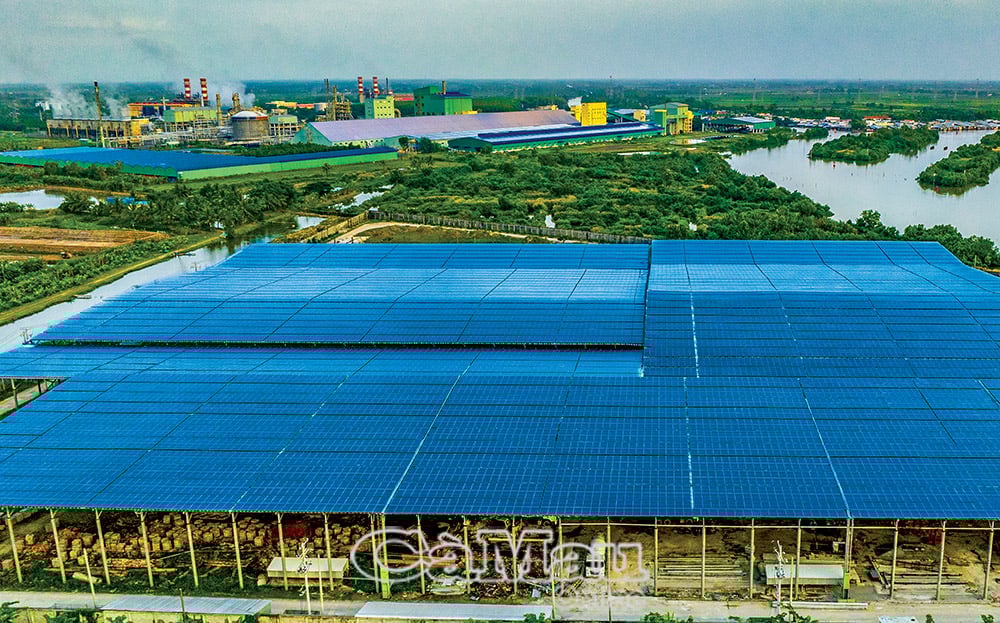 Throughout the province, more than 190 organizations and individuals have installed rooftop solar power systems.
Besides developing wind and solar power, the province is also expanding its vision to new energy industries such as the production of hydrogen and green ammonia, with an expected capacity of up to 86 million tons per year. These are key products in the roadmap for developing a circular economy, greening production, and integrating into the international market in the near future.
Beyond its economic value, the development of the renewable energy sector brings other significant benefits. During construction, wind power projects create jobs for thousands of unskilled workers; once operational, these plants employ skilled engineers and technicians, thereby contributing to improving the quality of the province's workforce.
...Building a foundation for a sustainable future
From July 2025, Ca Mau and Bac Lieu merged, opening a new chapter in the development of the new Ca Mau province with many expectations. In the 2025-2030 vision, the energy sector continues to be identified as one of Ca Mau's breakthrough areas. Following the merger, the province quickly updated its planning on electricity, land, and environment according to the new administrative boundaries to create a solid legal foundation for the next phase of development.
The province is also actively petitioning the Government to soon issue a clear mechanism for electricity exports, specifying regulations on export electricity prices, project approval procedures, and conditions for cross-border infrastructure connections. In addition, expanding bilateral and multilateral cooperation with countries such as Singapore, Thailand, Laos, and Cambodia will create opportunities for Ca Mau to participate more deeply in the regional energy value chain.
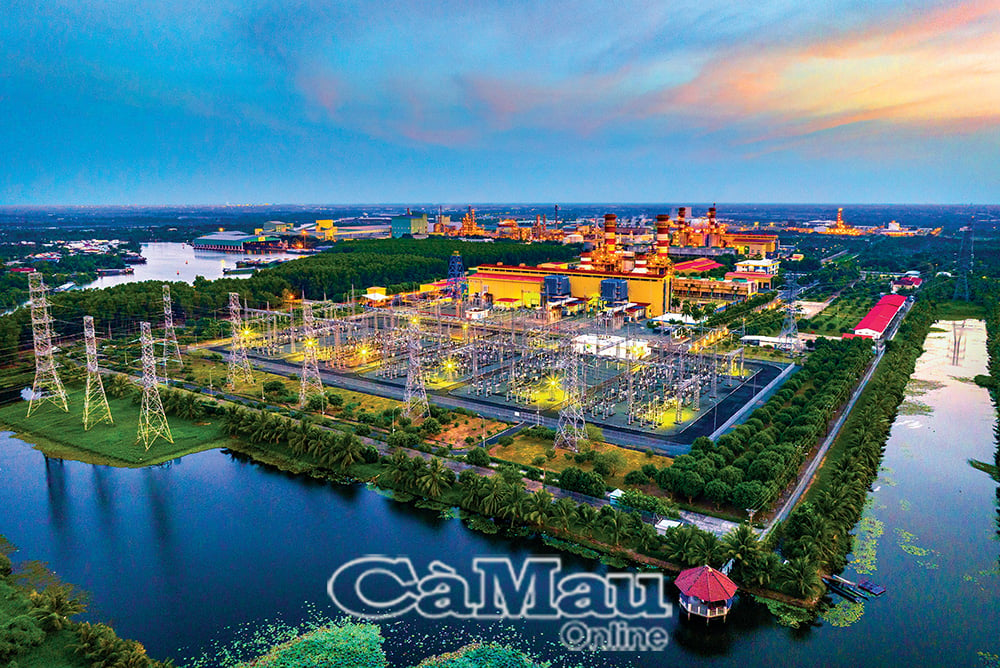 The Ca Mau 1 and 2 power plants illuminated the entire night sky. (Photo: Huynh Lam)
According to the Power Development Plan VIII, by 2030, Ca Mau province will put into operation an additional 2,309 MW of wind power, 100 MW of solar power, and 117 MW of rooftop solar power. Simultaneously, the province is coordinating with ministries and agencies to prepare for exporting electricity from offshore wind power with a capacity of up to 12,000-15,000 MW, depending on technical and legal conditions. This is a significant step forward, placing Ca Mau among the leading localities nationwide in renewable energy.
The journey to build Ca Mau into a national clean energy center is not just a technological race, but also a testament to a shift in development thinking. From being just a coastal province far from the national center, Ca Mau is gradually becoming a shining example of leveraging natural potential, demonstrating perseverance in planning, and a spirit of daring to think and act, so that today's green electricity can pave the way for a sustainable future tomorrow.
Phoenix
Source: https://baocamau.vn/danh-thuc-nhung-nguon-vang-a123169.html








































































Comment (0)