

According to a venture capital fund representative, start-ups that take a transparent and serious approach to gender equality will have certain advantages in raising capital.
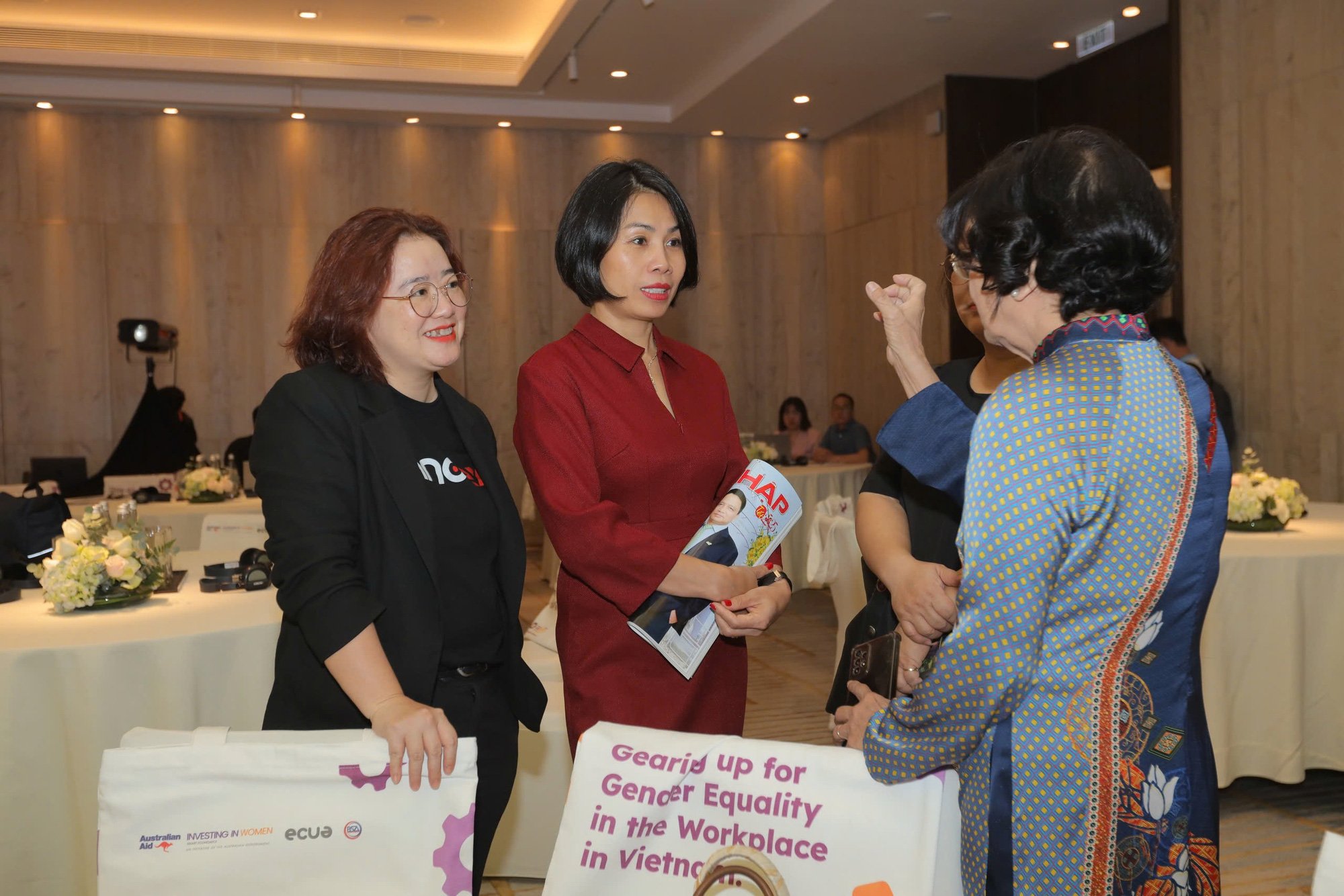
Interest in gender equality in the workplace in Vietnam has increased significantly recently - Photo: TQ
Gender inequality in startups
A 2021 survey by this organization revealed that in Southeast Asia, less than 20% of venture capital-funded startups had at least one female founder. Meanwhile, on the venture capital fund side, over 70% of venture capital funds did not have female partners.
"That's why ESG (Environment, Social, and Governance) criteria in gender equality are important. The trend is that investment flows are paying more attention to the issue of gender equality, and startups that take this aspect seriously and transparently in their investments will have an advantage in accessing capital."
However, given the current difficult economic situation, this is only one of the factors that investors consider," Ms. Hau said.
Ms. Tran Ngoc Thao, CEO of TMS Vietnam, believes that technology companies, which currently have a higher proportion of male candidates than female, often include incentives for female applicants in their job postings.
When recruiting, if male candidates score 8 points and female candidates score 6 points, many businesses still prioritize female candidates to meet gender balance requirements. Multinational companies currently prioritize a 40-60 or 30-70 ratio, and some French companies even set a 50-50 criterion.
"In a changing labor environment with the influx of Gen Z workers, bringing new awareness of freedom and equality, as well as the stringent standards of the global market, DEI (Diversity, Equity, Inclusion) – that is, diversity, equality, and inclusion – is becoming increasingly important," Ms. Thao shared about the trend.
The number of women owning businesses remains low.
In Vietnam, attention to gender equality in the workplace has increased significantly thanks to government policies and international integration. The 2006 Gender Equality Law and the Labor Code clearly prohibit gender discrimination in recruitment, salary, training, promotion, and other activities.
Currently, Vietnam has one of the highest rates of female labor force participation in Southeast Asia. However, a significant gap still exists between female and male participation rates.
According to the General Statistics Office in 2022, the female labor force participation rate was 62.7%, 12.8 percentage points lower than the male rate of 75.5%. Furthermore, the percentage of women owning businesses remains quite low, at around 20%, and is mainly concentrated in small and medium-sized enterprises.
Maya Juwita, Director of Gender Equality in the Workplace at Investing in Women, believes GEARS@VIETNAM will strategically address key challenges facing women in Vietnam's private sector, including enhancing career development support and ensuring a safe and supportive work environment for employees.
“Building on our success in other countries such as the Philippines, Indonesia, and Myanmar, we will collaborate with businesses and policymakers to create systemic change and deliver lasting benefits to all,” said Maya Juwita.
The GEARS@VIETNAM program is designed to help businesses address gender, diversity, and inclusion issues in the workplace strategically and comprehensively.
Participating in this program provides businesses with the opportunity to gain validation and solid evidence of their social responsibility efforts to support their ESG reporting.
Source: https://tuoitre.vn/binh-dang-gioi-tot-start-up-se-goi-von-hieu-qua-hon-20250116192523926.htm


































































Comment (0)