

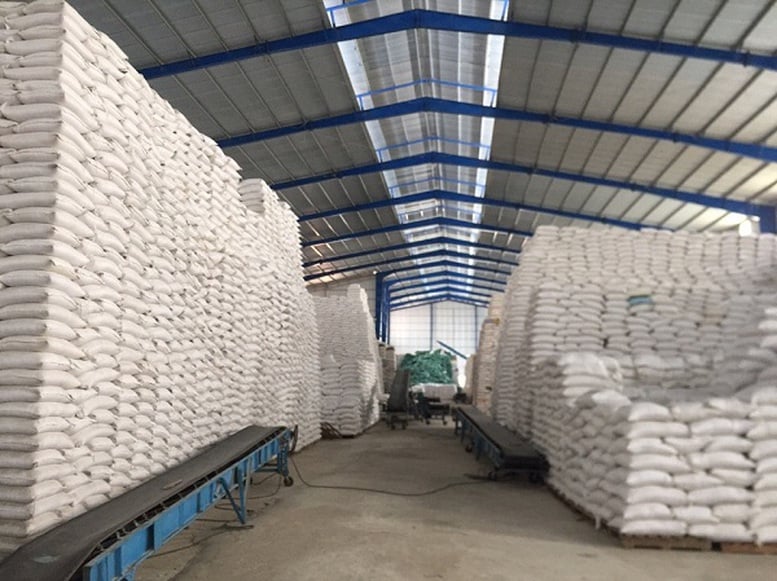
The government has approved the draft Law on National Reserves (amended).
The government requires the Ministry of Finance to be responsible for the contents of the draft Law, and for the reports on the acceptance and explanation of comments from Government members.
The Ministry of Finance will review and finalize the draft Law in accordance with regulations. Based on this, the Minister of Finance, acting under the authorization of the Prime Minister, will sign reports and documents submitted to the National Assembly and the Standing Committee of the National Assembly on behalf of the Government, ensuring quality and timely completion as required; proactively report and explain to the National Assembly and its agencies as prescribed, and be responsible for the content of the feedback and explanations; and promptly report to the Prime Minister on any issues arising that exceed the Minister's authority.
According to the Ministry of Finance, the drafting of the amended National Reserve Law aims to institutionalize the Party and State's guidelines and policies on national reserves, meeting the requirements of management and operation in the new situation; ensuring the uniformity and consistency of the legal system, resolving obstacles, creating favorable conditions for national reserve activities, contributing to macroeconomic stability and serving social welfare; inheriting and promoting existing regulations that have been proven in practice, while adding new, clear, and transparent regulations.
The draft Law on National Reserves (amended) has been reduced from 6 chapters and 35 articles to 6 chapters and 31 articles. One of the most significant amendments is the expansion of the scope and objectives, reflecting a shift in strategic thinking regarding national reserves. While the current law focuses only on urgent and emergency tasks (disaster prevention and control, epidemics, famine relief; serving national defense and security), the draft law clearly adds the objective of national reserves to ensure social welfare and socio-economic development. This expansion allows the State to use national reserves more flexibly, not only in emergency situations but also to regulate the market, stabilize the macroeconomy, and implement socio-economic development policies, especially in disadvantaged areas and ethnic minority regions.
The draft has added a completely new chapter, stipulating "Strategic Reserves," aimed at strengthening the national capacity to cope with unforeseen situations. Strategic reserves are defined as a tool for managing, exploiting, mobilizing, and effectively utilizing the resources of the economy to ensure stable and efficient economic operation according to market principles and socialist orientation. This involves increasing reserves of essential goods, materials, equipment, and resources serving strategic goals and national interests, meeting defense requirements and national interests in all situations.
The draft law promotes decentralization and simplification of administrative management processes. The revised draft assigns the Government the authority to specify the detailed list of national reserve goods. Instead of waiting for the National Assembly Standing Committee to make adjustments as is currently the case, this decentralization allows the Government to proactively and flexibly adjust the list of goods in a timely manner, meeting the requirements of the new situation. It clearly defines the responsibilities of the Ministry of Finance and other ministries and agencies managing national reserve goods in issuing standards and technical regulations for national reserve goods.
Regarding organizational structure, the Draft Law implements thorough decentralization and delegation of power by not specifying the tasks and powers of the National Assembly, the Standing Committee of the National Assembly, and the Prime Minister in the Draft Law, but instead assigning them to agencies and units that are specified in other legal documents, ensuring uniformity within the political system...
Phuong Nhi
Source: https://baochinhphu.vn/chinh-phu-thong-qua-noi-dung-du-an-luat-du-tru-quoc-gia-sua-doi-102251023143347602.htm



















![[Photo] Prime Minister Pham Minh Chinh holds a phone call with the CEO of Russia's Rosatom Corporation.](/_next/image?url=https%3A%2F%2Fvphoto.vietnam.vn%2Fthumb%2F1200x675%2Fvietnam%2Fresource%2FIMAGE%2F2025%2F12%2F11%2F1765464552365_dsc-5295-jpg.webp&w=3840&q=75)












































Comment (0)