

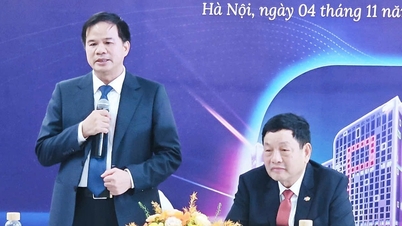
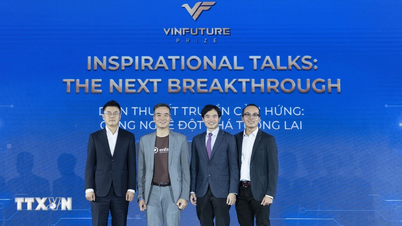
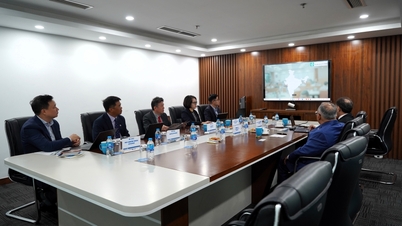
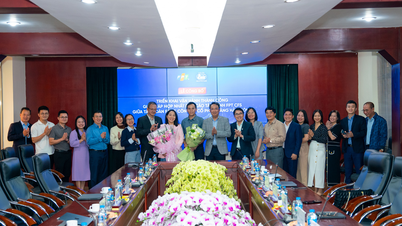
On the morning of December 3 in Hanoi , VinFuture Foundation organized a seminar with the theme "Advances in Disease Detection, Diagnosis and Treatment."
The event is expected to become a forum connecting scientists, healthcare professionals, businesses and policymakers, sharing visions, promoting cooperation and creating breakthrough solutions to improve human health in the digital age.
In his opening speech, Mr. Nguyen Ngo Quang - Director of the Department of Science, Technology and Training ( Ministry of Health ) began by pointing out that the world health picture in 2025 is facing a series of profound changes.
Accordingly, the incidence of non-communicable diseases, especially cancer, diabetes and cardiovascular diseases, is constantly increasing in many regions; while re-emerging and newly emerging infectious diseases continue to cause unpredictable outbreaks. In addition, climate change makes diseases spread faster, putting more pressure on the health system, which is already under pressure after the pandemic.
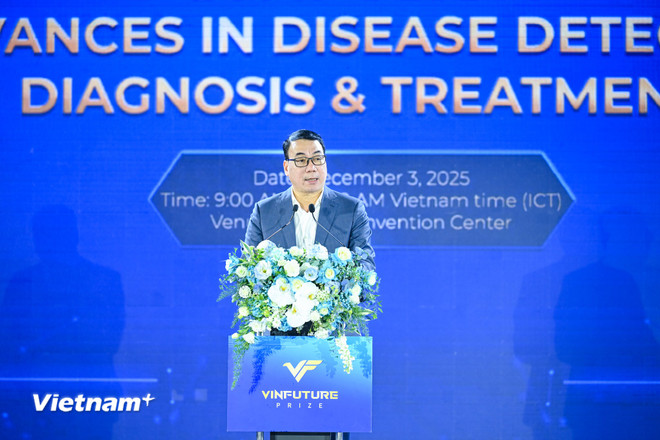
According to Mr. Quang, the risk of antibiotic resistance is approaching a global alarming level, threatening to reverse many achievements of the medical industry over the past decades.
This is no longer a problem of any single country but a common challenge that requires coordination, knowledge sharing and innovation among scientists around the world.
At the same time, disparities in access to health services between countries and population groups are becoming more evident. As populations age rapidly and disease patterns change, countries are forced to seek innovative, effective and sustainable solutions to improve health care capacity.
But in this context of many intertwined difficulties, Mr. Nguyen Ngo Quang emphasized that this is also an unprecedented opportunity opening up from the development of digital technology, artificial intelligence, gene technology and biological materials.
These technologies are leading medicine to shift from a traditional treatment model to a precision medicine model, based on data, genetics and pathology of each individual.
At the event, the world's leading scientists introduced many groundbreaking studies that are contributing to changing the way humanity detects and treats diseases.
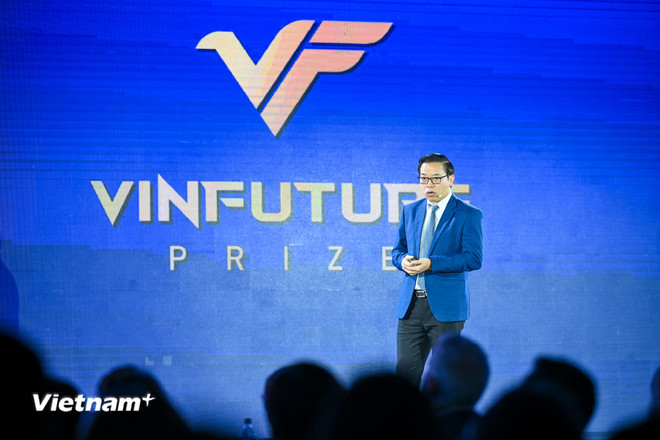
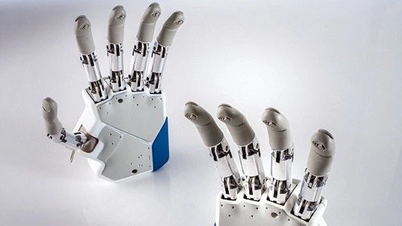
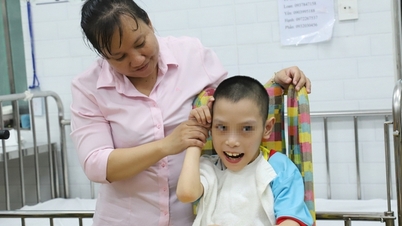
Anti-drug phage therapies, pioneering research in cellular microbiology, 3D printing in surgery, and advances in hearing science all open up new, less invasive treatment options that deliver superior clinical outcomes.
The convergence of many breakthrough studies from leading scientists in the world as well as in Vietnam has affirmed the orientation of the seminar: technology is the key to the future of medicine, especially in the three pillars of disease detection - diagnosis - treatment.
The leader of the Department of Science, Technology and Training also said that the Vietnamese Ministry of Health identified science and technology as the most important pillar to improve the quality of medical examination and treatment and strengthen the capacity of the health system in the coming years.
This is a strategic priority, consistently reflected in policies, from developing medical databases, electronic medical records, information sharing platforms to research on the application of biotechnology and artificial intelligence.
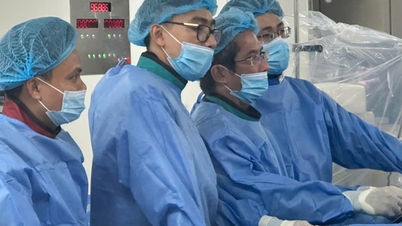
In Vietnam, many advanced technologies have begun to be applied, from artificial intelligence systems to support diagnostic film reading, gene sequencing technology for early cancer screening, digital health platforms to support chronic disease management, to 3D printing materials in surgery. These advances show that Vietnam is not only accepting technology but is gradually creating new values, contributing to the overall progress of medicine./.
Source: https://www.vietnamplus.vn/cong-nghe-mo-duong-cho-ky-nguyen-y-hoc-chinh-xac-co-hoi-de-viet-nam-but-pha-post1080755.vnp





















![[Photo] Worshiping the Tuyet Son statue - a nearly 400-year-old treasure at Keo Pagoda](/_next/image?url=https%3A%2F%2Fvphoto.vietnam.vn%2Fthumb%2F1200x675%2Fvietnam%2Fresource%2FIMAGE%2F2025%2F12%2F02%2F1764679323086_ndo_br_tempimageomw0hi-4884-jpg.webp&w=3840&q=75)
![[Photo] Parade to celebrate the 50th anniversary of Laos' National Day](/_next/image?url=https%3A%2F%2Fvphoto.vietnam.vn%2Fthumb%2F1200x675%2Fvietnam%2Fresource%2FIMAGE%2F2025%2F12%2F02%2F1764691918289_ndo_br_0-jpg.webp&w=3840&q=75)





























































Comment (0)